Stats NZ released migration data for October, which showed that large numbers of Kiwis continue to leave, mostly for Australia.
Net migration was only 11,929 in the year to October, down from a net gain of 35,400 in the October 2024 year.
The current net migration inflow is a fraction of the circa 130,000 peak in 2023 and is well below the decade’s average annual net inflow of about 50,000.
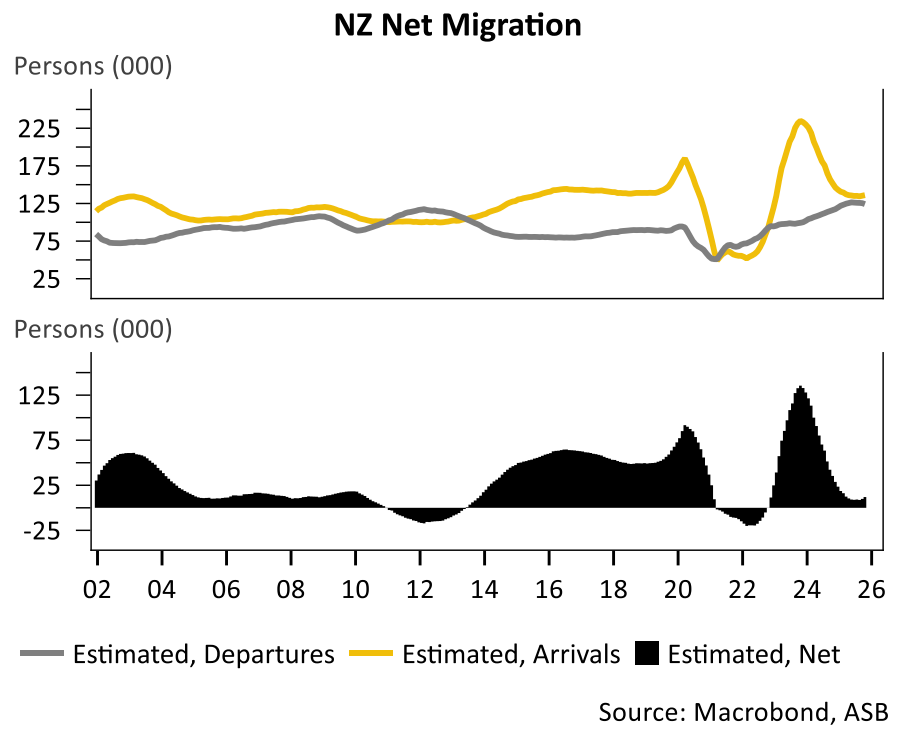
The decline in net migration has been driven by a strong net outflow of Kiwi citizens.
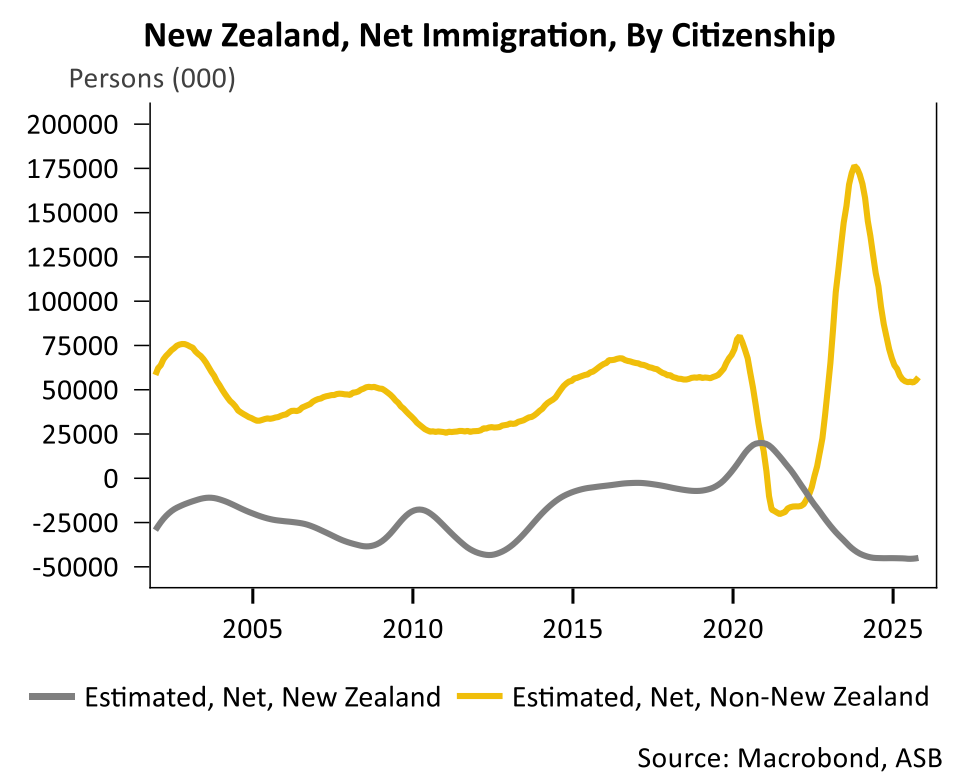
In the year to October 2025, a net 45,088 New Zealand citizens departed the country, offset by significant (but falling) arrivals from Asia:
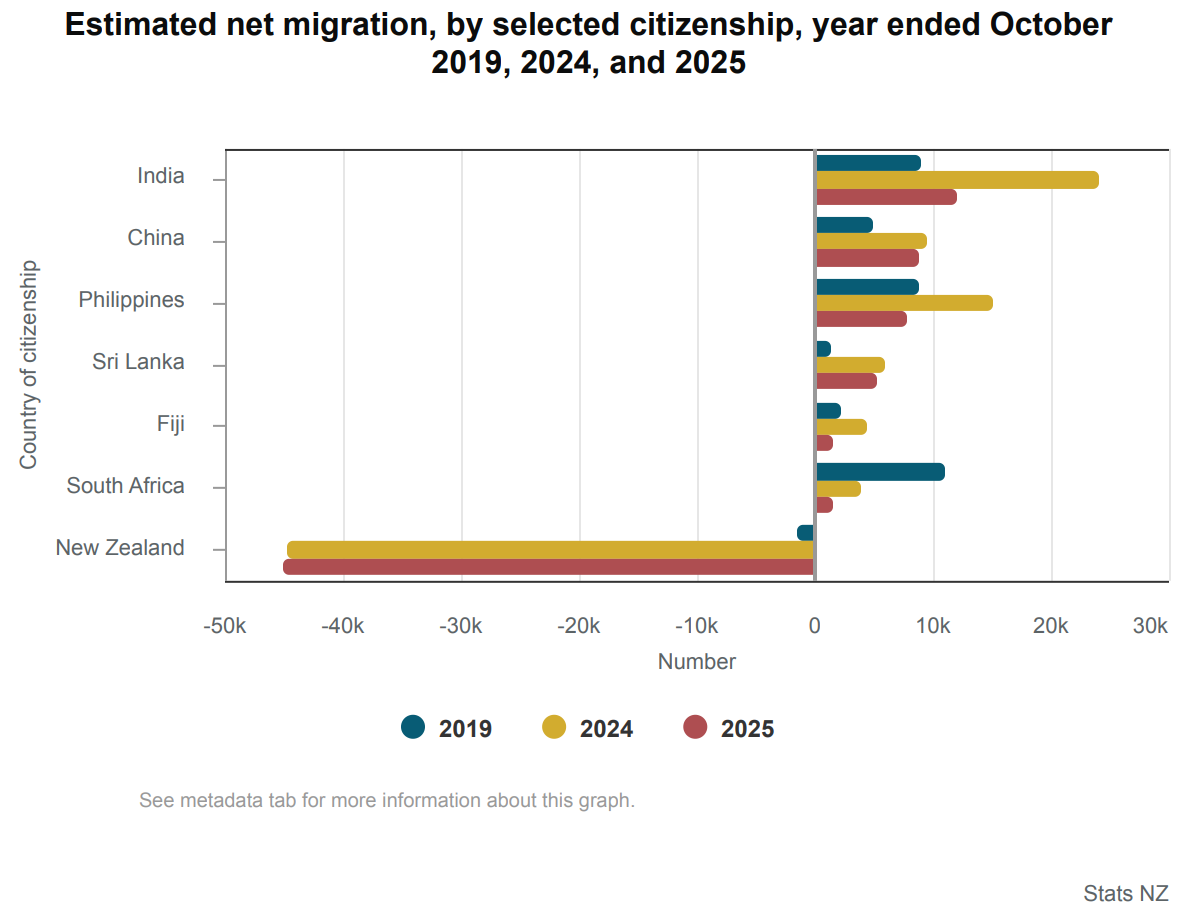
The next chart shows that the outflow of New Zealand citizens is tracking at its highest level since 2011-12:
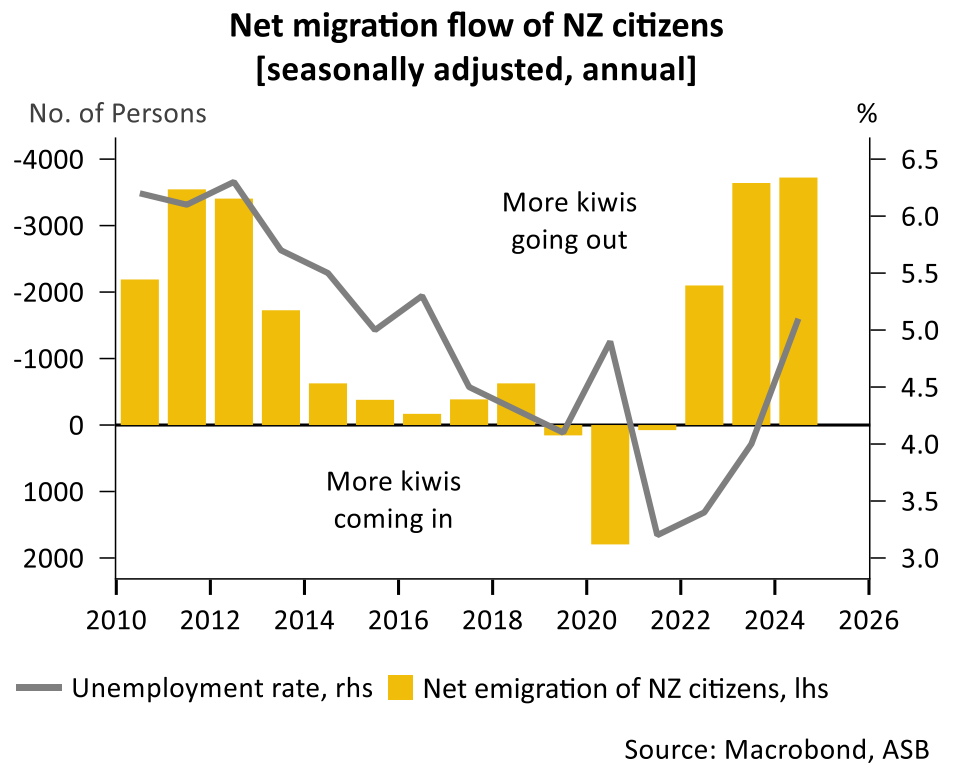
Around 30,000 of New Zealand’s migrant outflow was to Australia, which allows open entry and access to the labour market.
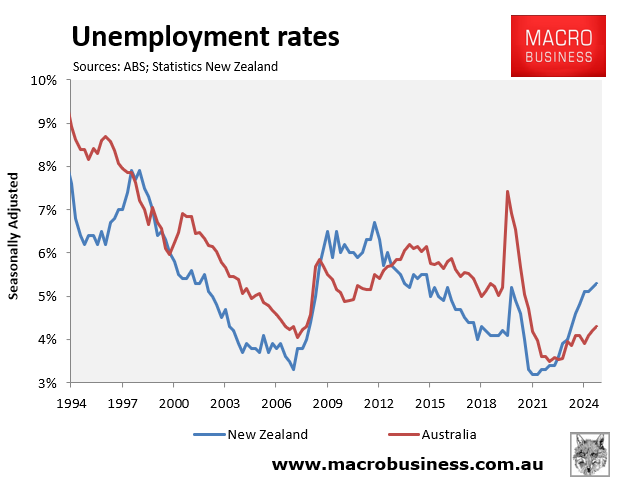
The rapid outflow of citizens to Australia is being driven by the strongly divergent labour market outcomes between the two nations. Australia’s unemployment rate of 4.3% was 1% lower than New Zealand’s in October.
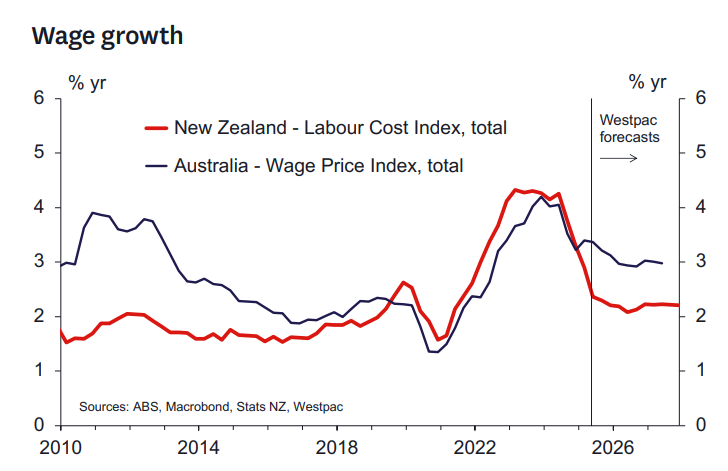
Australia has also experienced significantly stronger wage growth:
Commenting on the results, major bank ASB doesn’t expect an imminent turnaround in migration flows:
“The sharp decline in net immigration over the past two years is a key contributor to lower population growth, softer domestic demand and the sluggish housing market”.
“We do not expect to see an imminent turn around, reducing a key support to the NZ economy”.
“Slowing net immigration does help to slow labour supply growth, which will contain the peak in the unemployment rate but also temper trend growth in the NZ economy”.
ASB also believes that the Reserve Bank will need to keep interest rates low to “to rev the economy up and to start eroding still-abundant spare capacity in the NZ economy”.