The Australian Bureau of Statistics (ABS) released its Q3 Labour Account, which revealed the extent to which Australia’s job market has been artificially fuelled by government spending.
As illustrated below by Justin Fabo from Antipodean Macro, the annual growth in filled jobs remained stronger in the non-market (government-aligned) sector in the year to September 2025 than in the market sector:
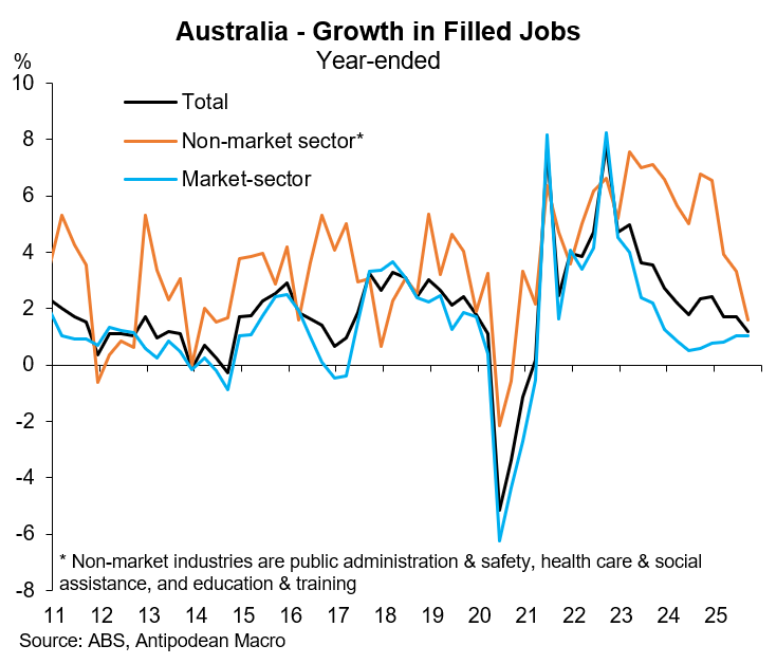
The non-market sector includes healthcare, social assistance, education, and public administration. Filled jobs in the non-market sector rose by 1.0% in Q3 2025 to be 1.6% higher year-on-year, down significantly from the peak.
The decline in non-market job growth has been driven by a normalisation in the care economy, which has moderated from its staggering pace over recent years:
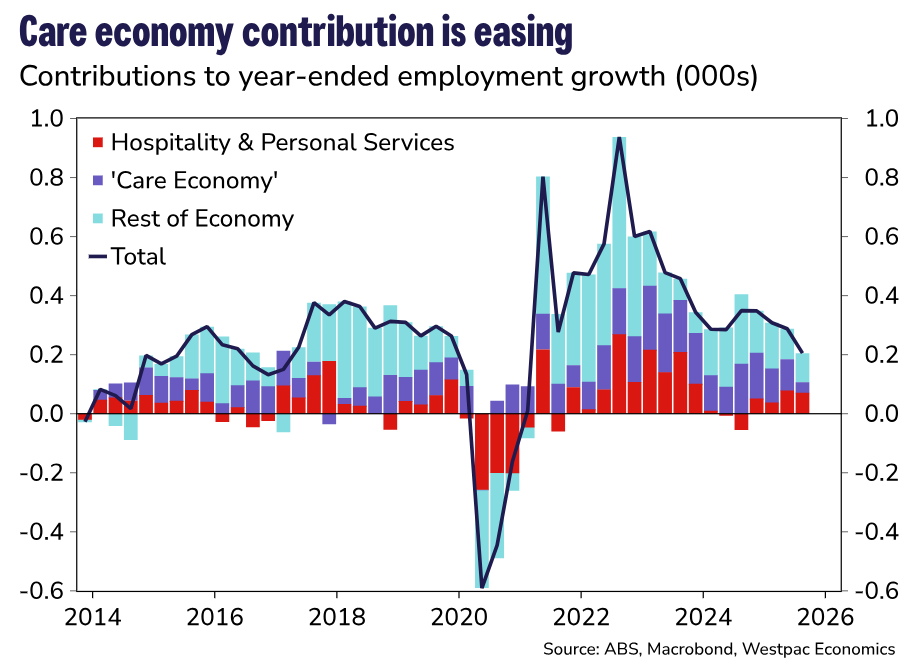
In comparison, market sector filled jobs rose by 0.5% over the quarter to be 1.0% higher through the year and are recovering from their recent lows.
The following chart from Alex Joiner, chief economist at IFM Investors, plots the cumulative change in filled jobs by sector since the beginning of 2023:
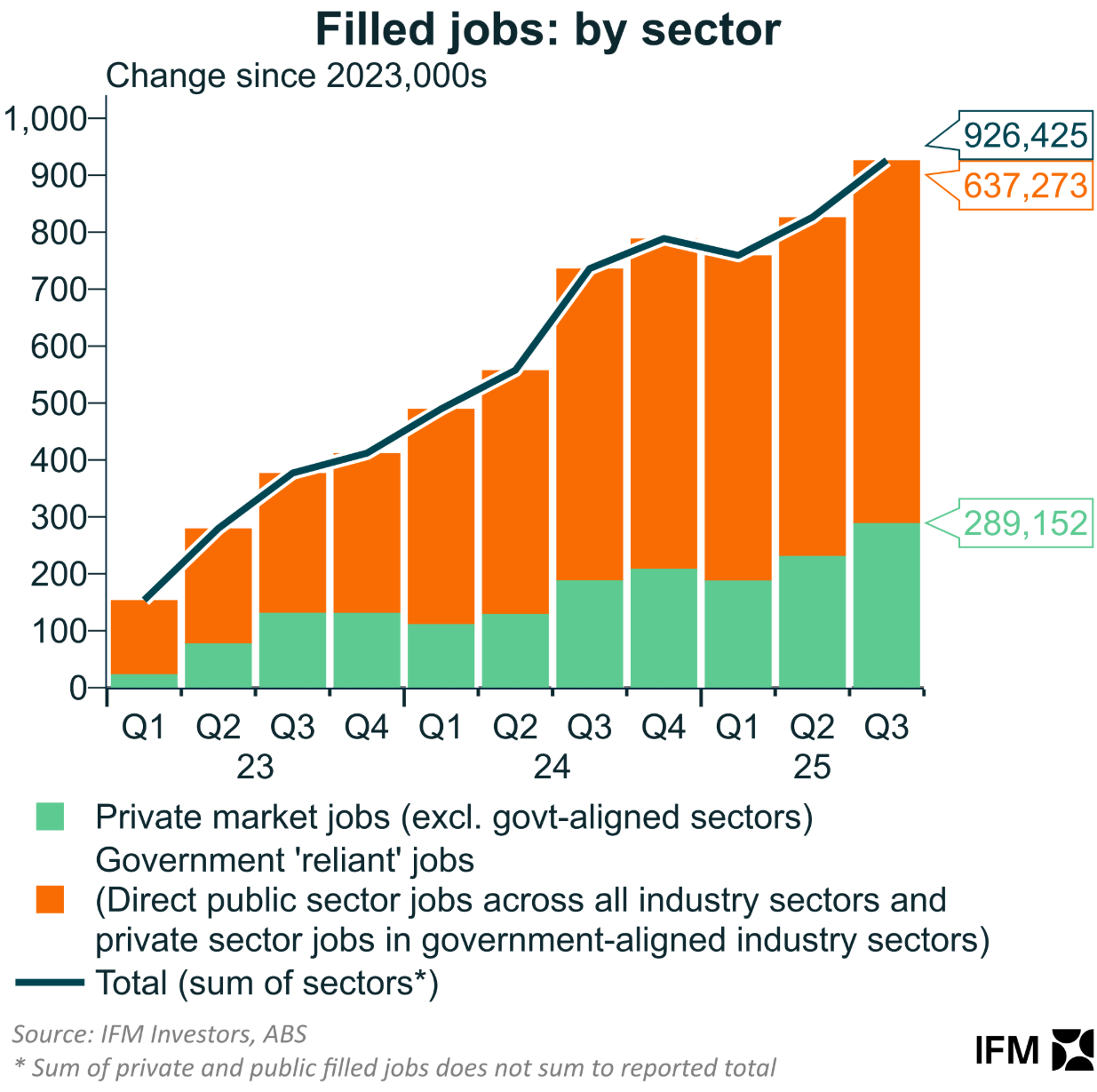
Despite comprising just over 30% of total jobs in Australia, the non-market sector accounted for 69% of the nation’s new filled jobs since the beginning of 2023.
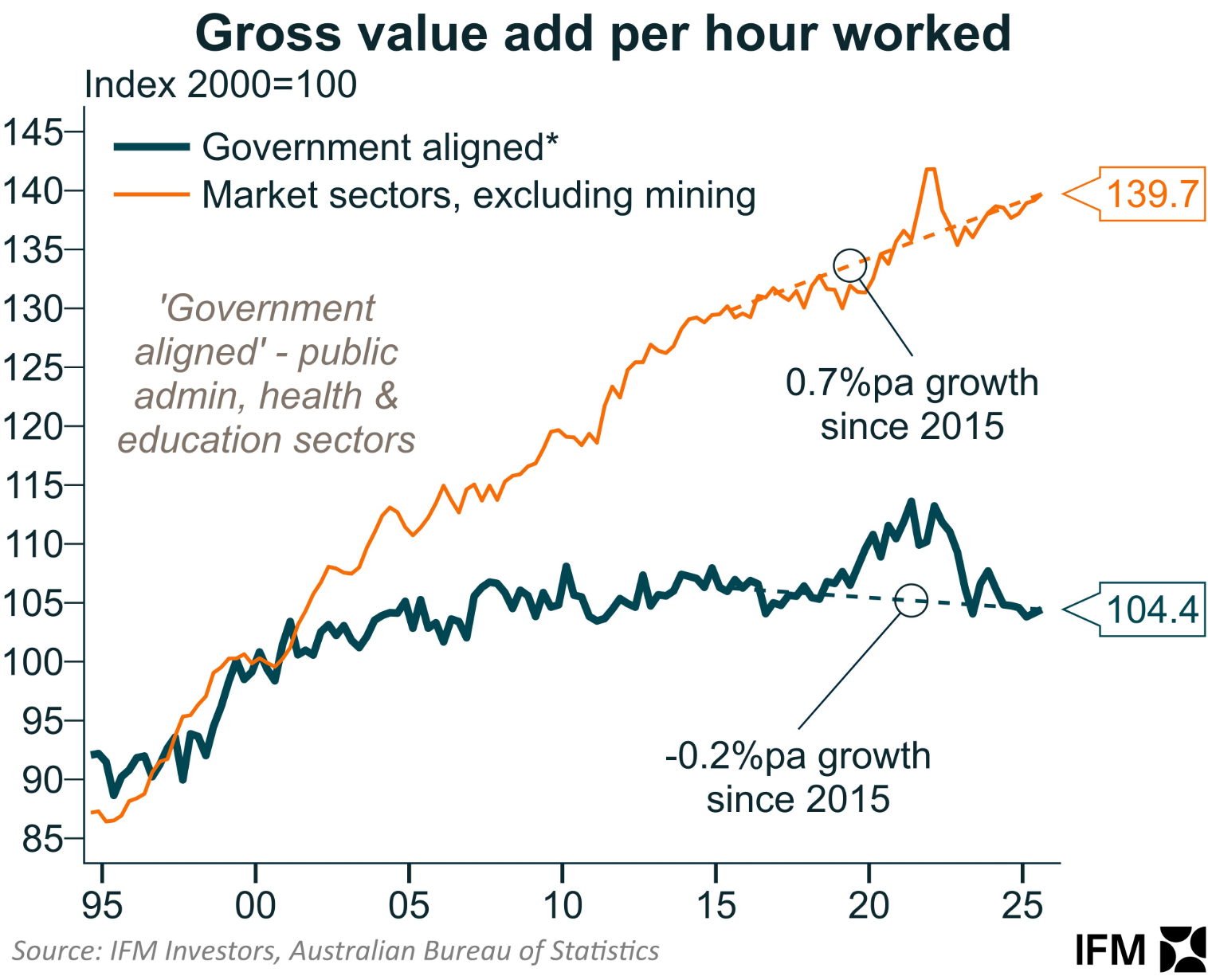
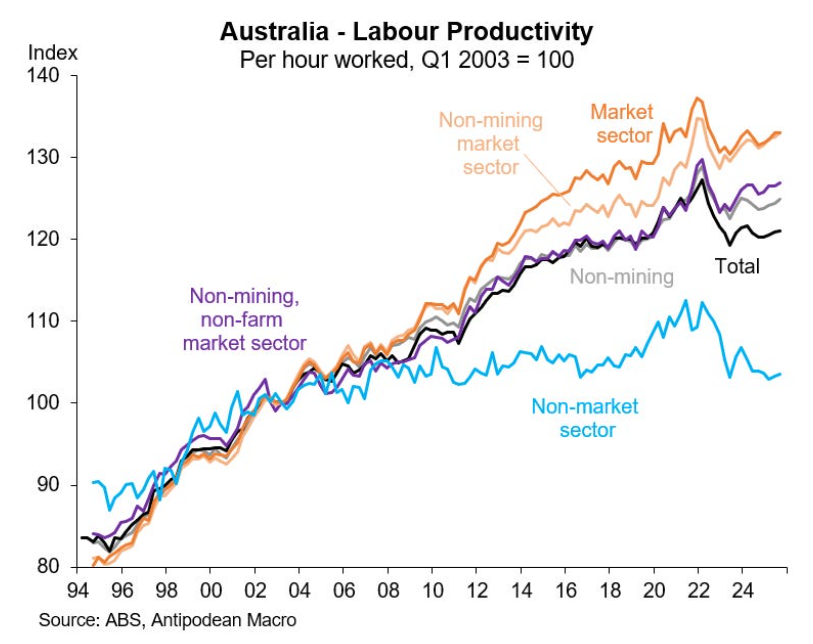
The strong growth in non-market sector jobs is a major reason why Australia’s recent productivity performance has been so poor.
As illustrated below by Alex Joiner, gross value added per hour worked in the non-market sector has fallen by 0.2% annually since 2015, whereas the market sector has experienced positive annual productivity growth of 0.7% annually:
Justin Fabo’s chart below, which plots GDP per hour worked, paints a similar picture, with the non-market sector no more productive today than 20 years ago:
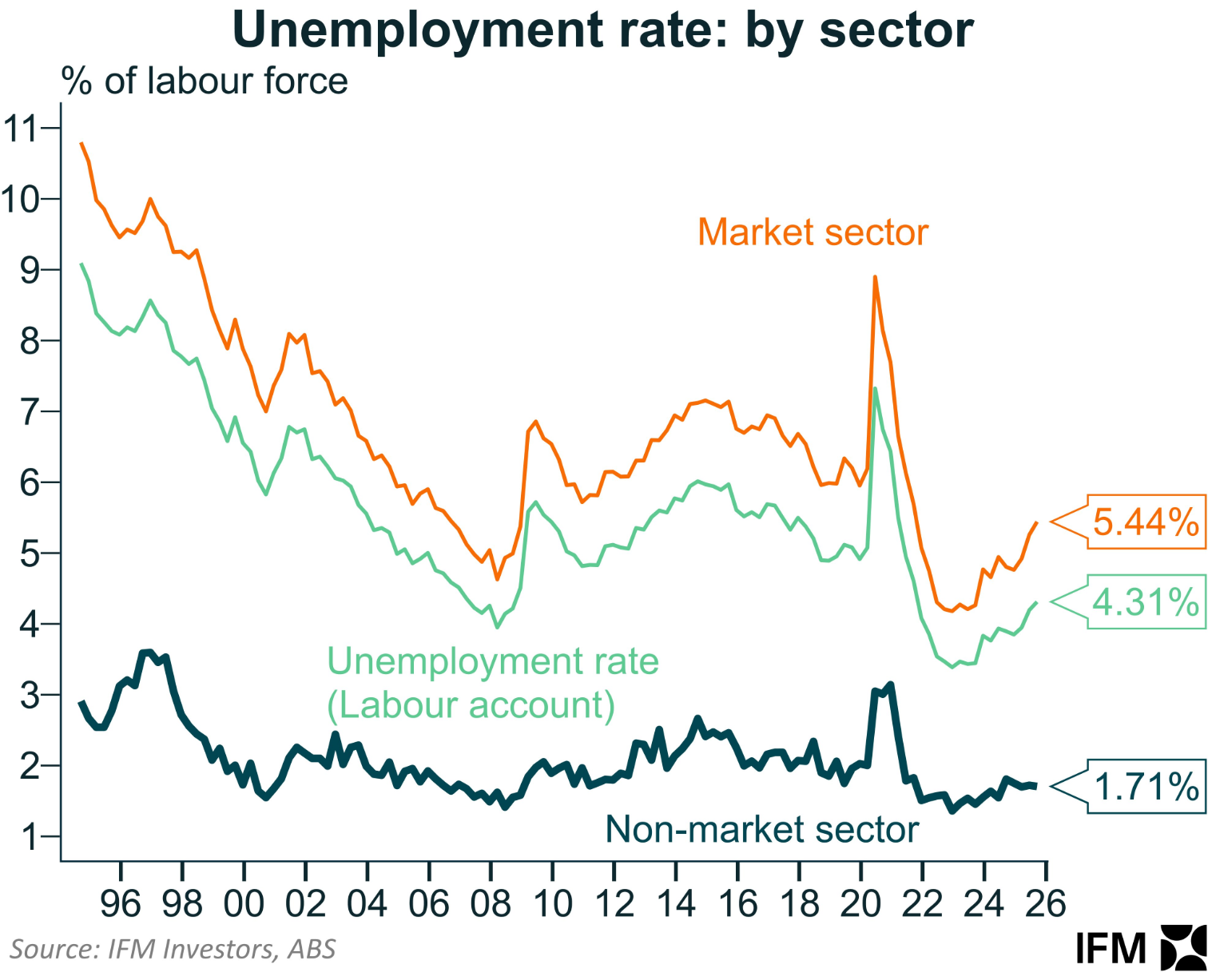
Finally, while Australia’s unemployment rate remains historically low at just 4.3%, this low rate has been artificially delivered by the government-funded boom in non-market sector jobs.
As Alex Joiner shows below, the unemployment rate in the market sector is significantly higher at 5.4%. The market sector has also experienced a sharp increase in unemployment over the past year or so:
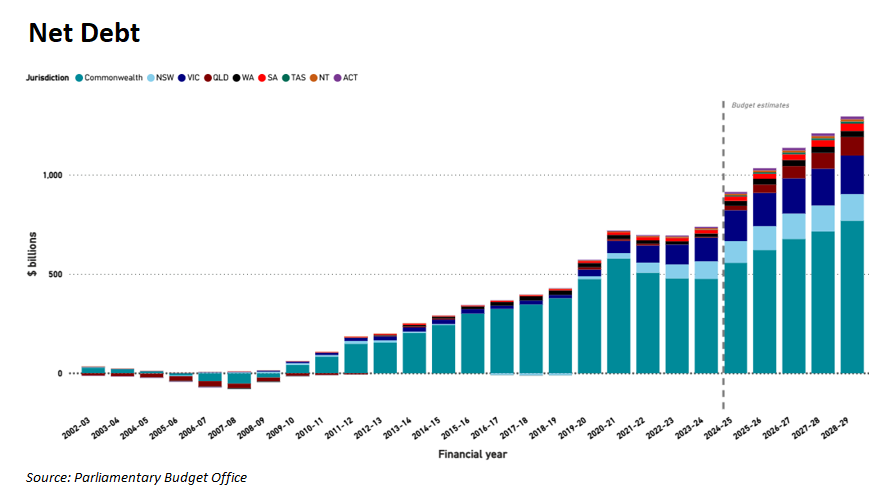
With federal and state governments now trying to rein in spending amid soaring debt, growth in non-market sector jobs will inevitably slow.
And with Australia’s labour force growing by nearly 40,000 per month on the back of historically high immigration, the market sector will need to expand to compensate.
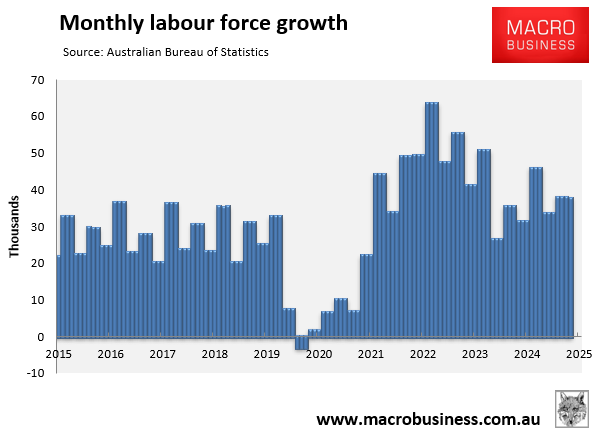
Otherwise, the nation’s unemployment rate will increase significantly.