
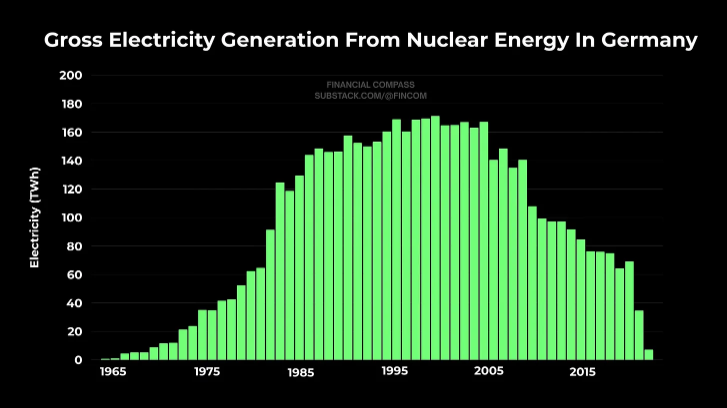
Germany once operated over 22 GW of nuclear capacity, producing around 160 TWh annually at low cost and without emissions.
Following the Fukushima accident in 2011, Berlin accelerated closures, shutting 8 GW immediately and completing the phase-out by 2023.
Source: Financial Compass
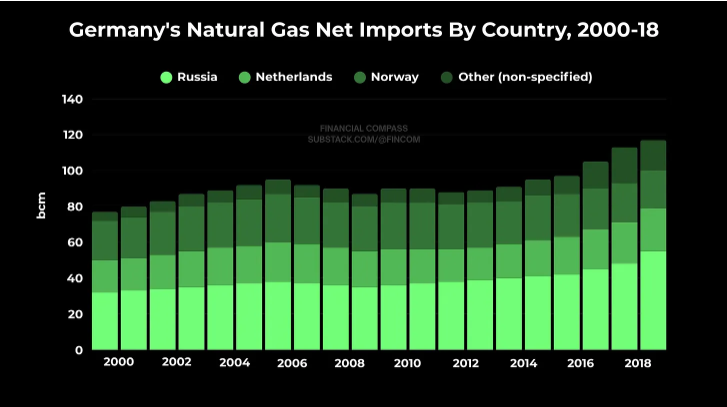
However, renewables could not provide stable baseload power. As a result, the shortfall was filled by natural gas imports, increasingly from Russia.
Source: Financial Compass
By 2018, over half of Germany’s imported gas came from Russia, consolidating risk.
Russia’s invasion of Ukraine exposed Germany’s energy vulnerability.
With nuclear gone, gas scarce, and renewables insufficient, coal—the fuel Germany vowed to eliminate—returned as an emergency measure. Coal plants were revived to keep the grid stable.
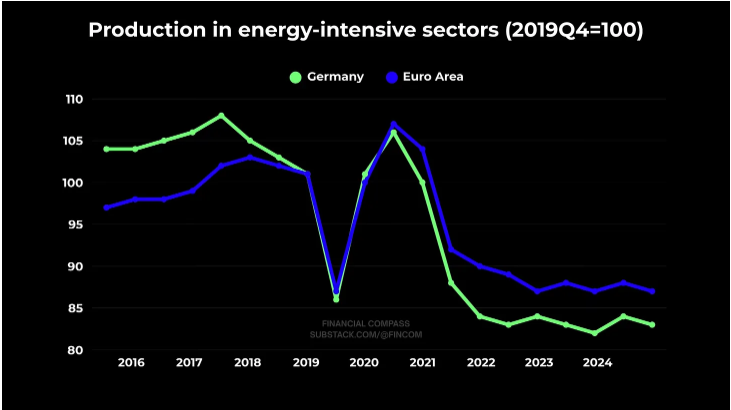
Industrial giants like BASF suffered, cutting operations due to soaring energy costs. Energy-intensive sectors contracted, with investment drifting abroad.
Source: Financial Compass
As explained by Financial Compass:
Germany was hit harder than the rest of Europe. Its energy-intensive industries contracted sharply in 2022, and output has lagged ever since.
Even today, German production sits below the euro-area average, a gap that has not closed. Industrial activity remains subdued, energy-heavy sectors are still cautious, and investment continues to drift abroad…
Some analyses suggest that if Germany had kept its nuclear fleet running from 2002 to 2022, it could have cut its carbon emissions by roughly 70% and avoided hundreds of billions of euros in energy-transition costs.
Nuclear power offered Germany exactly the kind of steady, clean support that could have carried the country through the hardest year of its energy crisis…
Germany shut down its final nuclear power plant on April 15th, 2023. The images of protestors celebrating the end of their 50-year war on nuclear energy were met with anger and disgust by pro-nuclear activists online.
Protesters’ celebration of a move that so clearly undermines Germany’s ambitions for clean energy and energy security is difficult to comprehend.
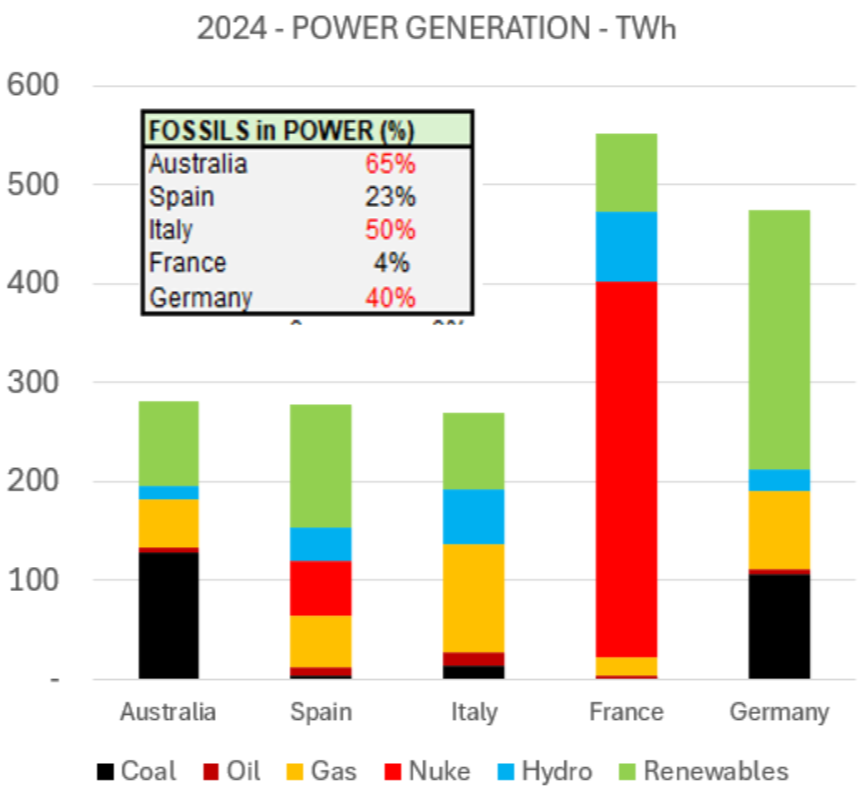
Shutting Germany’s nuclear facilities has caused it to be far more dependent on fossil fuels than its nuclear neighbour France, while driving up energy costs.
Germany emits 440 grams of carbon dioxide per kilowatt hour it generates, versus just 30–40 grams in nuclear-heavy France.
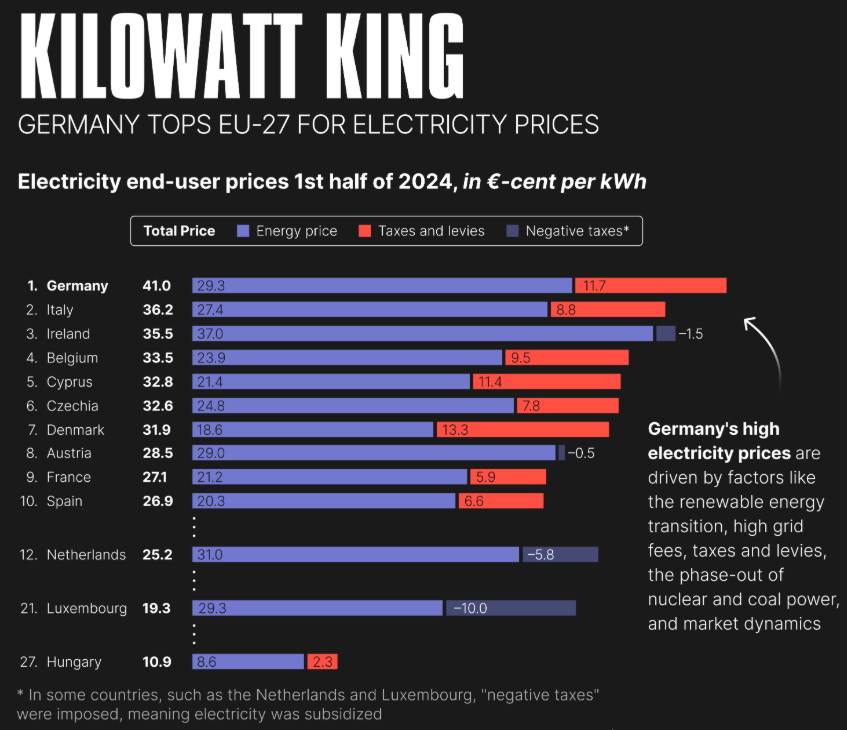
Germany now has the highest electricity prices in Europe, alongside the fifth most expensive electricity prices in the world:
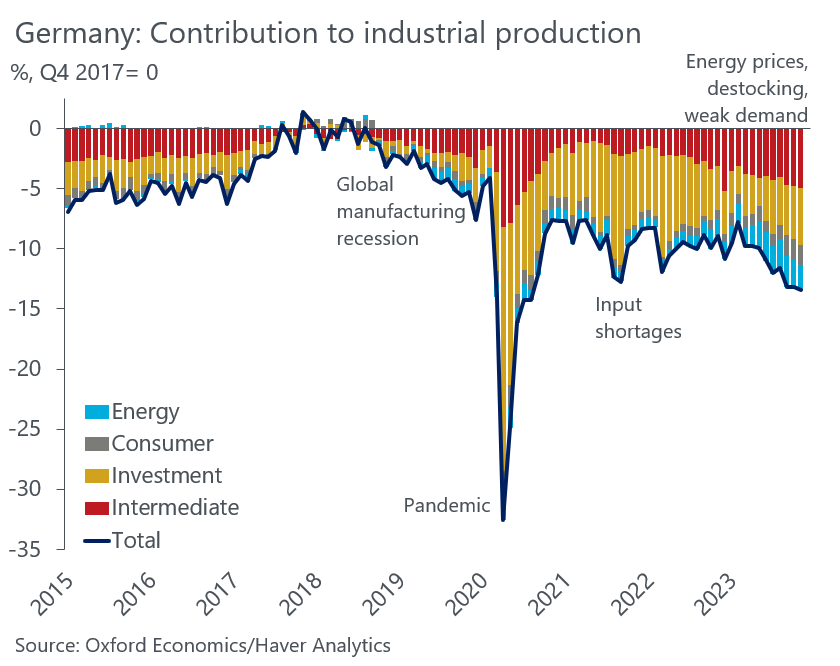
The impact on German industry has been destructive, with industrial production shrinking at an alarming rate:
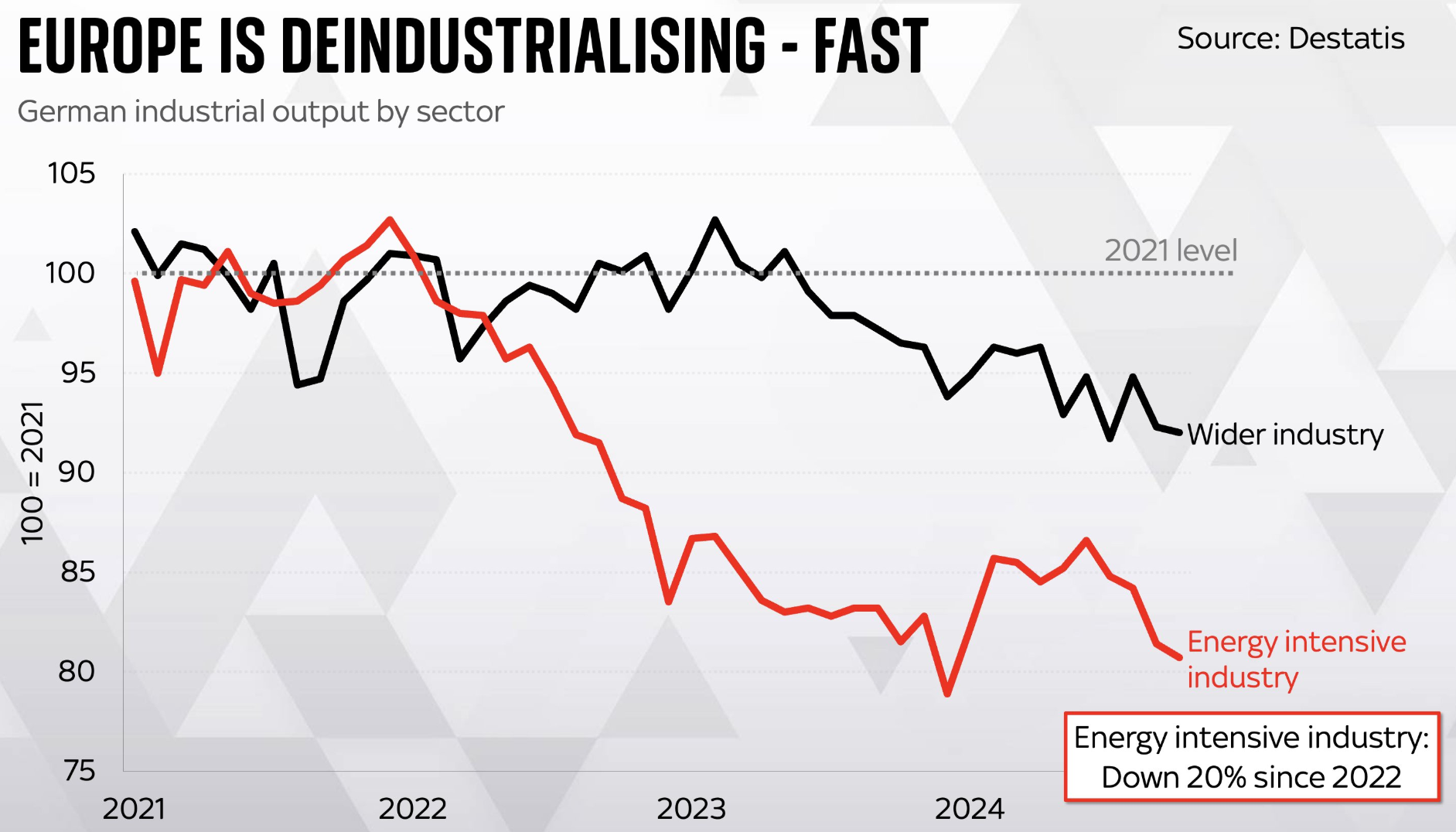
As expected, the deindustrialisation of Germany has been concentrated in energy-intensive industry, which has shrunk 20% since 2022:
No other major developed nation has mishandled energy policy as badly as Germany. However, the United Kingdom and Australia are striving to surpass Germany in this regard.
