
Australian taxpayers buried under government debt
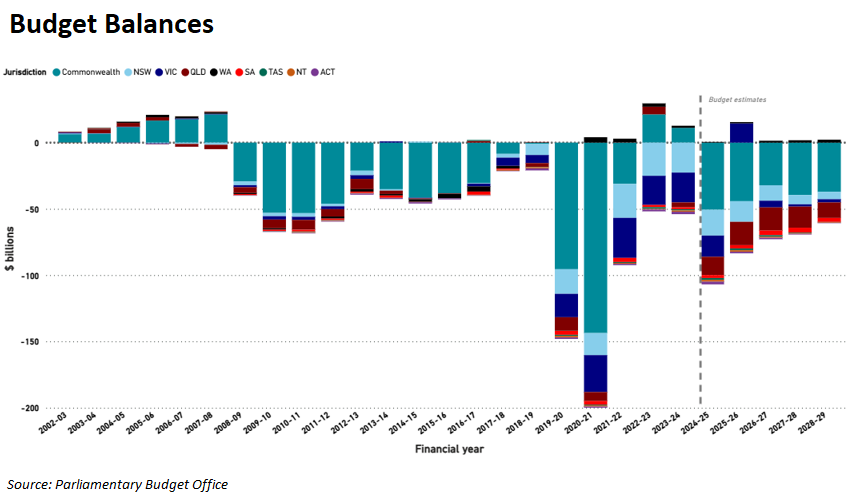
The Parliamentary Budget Office’s (PBO) 2025–26 National Fiscal Outlook shows that Australia’s combined national fiscal position has worsened compared to 2024, with deficits persisting across most jurisdictions, rising debt levels, and limited fiscal space for new spending. The report consolidates Commonwealth, state, and territory budgets to provide a whole-of-nation view of fiscal sustainability.
The aggregated fiscal outlook across all levels of government has deteriorated since the last edition in October 2024. This reflects weaker budget aggregates in most jurisdictions.
Both the Commonwealth and several states are projected to remain in deficit through 2025–26, driven by slower revenue growth and higher expenditure commitments.
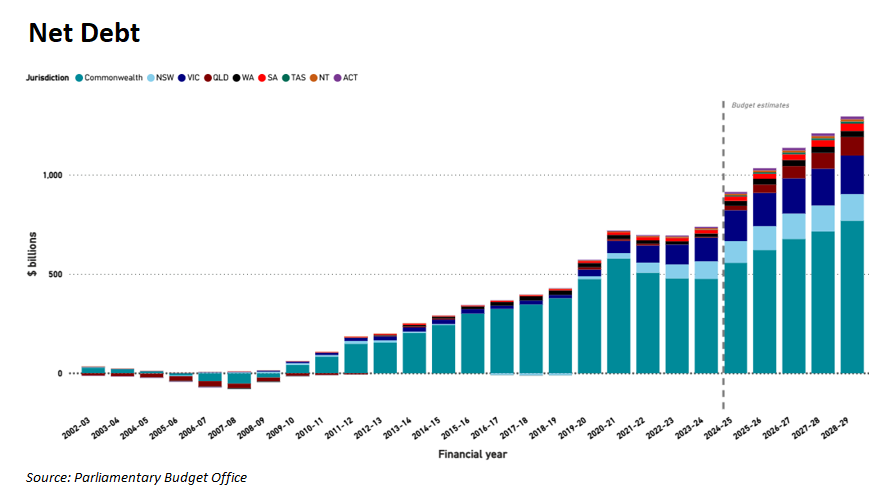
Public debt is expected to rise further, with net debt ratios increasing across jurisdictions. This raises concerns about long-term fiscal sustainability.
The drivers of the deterioration include:
- Slower-than-expected economic growth impacting revenue.
- Higher spending on health, education, and disaster recovery.
- Ongoing cost-of-living relief measures and infrastructure commitments.
The jurisdictional breakdown is summarised below:
- Commonwealth Government: Facing weaker revenue growth and persistent deficits, with debt projected to climb.
- States & Territories: Most show worsening fiscal positions, though the degree varies. Some resource-rich states are better placed due to stronger royalties, while others face sharper deterioration.
- National Aggregates: When combined, the overall fiscal outlook points to reduced resilience and limited capacity to absorb future shocks.
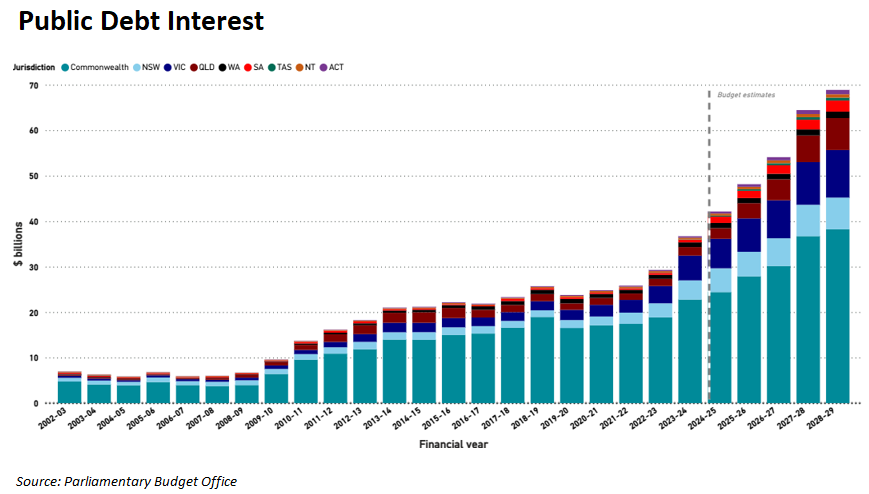
The PBO found taxpayers would pay $48.1 billion in interest payments on state and federal debt this year, equivalent to about $1700 per person, which will only grow from here:
The deteriorating debt situation explains why the federal and state governments are now seeking to cut costs, which has implications for non-market sector jobs and growth.
