Former senior immigration department bureaucrat Abul Rizvi loves to play the racism/xenophobia card against anybody arguing for lower, sustainable levels of immigration (for example, see here, here, here, and here).
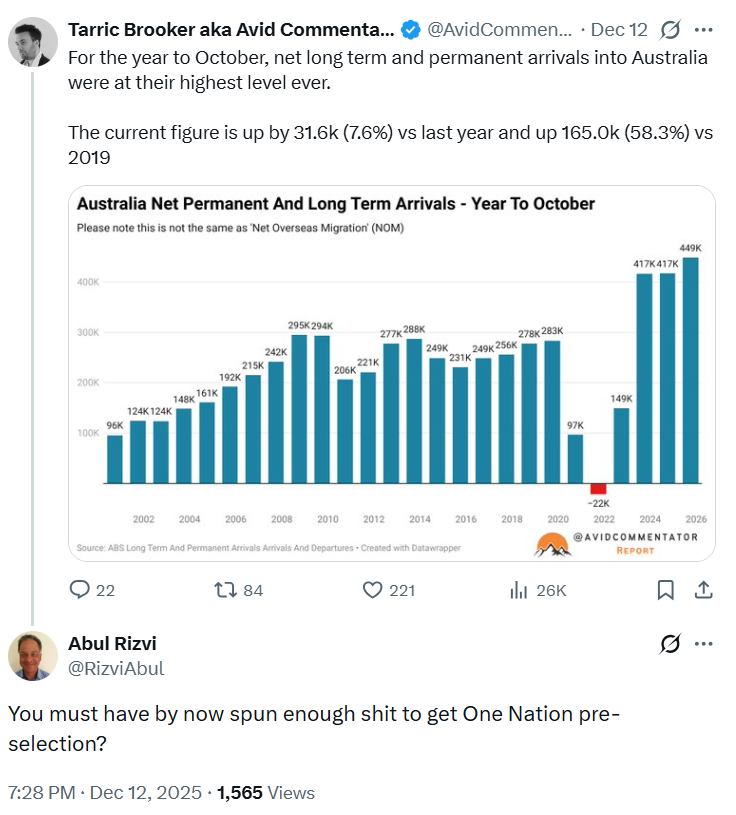
On Friday, Tarric Brooker posted the following factual chart on Twitter (X), stating that net permanent & long-term (NPLT) arrivals hit a record high in October, to which Rizvi responded, “You must have by now spun enough shit to get One Nation pre-selection?”:
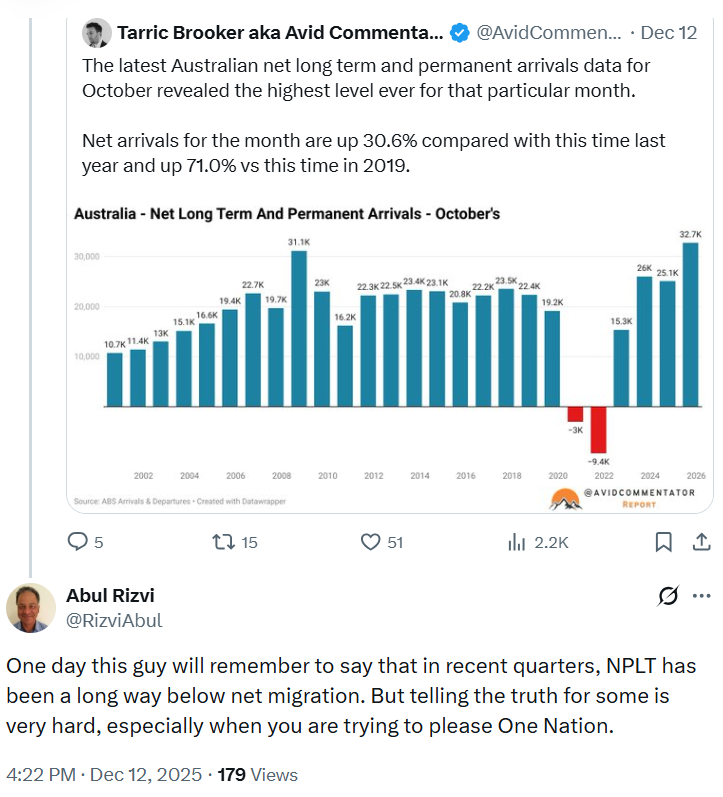
Rizvi used a similar line of attack on Brooker’s follow-up tweet, which factually stated that NPLT arrivals in October were the highest for that particular month on record:
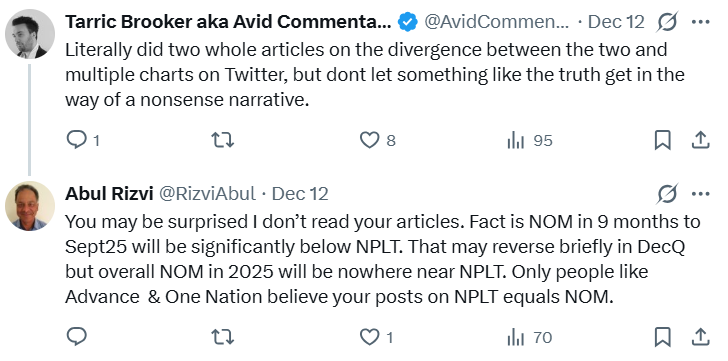
When challenged directly by Brooker, Rizvi resorted to the strawman argument that NPLT arrivals don’t equal NOM, which Brooker has literally never claimed:
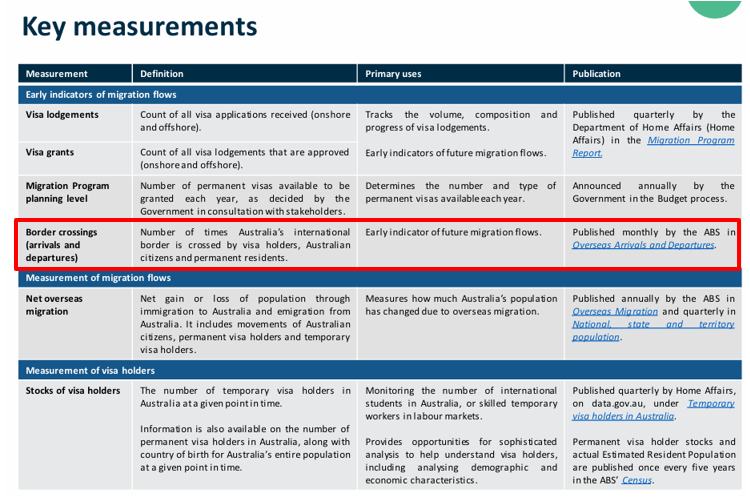
Like me, Brooker has only ever used NPLT arrivals as a leading directional indicator, which is precisely how the Centre for Population says it should be used in its official handbook, Fundamentals of migration in Australia: Migration concepts and measurements:
But don’t let this inconvenient truth knock you off your high horse, Abul.
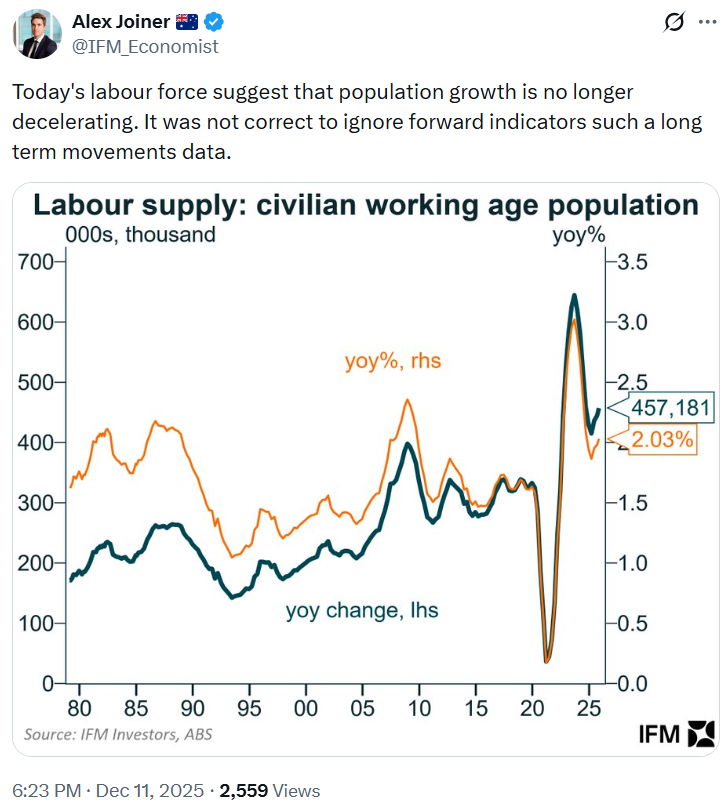
The other recent population data from the ABS also suggests that NOM has increased.
This includes the working-age population series published in the monthly labour force survey:
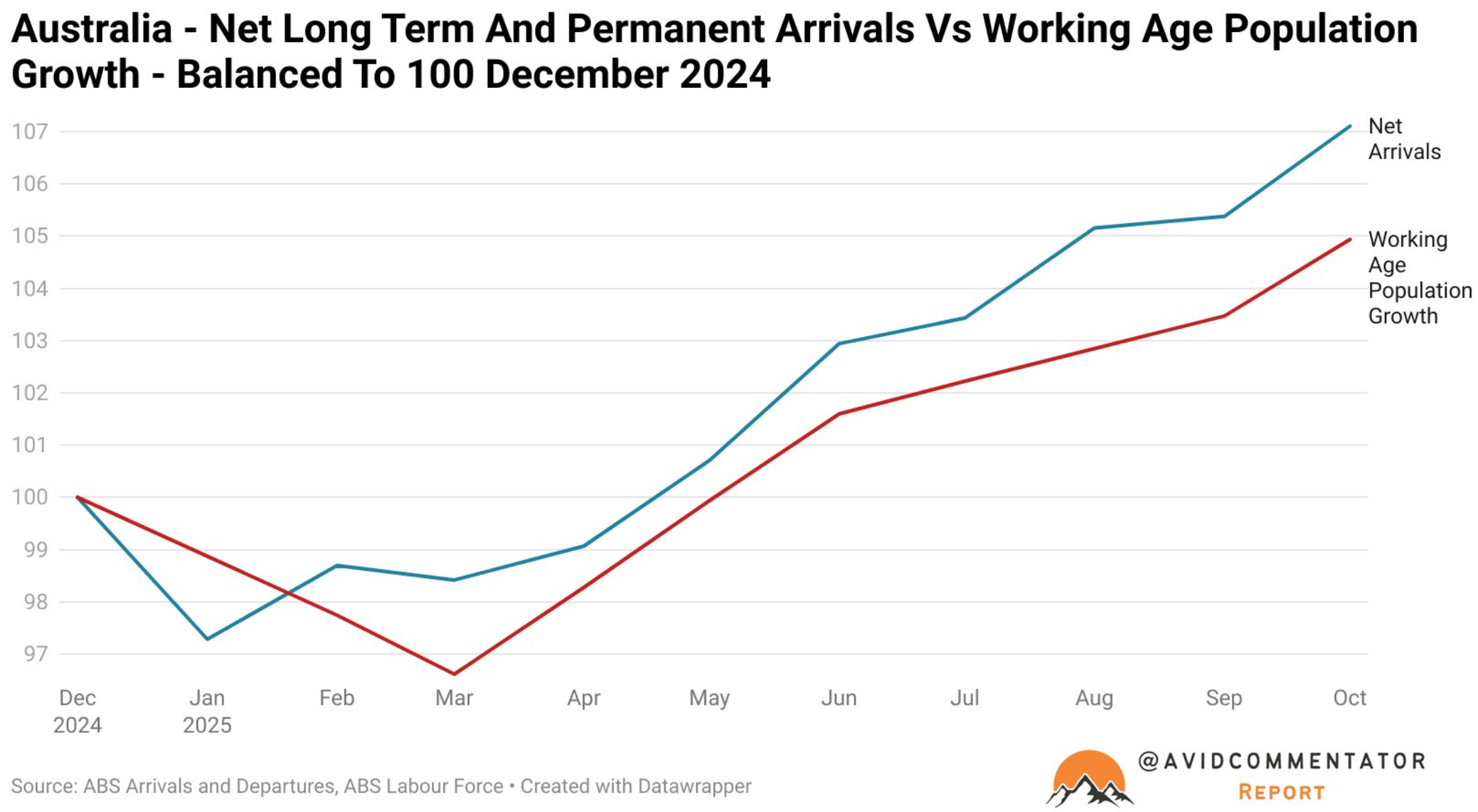
The ABS also seems to think that the rise in NPLT arrivals has driven up the working-age population:
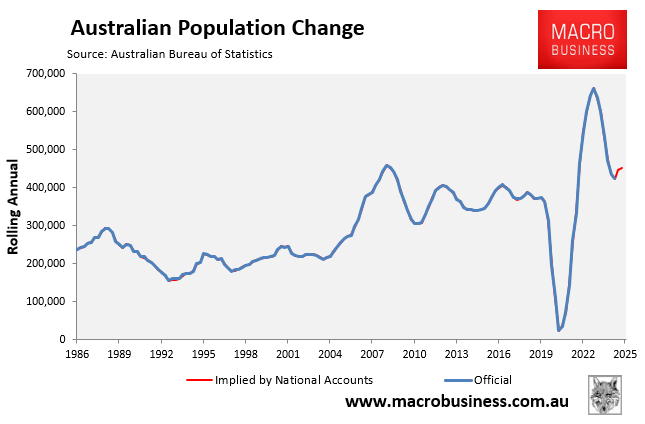
The ABS likewise reported a rebound in population growth in the Q3 national accounts, released this month:
Finally, annual advertised rental growth accelerated to 5.0% in November, according to Cotality, commensurate with the rebound in NPLT arrivals and population growth:
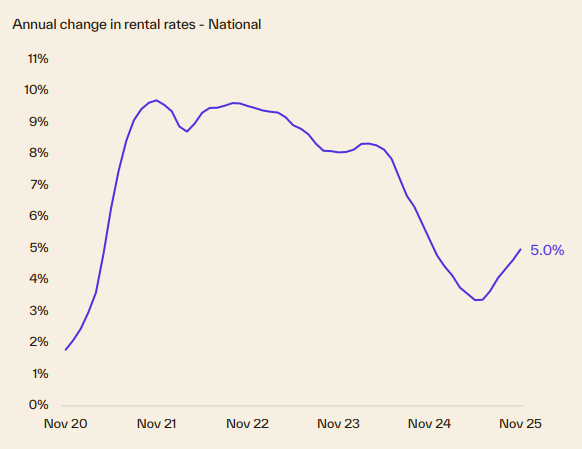
Source: Cotality
Therefore, all recent indicators are pointing to rising NOM.
Curiously, Rizvi’s latest outburst at Brooker follows his recent admissions that Australia’s immigration is too high and poorly planned.
Earlier this month, Rizvi argued that Australia’s visa system was “unable to cope with the volume”:
“Just about everything is up — there’s nothing that’s fallen over the last decade,” said Dr Abul Rizvi, former deputy secretary of the Immigration Department. “The only one that hasn’t really gone up is visitors. We’re not getting the tourism numbers we did pre-Covid”.
Dr Rizvi, who served at the Immigration Department from 1991 to 2007, said Australia’s visa system was more overloaded than ever and “unable to cope with the volume”, particularly of bridging visas…
Rizvi said the government must urgently “slow the rate at which temporary visa holders in Australia are growing”…
Rizvi attacked the Albanese government for walking back on its commitment to cut temporary visa numbers:
Dr Rizvi said Labor appeared to have walked away from its promise rein in the flood of temporary visas.
“The Labor government promised prior to the 2019 election that it would significantly reduce reliance on temporary entry visas,” he said.
“The Migration Strategy it issued in 2023 said it would reduce reliance on temporary entry visas. I think it’s a reasonable question to ask, what happened to the promise?”
Rizvi has also praised Canada’s sharp immigration cuts while hypocritically attacking those calling for immigration cuts in Australia.
Rizvi also forecast that net overseas migration would average an insane 300,000 going forward under current migration settings—a level that was only ever reached once in Australia’s history (i.e., 2008-29) before the pandemic.
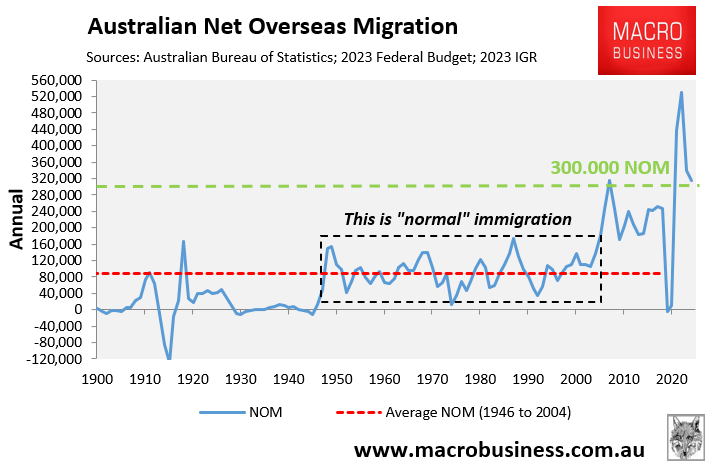
As reported in The AFR on 17 October:
Rizvi expects that net migration will be 15% higher than Treasury’s forecast, equivalent to an additional 40,000 migrants.
“Going forward, net overseas migration will be probably around 300,000 under current policy settings. The government’s processing of student visas is set to ramp up again, and the huge backlog in permanent visa applications will have to be accommodated eventually,” he said…
The government quietly sped up the processing of international student visas by lowering the risk ratings of 13 universities…
Rizvi said lower risk ratings drive higher approval rates, and higher approval rates drive higher application rates.
The government has also increased the number of international students given “priority” visa processing status…
Thus, it appears that Rizvi also believes that Australia’s immigration program is excessive and poorly targeted. So, why does he continually hurl insults at others making similar claims?
Why does Rizvi believe that he is the only one allowed to comment on Australia’s dysfunctional immigration system?
Virtually every opinion poll in the past decade has indicated that Australians want lower immigration. It is time that our policymakers reflected their wishes, as Canada’s have done.
Otherwise, they risk creating a Trumpian-style backlash.