It appears that the average Australian knows more about housing affordability than YIMBY lobbyists, such as the Grattan Institute and the Centre for Independent Studies (CIS).
The Report from the 2025 Australian Cooperative Election Survey by Macquarie University, based on the views of 4,012 survey participants, showed that immigration/population growth was considered the leading contributor to Australia’s housing crisis, with 39% of respondents placing it in their top three causes:
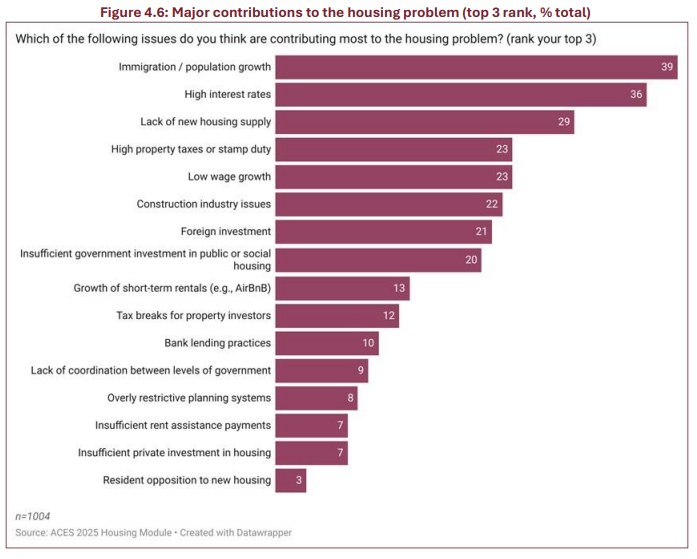
In contrast, despite the howls from YIMBY lobbyists, “overly restrictive planning” barely registered as a cause of the housing crisis, with only 8% of survey respondents ranking it in the top three causes.
Voters also ranked reducing immigration as the leading solution to reducing housing costs, with 44% ranking it as one of their top three solutions:
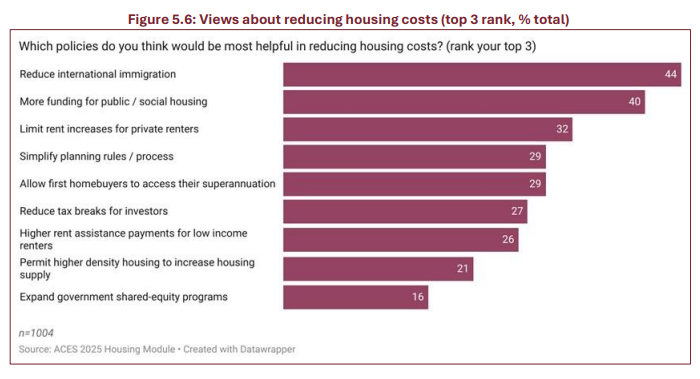
In contrast, “simplifying planning processes” ranked fourth, with 29% listing it as one of their top three solutions to reducing housing costs.
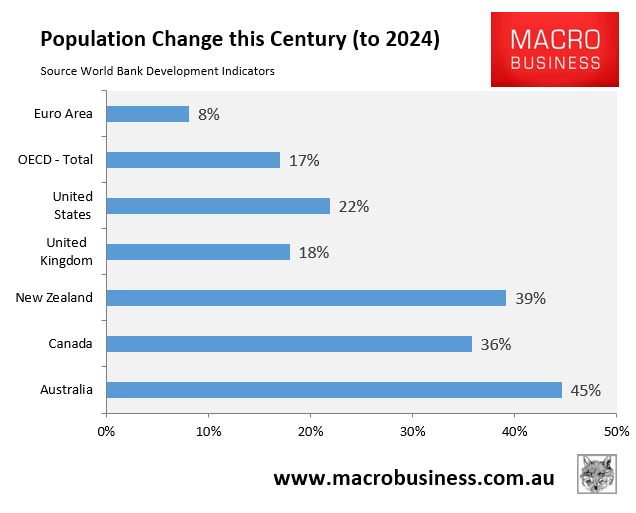
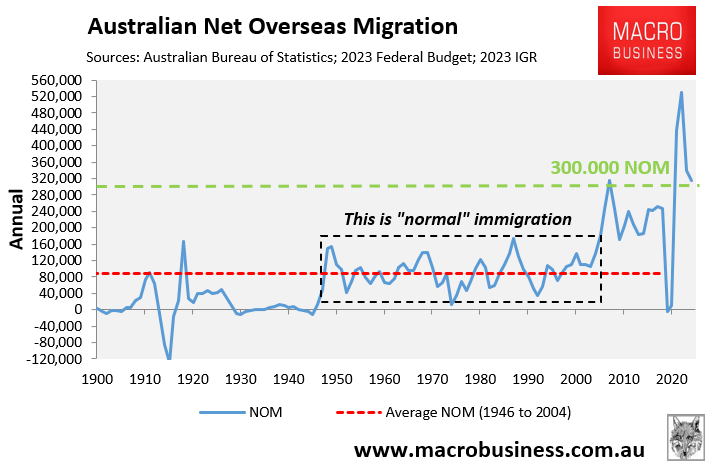
The reality is that Australia has a housing shortage because it has grown its population hyper aggressively via immigration:
Australia’s rapid population growth has overwhelmed the supply-side, resulting in a cumulative shortage of at least 200,000 homes, according to AMP chief economist Shane Oliver:
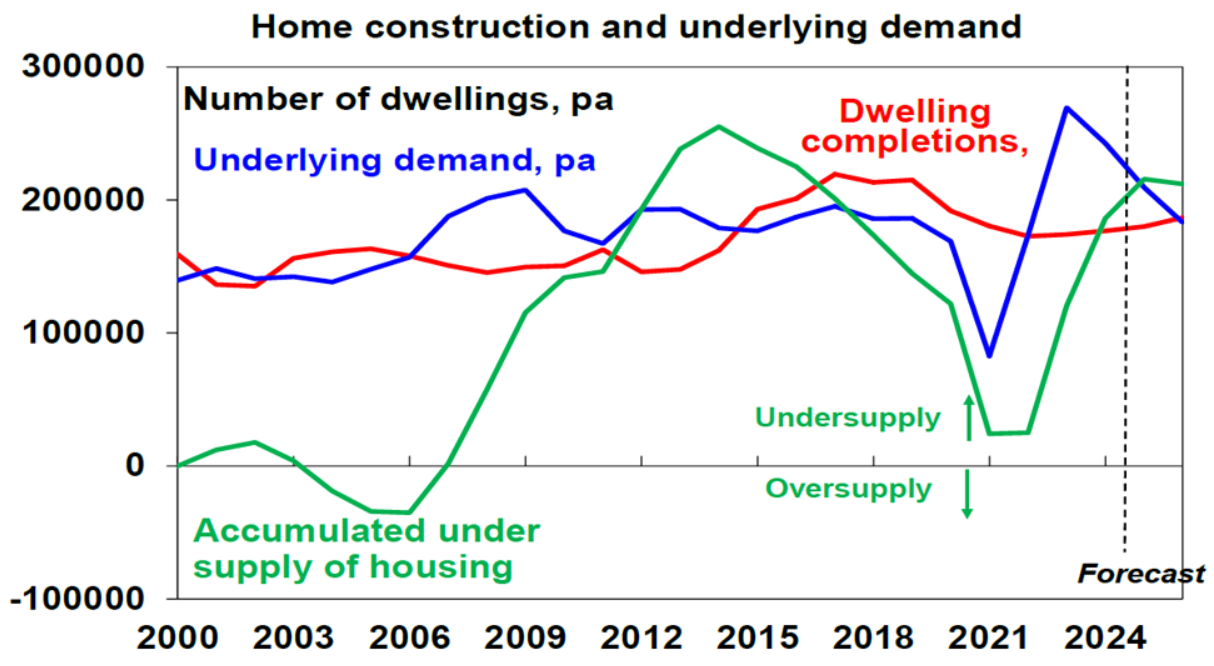
Source: Shane Oliver (AMP)
Former immigration department deputy secretary Abul Rizvi forecasts that Australia’s net overseas migration will average 300,000 under existing policy settings, which is 15% higher than the Australian Treasury’s forecasts:
However, the National Housing Supply and Affordability Council (NHSAC) warned that if population growth is 15% faster than expected, then Australia’s housing shortage will grow by around 200,000 over the five years to 2028-29:
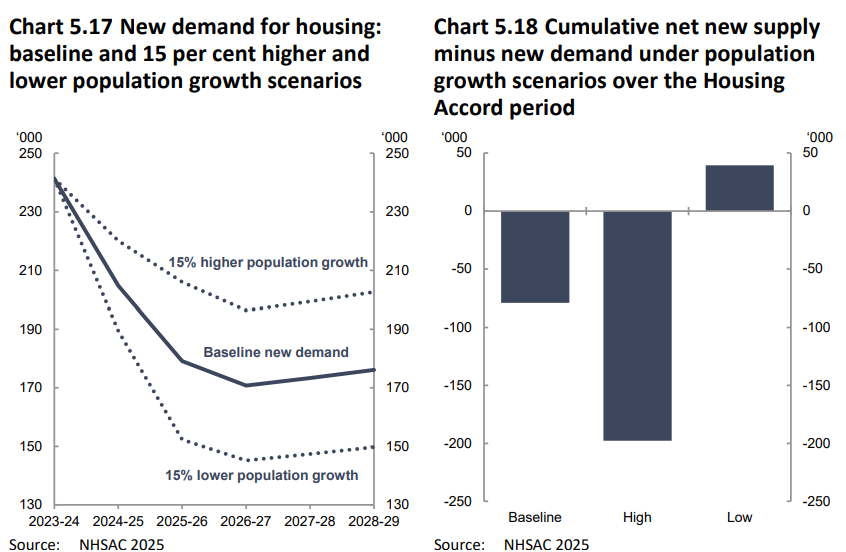
As a result, Australia’s cumulative housing shortage would grow to around 400,000 by 2028-29.
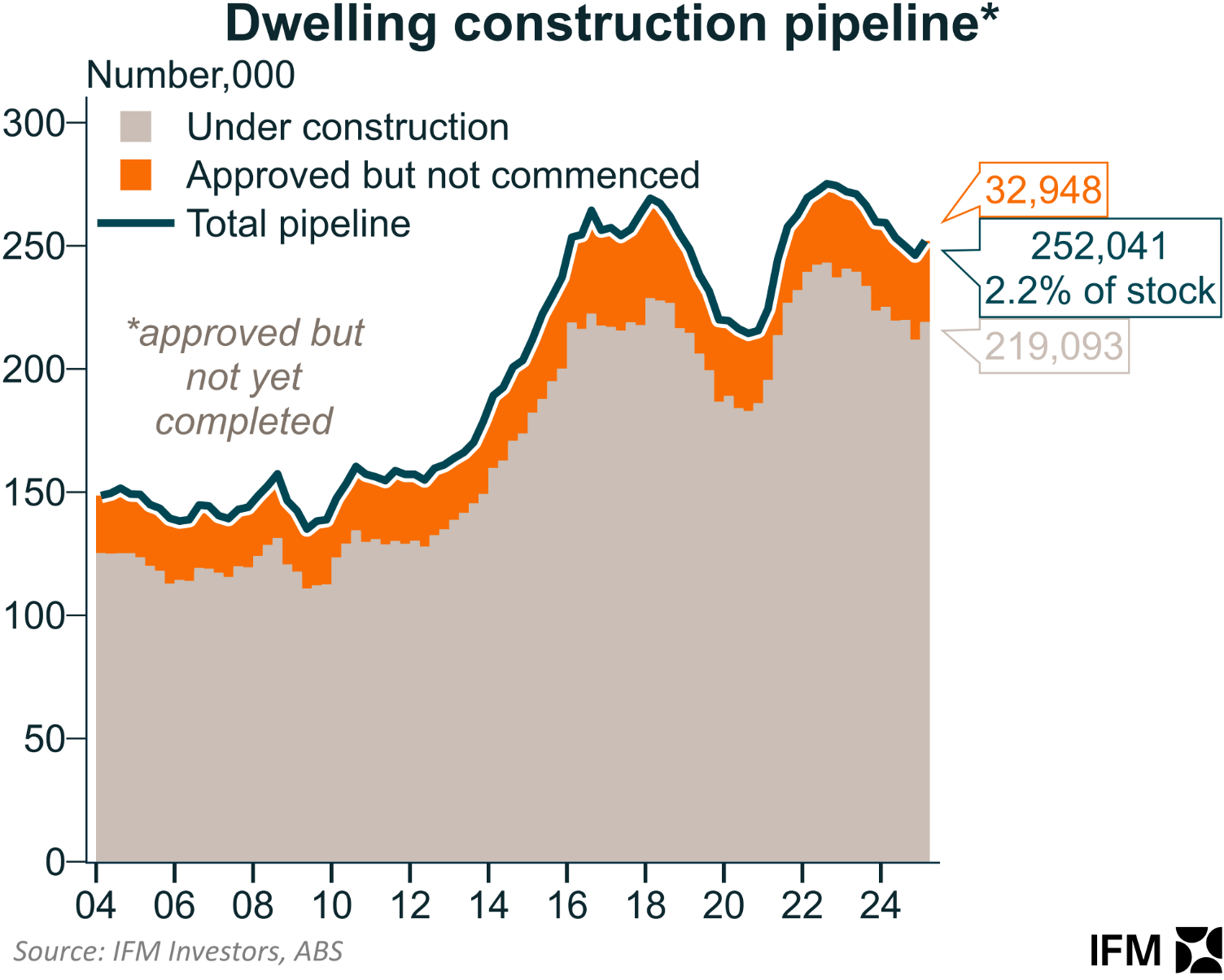
Relaxing planning won’t make much difference to supply since there is already a massive backlog of homes approved for construction but not yet built, suggesting that the construction sector is operating at capacity:
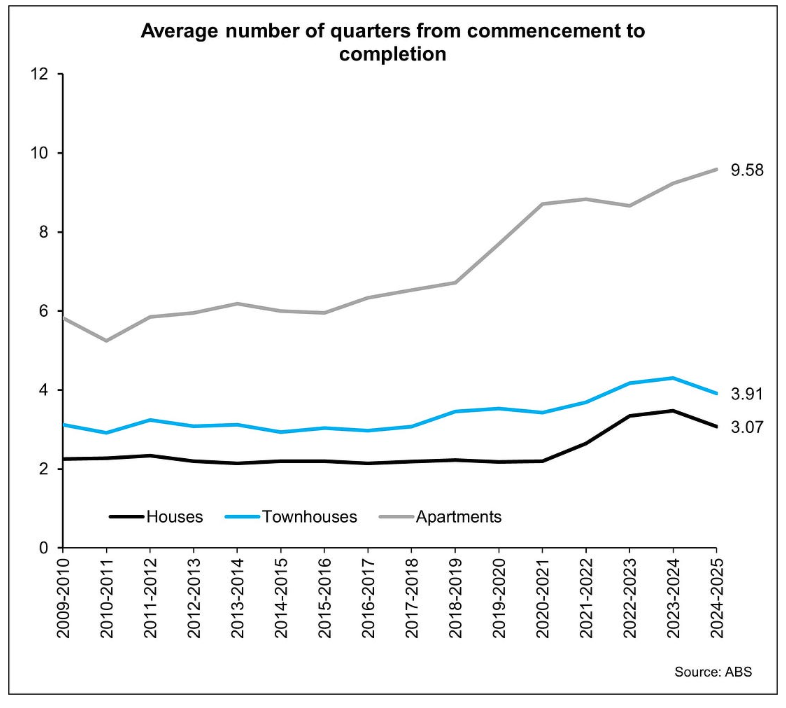
The time taken to build homes has also blown out, also suggesting that construction capacity is stretched:
Therefore, even if more homes were approved by relaxing planning, it would be akin to filling a bathtub that is already full.
In reality, the only way to ‘solve’ the housing shortage is to dramatically slow population demand by cutting immigration, as well as tilting the migration system towards tradies over Uber drivers.