
As housing prices continue to fall at the fastest rate in at least half a century across the nation, Australia recently recorded the largest price falls since at least 1980 at a five-capital-city aggregate.
According to an analysis from Coolabah Capital Portfolio Manager and AFR Columnist Christopher Joye, the largest price fall at a five-capital level since 1980 prior to the current cycle was 8.6% between 2017 and 2019.
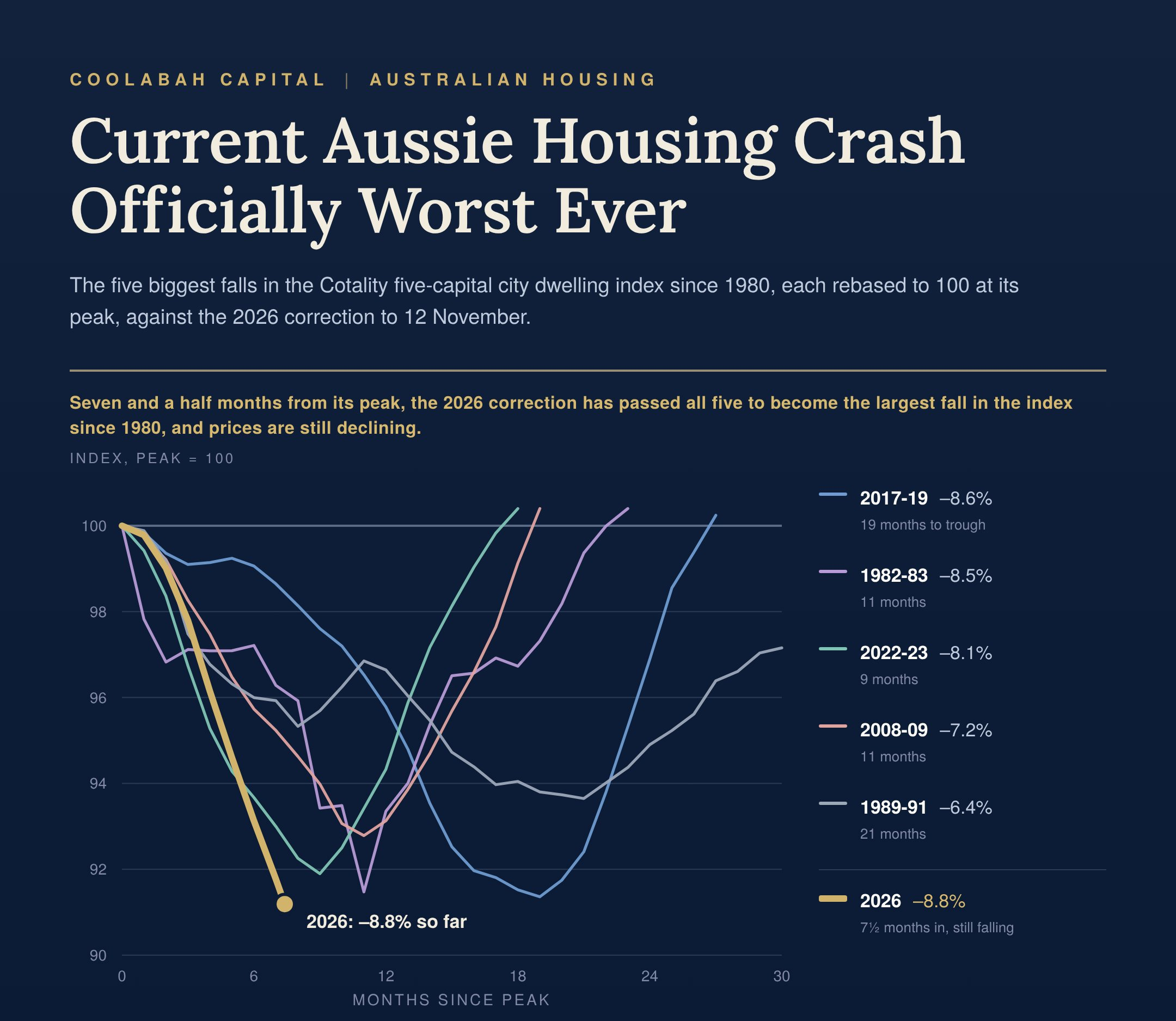
Source: Christopher Joye
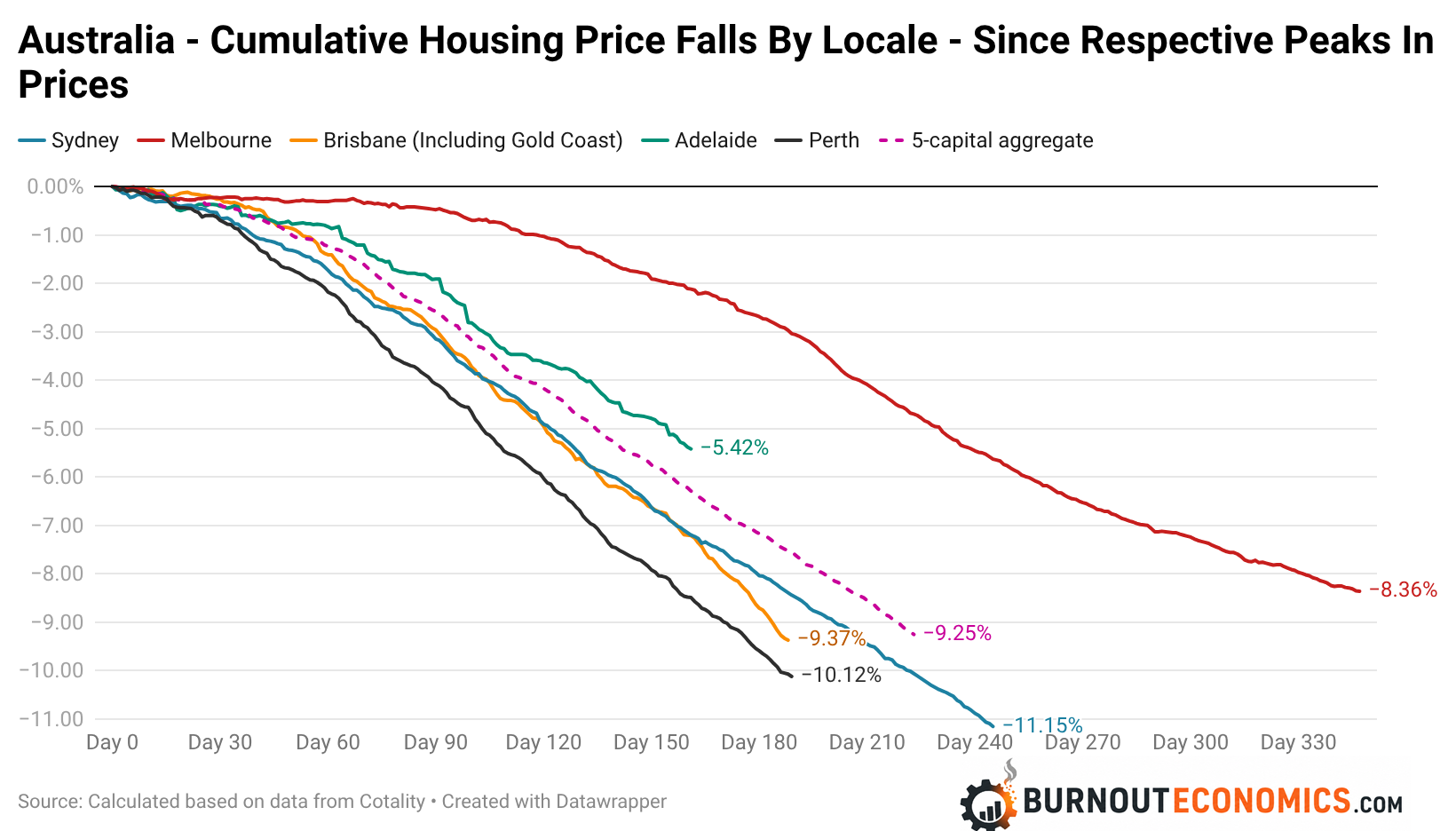
As of the latest data, prices at a five capital city level are now down by 9.2%.
The worst performers are Sydney, down 11.2%; Perth, down 10.1%; and Brisbane, down 9.4%.
Which got me thinking: how does the performance of the market compare to historic price falls?
The biggest price falls ever seen in a major capital since Australia became an independent nation at federation in 1901 occurred in Sydney between 1929 and 1933, as the fortunes of the harbour-side city’s property market were impacted by the Great Depression, with prices dropping by 36.7%.
The largest year-on-year price fall recorded in Sydney during this time was 17.5% in 1930, at the height of the Depression.
If we chart the current price falls in Sydney over the same period of the year as 1930, we see a 11.2% fall in 2026, compared to 11.7% during the worst annual falls of the Depression.
Please note this assumes that the price fall in 1930 occurred linearly across the entire year.
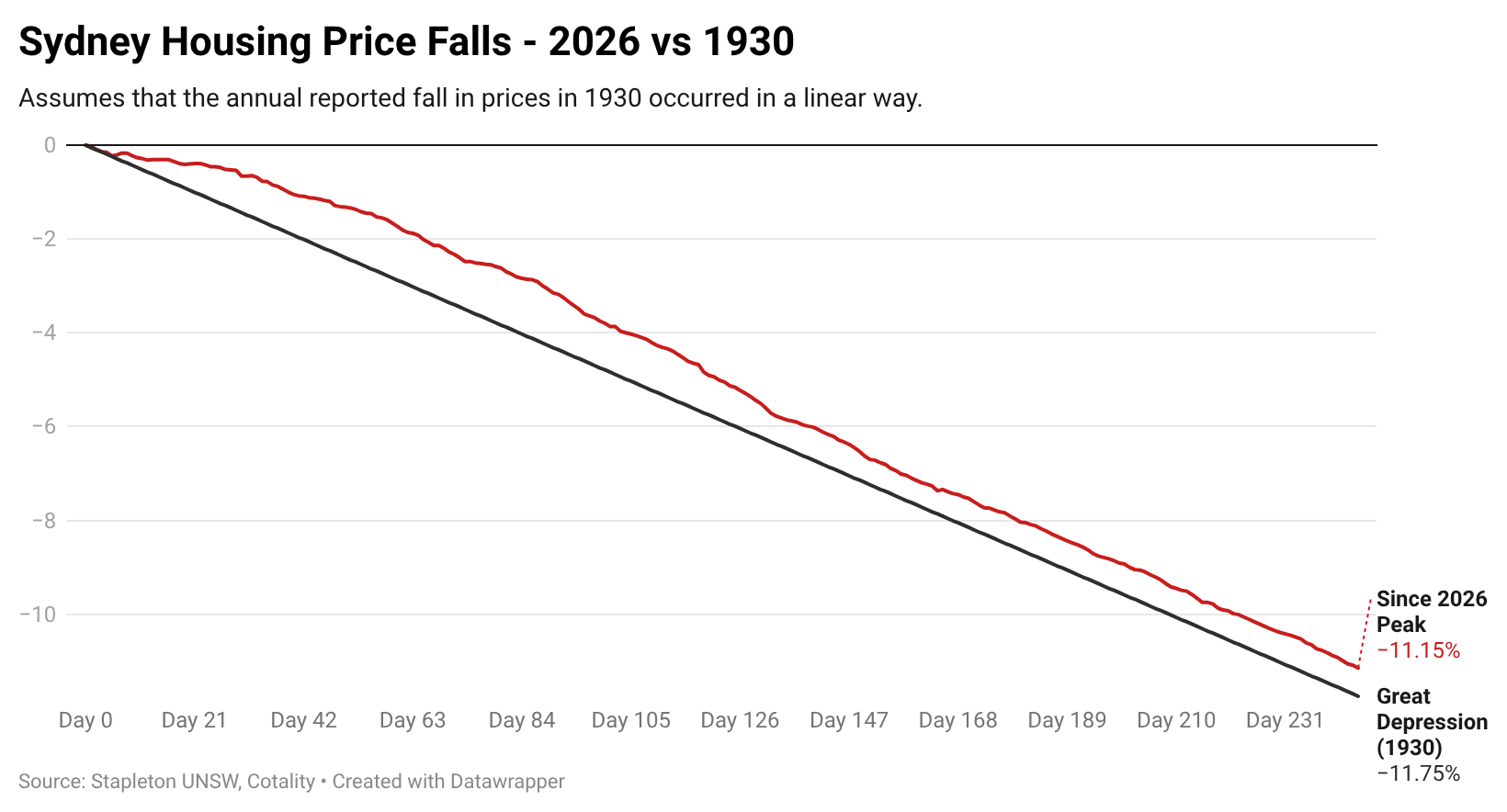
While being within 1 percentage point of the Great Depression’s falls is something of an achievement in and of itself, the pathway for the Sydney housing market may still worsen somewhat.
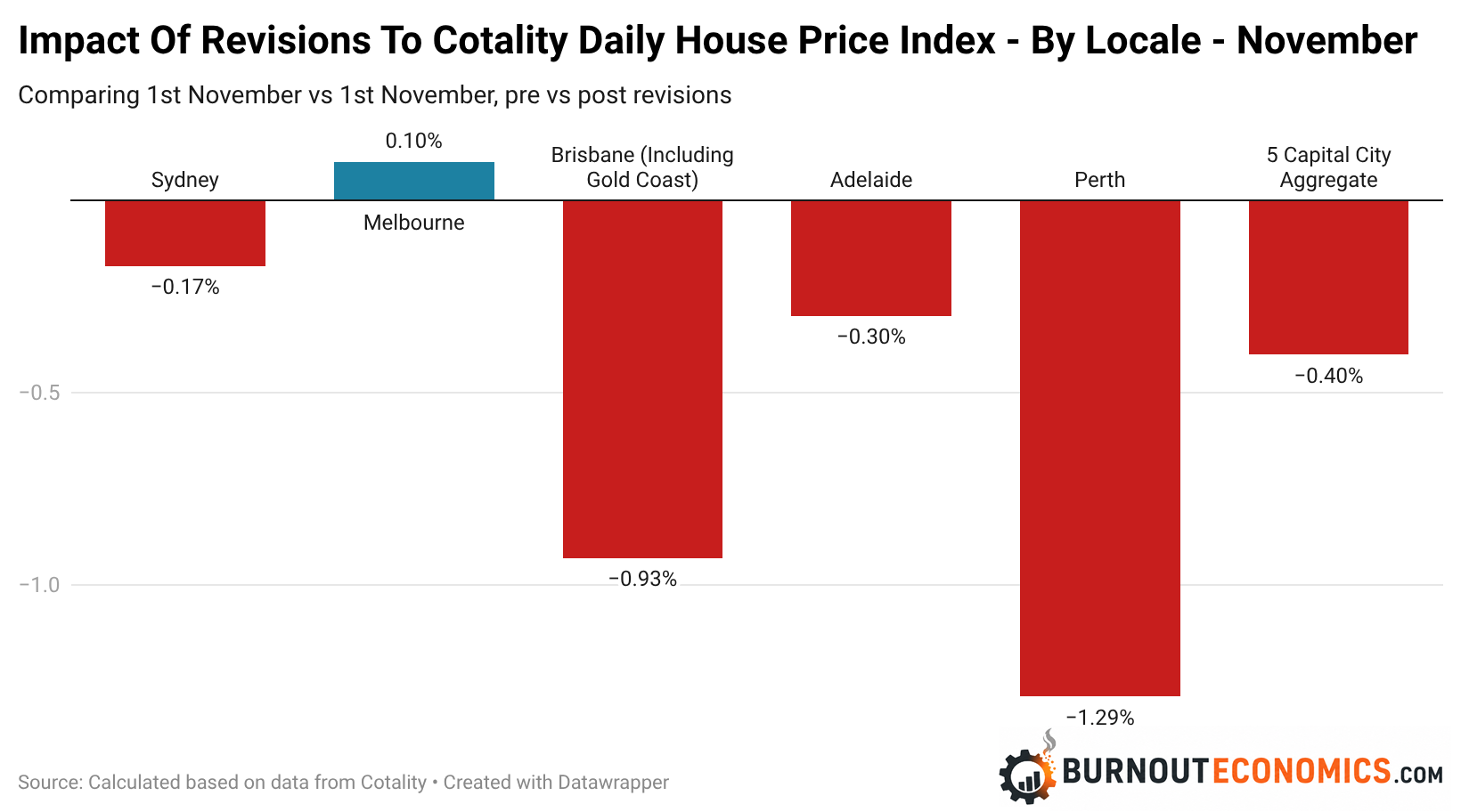
The revisions for Sydney’s peak-to-trough falls were revised 0.17% larger at the latest round of revisions to the Cotality daily index earlier this month.
The Takeaway
In Australia’s history, sustained housing price falls have generally been relatively few and far between, with only a handful of exceptions.
As housing prices continue to fall across the nation, we may be seeing the start of one of these instances, as potential headwinds loom on the horizon, such as a dramatic slowing in the domestic economy and further inflationary pressures stemming from geopolitical events.
If that is the case, we are nowhere near the end, and we may only be approaching the end of the beginning, to borrow a phrase from former British Prime Minister Winston Churchill.
