
That the energy transition is behind is old news. Now we are getting reports of what it might mean.
Australian power prices are projected to nearly double by 2029 as delays in building giant wind farms and the closure of coal plants throttle the nation’s energy transition, hiking pressure on Climate Change Minister Chris Bowen who has conceded Labor has “more work to do” to deliver household bill relief.
Wholesale electricity prices will surge up to $110 per megawatt hour from the current $60MWh, with the government’s Capacity Investment Scheme failing to deliver enough new renewable capacity before the country’s biggest coal stations exit the power grid, modelling by consultancy Rystad Energy shows.
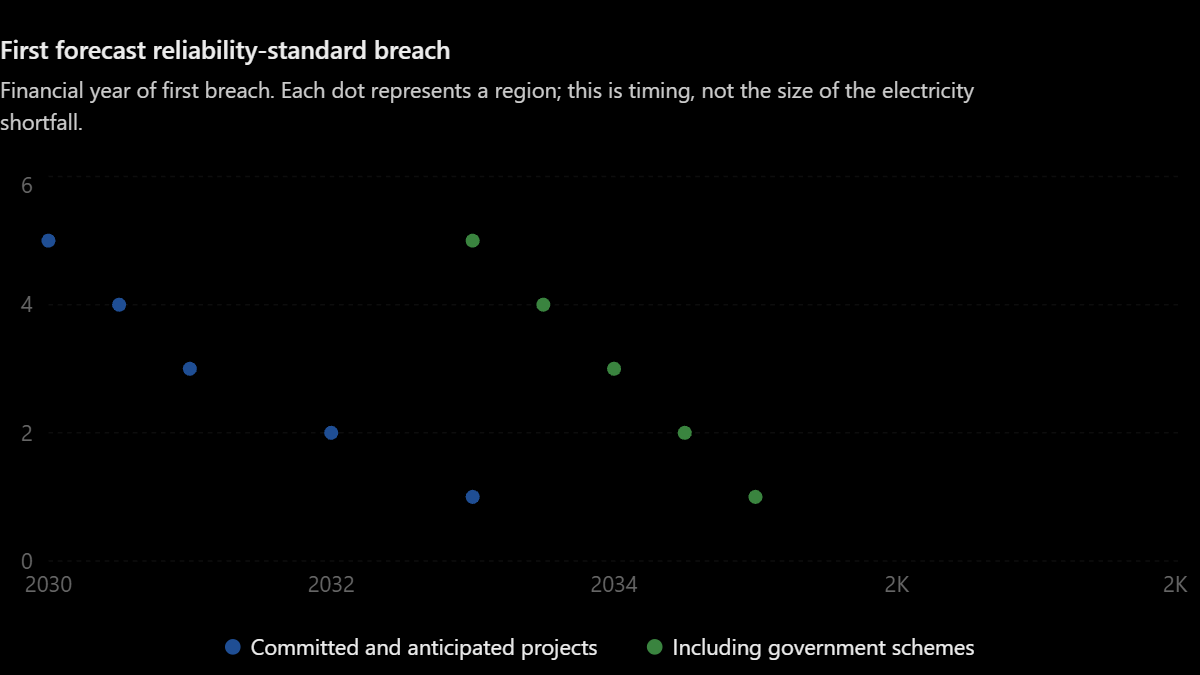
The volume of large-scale wind and solar required over the next two years has to triple for Labor to reach its goal of 82 per cent renewable energy by 2030.
Renewable energy investment approvals this year have already hit a record 5 gigawatts, but projects are taking too long to be built and delivered into the power grid.
Significant “winter price spikes” are also expected once coal plants shut down, given the problems involved with building big wind farms.
“We’re exiting coal at double the rates at which we’re building renewables,” Rystad senior analyst David Dixon told The Australian. “And because we’re not installing enough wind, prices will be squeezed.”
Further slippage in the Snowy Hydro 2.0 disaster and the developing Swiss cheese gas reservation plan will make the situation worse again.
The two major challenges when wind is insufficient are a lack of capacity to cover peak demand periods and a lack of firming capacity to cover periods of low renewable output.
Both of these can be addressed via reasonably priced renovations of existing coal power stations, notably Eraring in NSW and Yallourn in VIC.
Both could be achieved for $1-2bn, assuming their boilers and turbines are in reasonable enough condition.
The problem is that this would have to be staggered across the eight turbines, so it would take at least three years.
That said, staggering would also mean less disruption to renewable rollout plans and would make the coal insurance plan incremental rather than all at once when we may not need it all.
The advantage of it is that we would have both spare capacity and firming power to tip into the grid while the buildout of renewables continues.
If this project is going to happen, it must happen now. And it should be done transparently, not like the current dodgy deals in VIC.
My own view is that the Rystad analysis of wholesale prices is far overblown, thanks largely to batteries.
But the risk of power shortages and prices is real, especially since we won’t have cheap gas, either, thanks to Albo’s reservation failure.
It’s almost as if Albo’s muppets think energy grows on trees.
