
Australian house price falls track Kiwi housing crash
As falling housing prices continue to spread to a growing share of the nation’s housing markets, downward revisions to price performance in various locales increasingly feel like par for the course.
When Cotality released the latest revised housing price data at the start of the month, it revealed that housing price falls at a five-capital-city aggregate level were again worse than originally thought, with the magnitude of the drop revised down to an overall contraction of over 6.5%.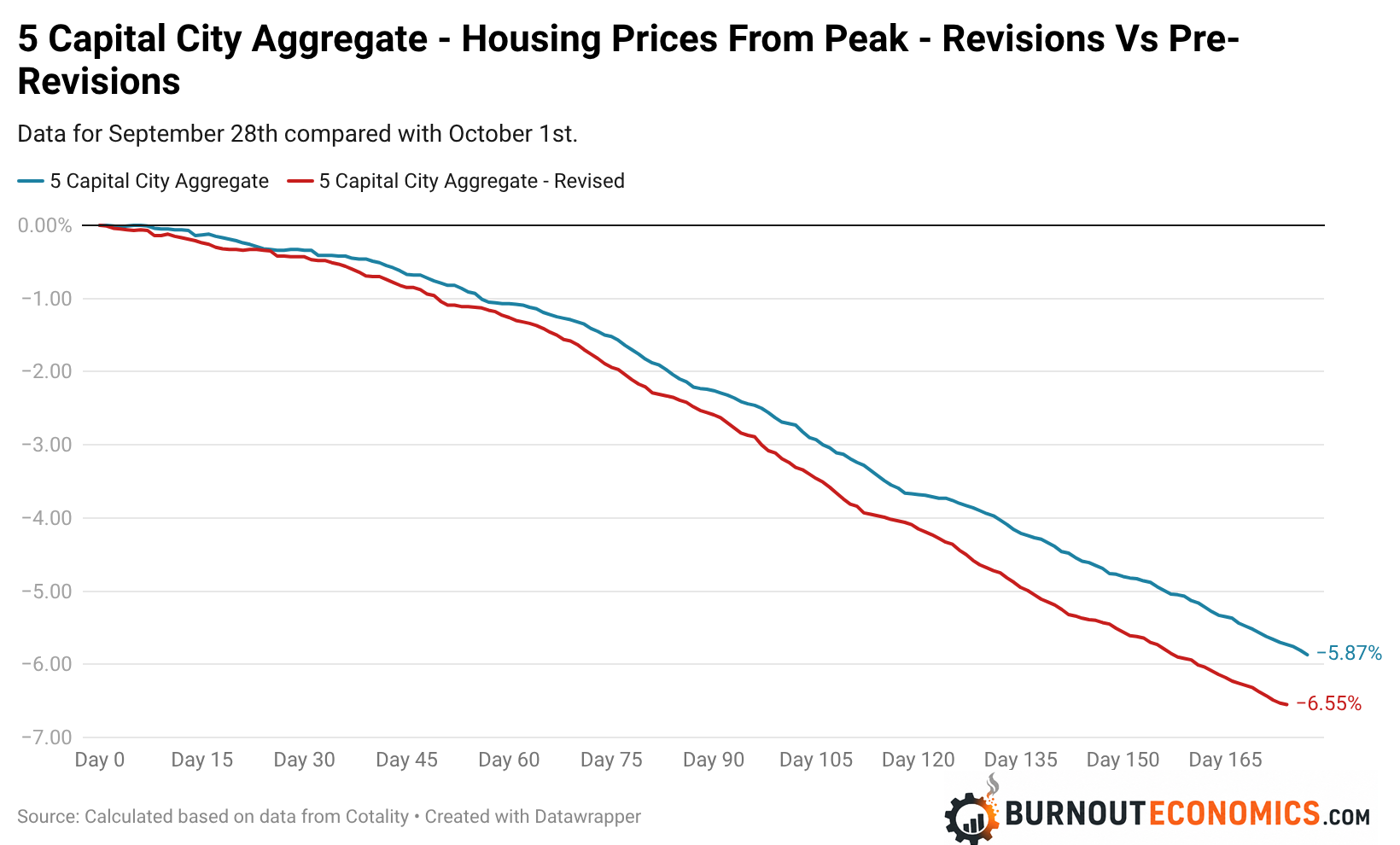
Last week here at Macrobusiness, I went through each of the five major capital cities and assessed the scope of their respective price falls, as well as how much revisions have changed their trajectory down; that article can be found here.
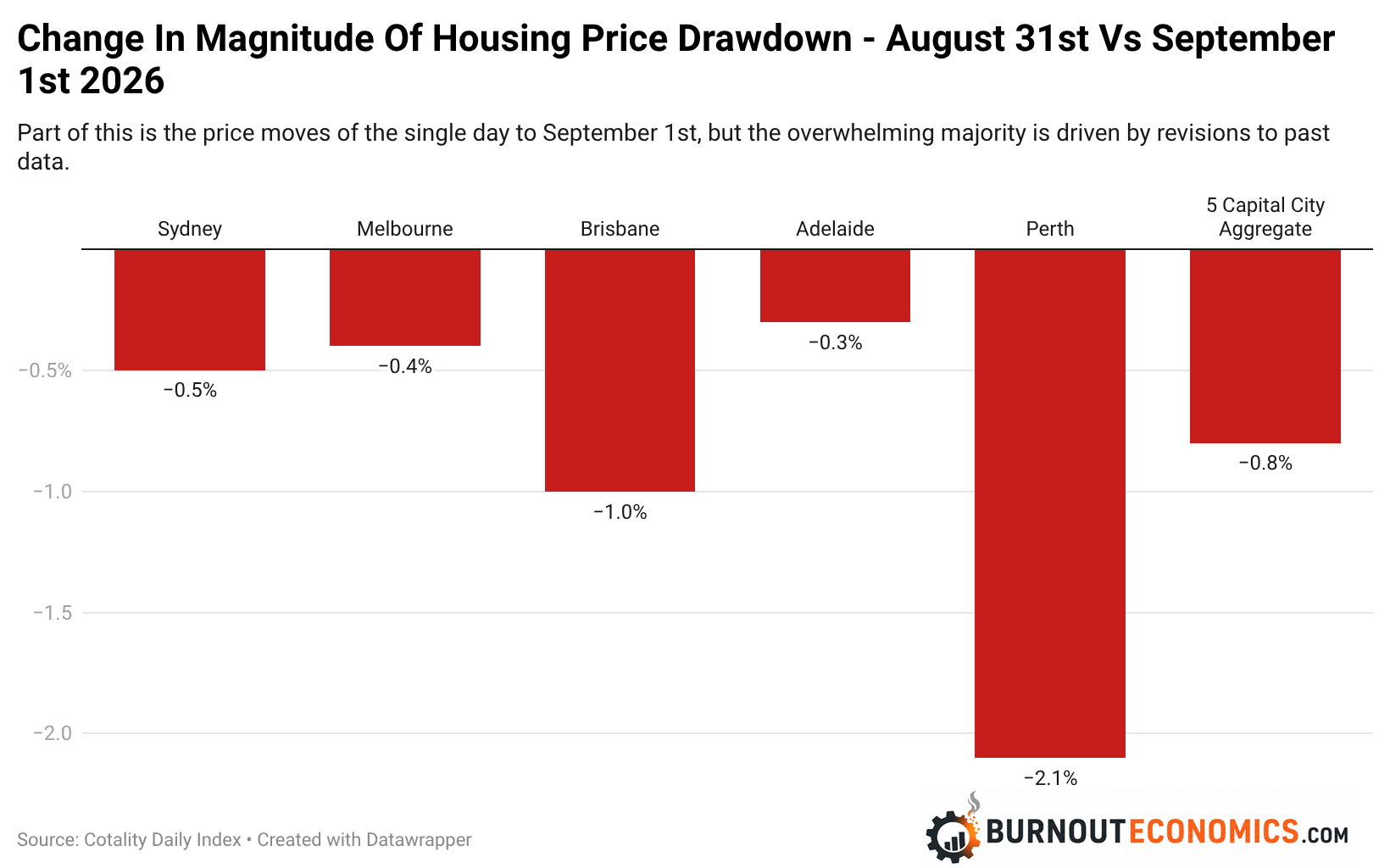
Given that revisions continue to be sizable, as illustrated by the chart below showing the changes to prices seen in the revisions published on September 1st, attempting to compare the path of Australian housing prices in the present with past cycles or internationally is arguably going to provide a more positive picture than what will play out in reality after revisions come to pass.
To get a more accurate picture of how housing price falls are unfolding, we can examine earlier data and contrast it with other instances of falling housing prices.
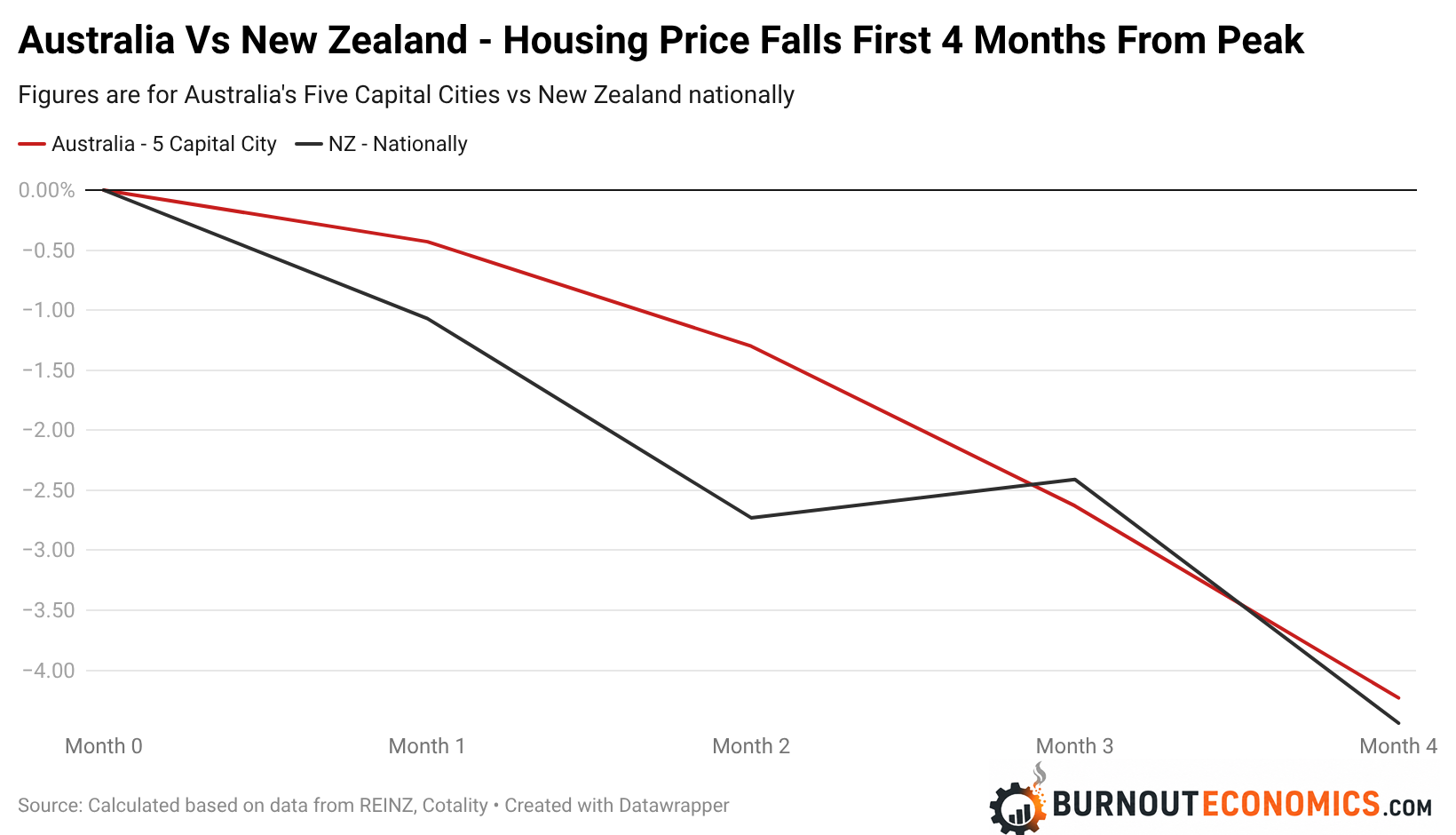
For example, the price falls in the first four months of the current fall in housing prices in Australia (10th of April to the 10th of August) at a five-capital-city aggregate level can be contrasted with the first four months of the Kiwi housing crash.
In the first four months of New Zealand’s housing price fall (November 2021 to March 2022), prices fell by 4.44% nationally, compared with 4.23% in the first four months of falls in Australia.
The Takeaway
In time, housing prices in New Zealand would fall over 18% nationally, with major markets such as Auckland and Wellington falling further still, down by 25% and 30%, respectively.
With Australian capital city housing prices currently on track to take out the 40-year record for the largest price drop by Christmas, the big question is arguably to what degree Australia’s house price falls resemble those in New Zealand.
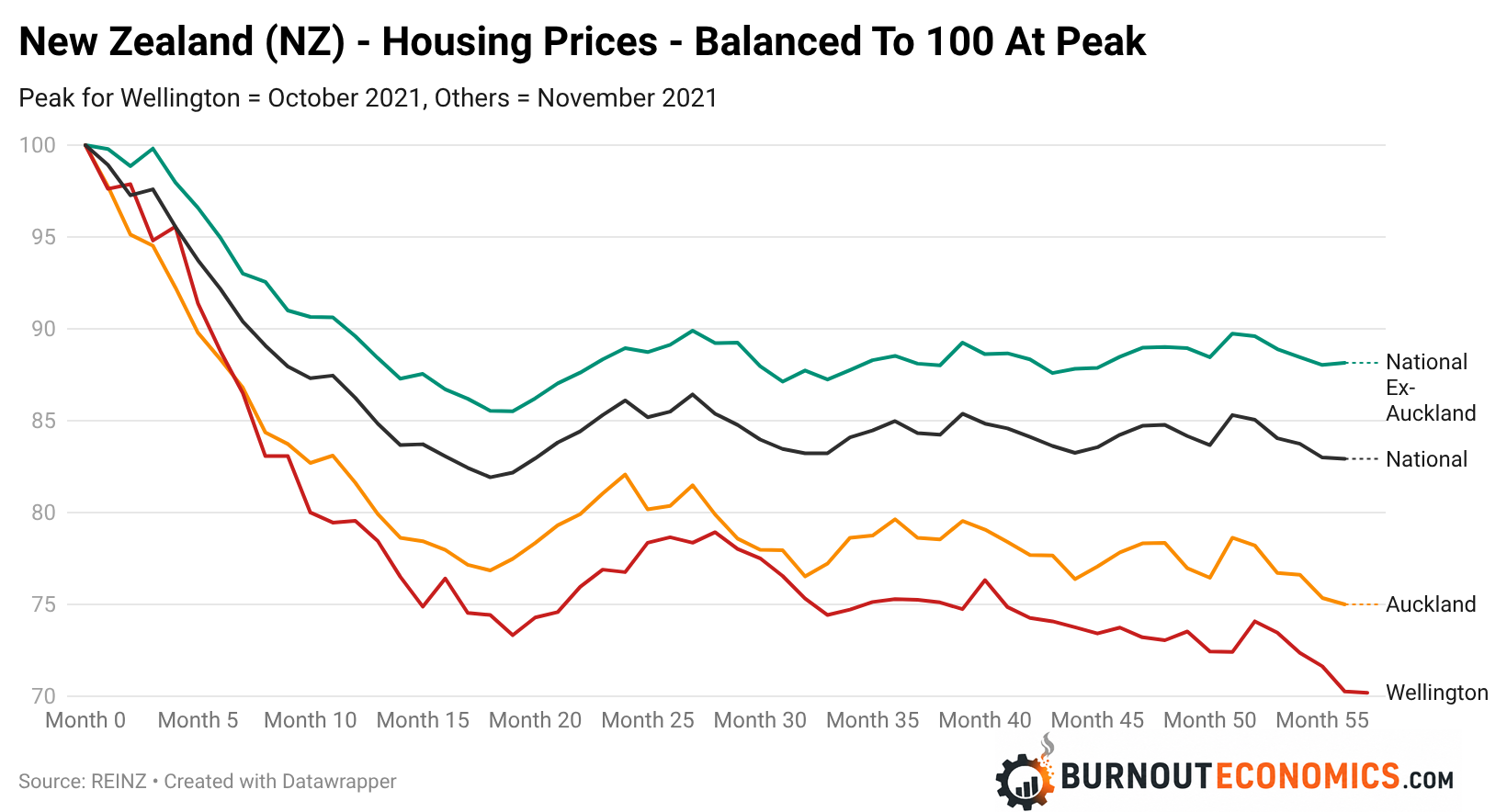
So far the two are tracking relatively closely, but for Australia in the present there are arguably additional downside risks for the market.
Demand for the purchase of existing homes from property investors has fallen significantly, and if projections from institutions such as Westpac are correct, they still have a long way to fall.
The Reserve Bank is expected to raise rates further, pushing the cash rate further above its already 15-year highs.
And finally, in the Middle East, the wars in Yemen and the Persian Gulf are still far from resolved, leaving the potential for energy price-driven inflation and fuel shortages still looming ominously on the horizon.
Ultimately, the ‘Lucky Country’s’ good fortune (or bad fortune, depending on one’s point of view) when it comes to housing price falls remaining relatively minor appears set to run out in the months ahead, leaving many to wonder to what degree Australia’s housing market will follow Canada’s and New Zealand’s on the way down.
