
My god, it has taken 15 years for the MSM to catch on, but it finally has.
From the time-warped ABC.
“All roads lead to Santos’s GLNG project,” says Saul Kavonic, head of energy research at MST Financial.
Kavonic, one of Australia’s most respected oil and gas analysts, says the tensions stem from the once-in-a-generation investment boom that opened up the country’s east coast gas market to exports.
During that rush, Kavonic says, three giant plants took shape on Queensland’s Curtis Island, turning coal seam gas into liquefied natural gas (LNG) that could be put on ships and sent overseas.
Among them were Asia Pacific LNG (APLNG), operated by Origin Energy, Queensland Curtis LNG (QCLNG), run by Shell, and Gladstone LNG, managed by Santos.
All three struck huge, long-term deals to supply gas to buyers overseas.
All three were built with two “trains”, or giant refrigerators that chill and condense the gas to a liquid form about one-600th of its original size.
But only two of the plants had the gas they needed to meet their overseas commitments and supply domestic customers.
“The GLNG project is fundamentally in a tight spot where it’s only got enough gas to meet its long-term LNG contracts,” he says.
“Therefore, it doesn’t have more gas left over to sell to the domestic market.
“In fact, it needs to buy gas out of the domestic market just to meet its contracts.”
…At the time, Santos stressed GLNG would have “no direct implications for domestic gas prices” and that it would “not divert gas from local markets to export markets”.
The company told regulators the development was “therefore unlikely to contribute to a future shortage of gas in the domestic market”.
But even as Santos was assuring the public on one hand, it was telling shareholders a very different story.
Investor presentations from 2011 show Santos knew opening Australia’s eastern market to exports would lead to “permanent … upward pressure on gas prices”.
A few corrections for you. Saul Kavonic has a vested interest. MST Marquis has small gas producer clients. He has been massaging the debate for years.
Still, even he has told the truth here, mostly.
Santos did not initially have two trains. It had one. It pushed into two trains at the last minute after two other consortia trumped its volumes.
This is important because it gestures towards what was really happening at the time. All three LNG plants were built in the frenzy of the post-GFC bubble that duplicated everything and wasted scores of billions of dollars. That is, it was malinvestment from the beginning, designed to produce market failure.
You might call it the premeditated murder of a market.
This came to bear in 2015 when the gas price collapsed, and all three projects wrote off these investments. At that time, I argued the government should buy Santos while it was cheap and shut down one of its LNG trains
The legacy of this was overbuilt export capacity, and it is Santos that exploited it most viciously ever since.
It bought third-party volumes across the East Coast while the others expanded local supply, though more recently, QLNG seems to have a problem as well.
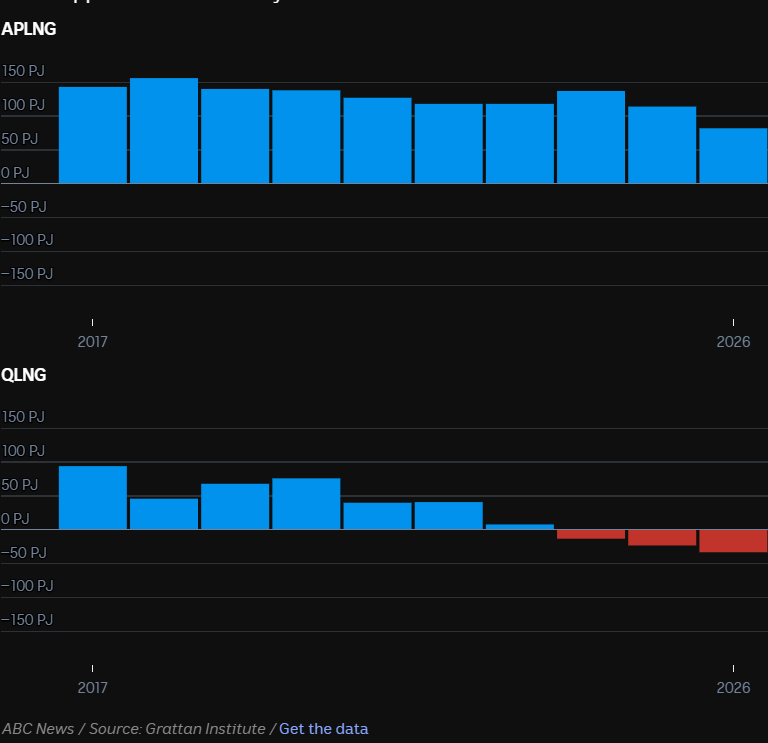
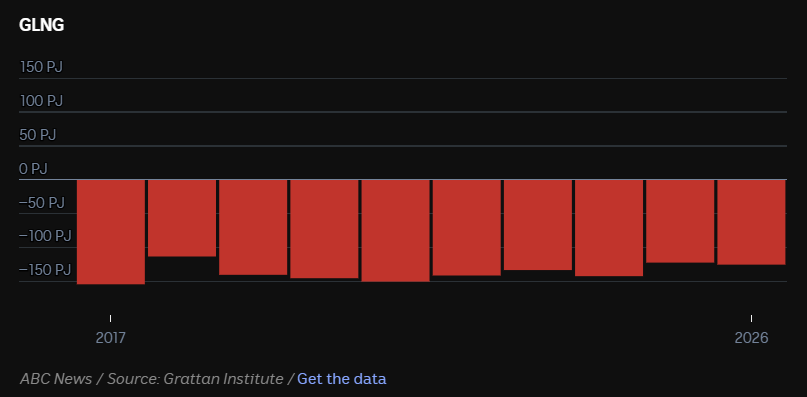
GLNG is, quite literally, Australia’s only gas problem.
That makes it one half of Australia’s productivity and inflation problem (the other half being immigration).
It is also the primary destroyer of the energy transition because it has driven up energy prices, opening a political vacuum that has been filled with every bad idea and sophist in Australia.
The list included the CEO of Santos at the time, David Knox, who was forced to resign after the write-offs, only to return as the chairman of Snowy Hydro a few years later, where he oversaw the disaster of Snowy Hydro 2.0, sucking at both ends of his energy puswad.
All of these efforts are to protect one evil firm.
And, alas, you know what the kicker is?
Even though this is now a known known of the Australian political economy, I have no faith that it will be fixed.
Albo’s gas reservation is welcome, but, as with everything he does, it is piss-weak, and the decline of Bass Strait will probably overwhelm it in its current configuration.
All we can really be thankful for is that batteries have matured over the last year, finally dislodging the gas cartel from setting electricity prices.
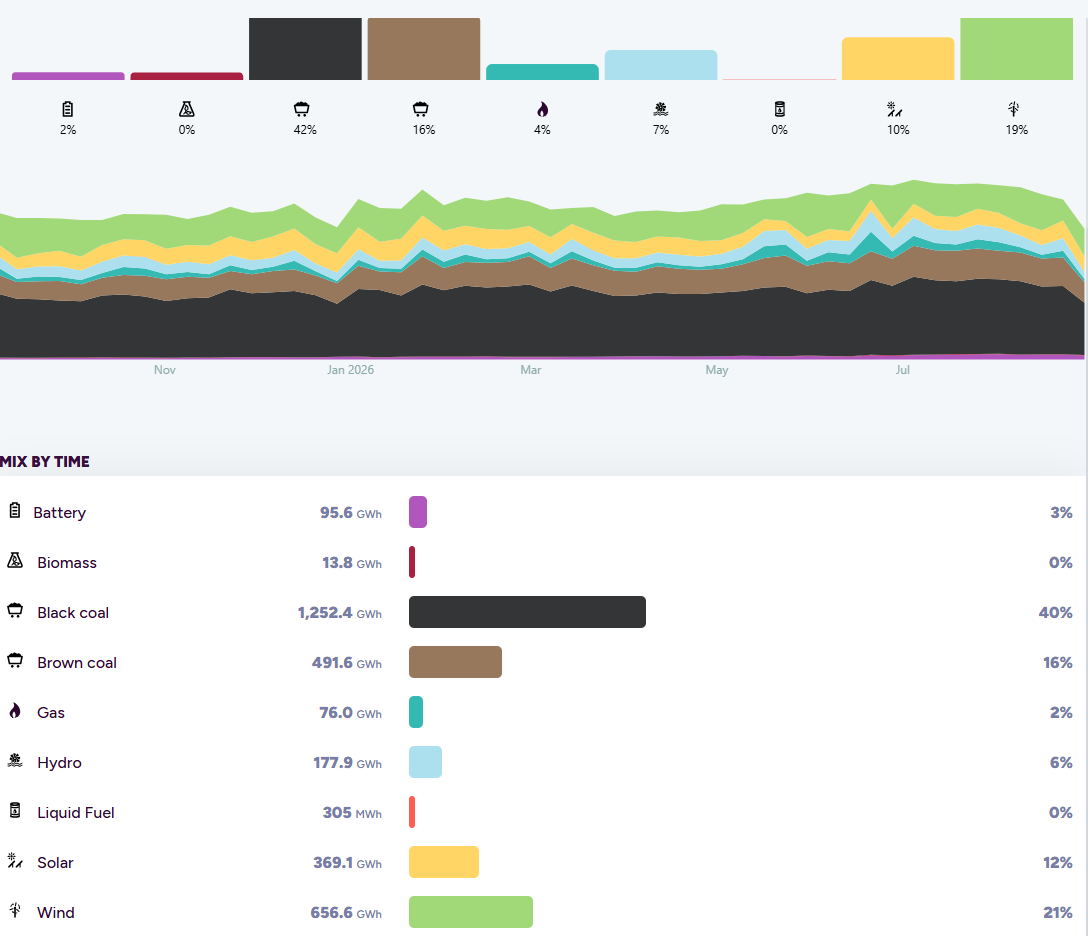
But the cartel is still destroying manufacturing, especially in areas like building materials, explosives, and fertiliser that use gas as feedstock.
These are the building blocks of your former nation-state, now Santos catamite.
Needless to say, this is becoming an ever-larger problem as the Battle of the Straits of Hormuz is inexorably lost.
