
Since U.S. President Donald Trump first unleashed his various tariffs on the Canadian economy, its economic performance has been on a rollercoaster ride.
Before the tariffs and the uncertainty they created about Canada’s economic future, the broader Canadian economy was performing relatively well, especially for a nation that had just sharply reduced its migration intake.
In the March quarter of 2025, it recorded GDP growth of 0.7% for the quarter and growth of 3.1% year on year.
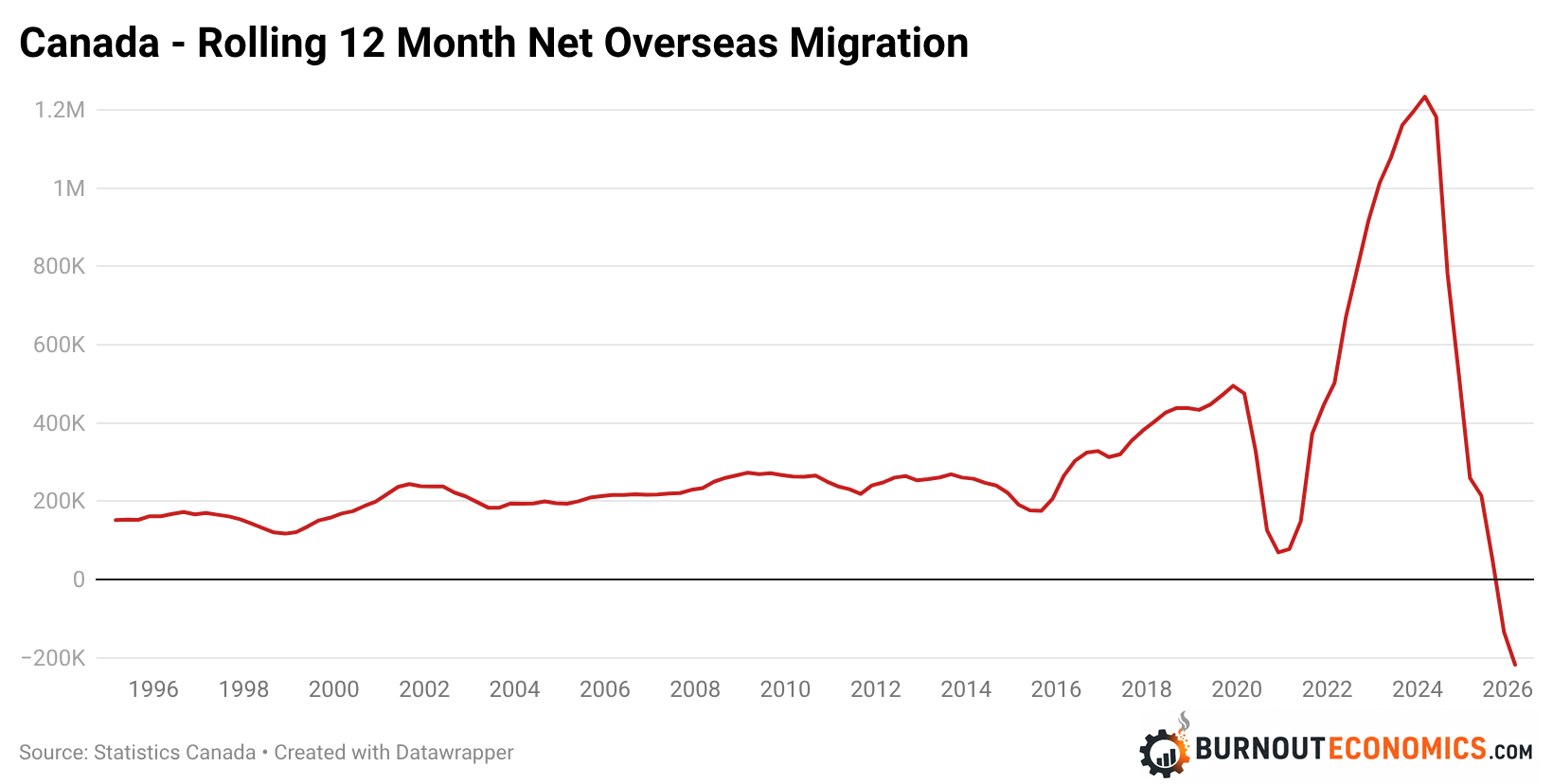
Meanwhile, its quarterly migration intake had fallen from a peak of over 402,000 in the September quarter of 2023 to just 29,100 in the March quarter of 2025, on its way to a deeply negative intake on a quarterly and annual basis.
The latest Canadian National Accounts data showed the strongest quarterly growth since Q4 2024, coming in at 0.8% for the quarter.
While part of the positive story stemmed from a resurgent Canadian energy sector, which benefited from higher prices driven by the war in the Persian Gulf, household spending also rose strongly, up 0.8%, as Canadians spent more freely.
In all important per capita terms, the Canadian economy expanded by 0.95% for the quarter to be up by 1.59% over the last 12 months, its strongest performance since prior to the pandemic, not driven by virus-driven base effects.
In October last year, TD Economics authored a report on how Canada’s shift to negative net overseas migration was a positive:
“The federal government’s revised immigration policy is beginning to pay dividends in returning balance to a stretched social infrastructure.
Although the policy alone does not resolve all of Canada’s structural issues, it was an important reform at the right time in the economy.
It has contributed to easing pressure in the national housing market—particularly in rentals—and has stemmed a harsher run-up in unemployment during a challenging economic period. “
Amidst this improved set of circumstances, this “important reform at the right time” has helped to boost Canada’s economic fortunes and ensure that the rise in unemployment was kept to a far more limited degree than it would have been had the historically large intake of migrants continued.
The Australian Experience?
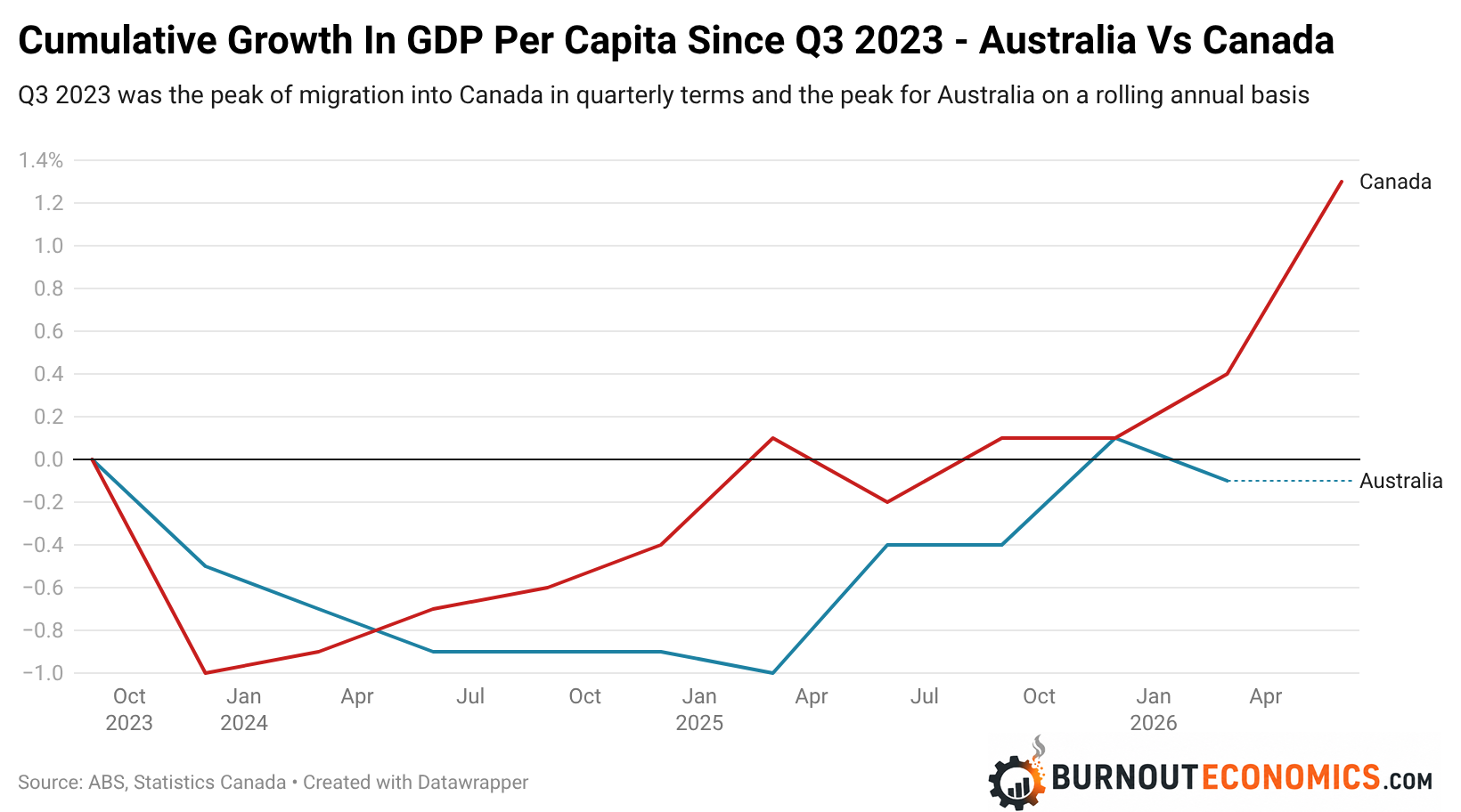
If we take Q3 2023 onwards as our point of comparison, the difference between Canada and Australia is stark.
This was chosen because it represents peak rolling 12-month migration flows into Australia and the strongest single quarter of flows into Canada before trending down after this.
Between Q3 2023 and Q2 2026, Canadian per capita GDP has grown by 1.35%.
Between Q3 2023 and Q1 2026, Australia’s per capita GDP has contracted by 0.05%.
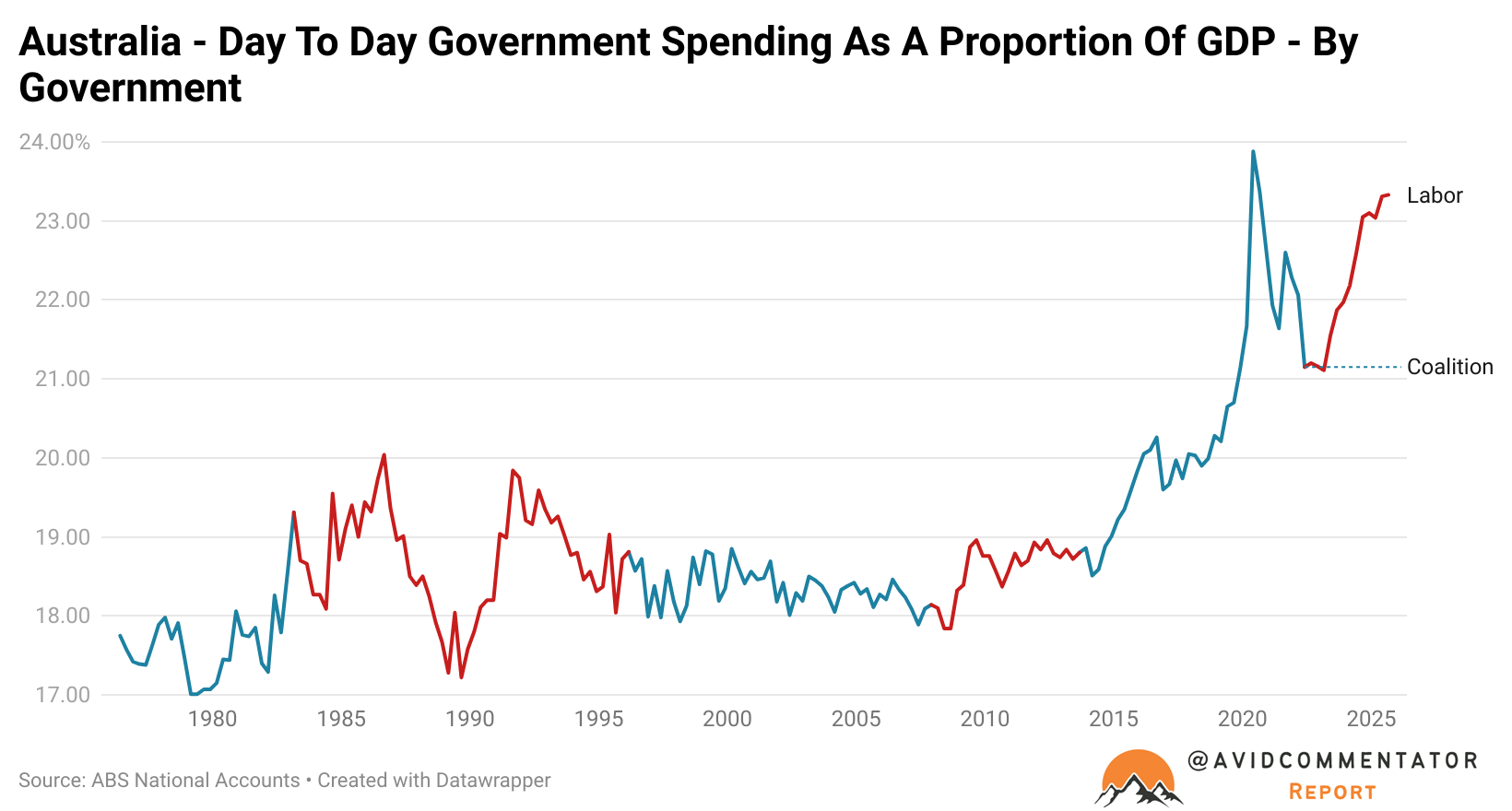
While Australia’s significantly smaller rise in unemployment is pointed to as a sign of success, this divergence has been heavily built on the rise of taxpayer-funded employment and the dramatic expansion in the role of government as a driver of economic activity in Australia.
The Takeaway
As 2026 continues to unfold, it’s certainly true that Canada continues to face challenges, but that is the reality of pursuing a failed set of economic strategies for well over a decade.
The shift towards higher productivity growth and sustainable long-term growth in per capita outcomes will involve challenges in the years ahead, but it is a worthwhile change for a more sustainable economy and a more cohesive society.
In a generally quiet corner of the South West Pacific, the situation is likely to be quite different.
Instead of accepting that changes are needed and that following a different, better path has costs, Australian policymakers continue to pursue the same failed economic strategies, even as they deliver worse and worse economic outcomes and increasingly pull on the ragged threads of the nation’s social fabric.
Ultimately, Australia appears set to continue on this increasingly dark path toward almost certain failure until political realities driven by the electorate force a change of course.
