
As the debate over the changes to negative gearing and the capital gains tax discount continues, one of the major points of contention is the impact on new home building.
According to estimates from Treasury, the changes to negative gearing and the capital gains tax discount will reduce the number of homes being built over the next decade by 35,000.
Modelling from Qaive and Tulipwood Economics held a similar conclusion, that limiting negative gearing to new homes would reduce new home construction by 22,700 homes over 5 years.
But there is far from a consensus on the impact of changes to the tax system on the rate of new home construction.
Westpac has a very different view to Treasury, holding the view that the number of new homes being built by investors would rise by roughly 45%.
“While there are other important considerations for buyers considering new vs existing – including cost, delivery risk and capital gain expectations – it is likely that at least some prospective investors will switch.
The implication is that sharply lower investor activity will also skew more heavily towards new, the share potentially rising towards 40–50% of new investor loans.” a recent Westpac report read.
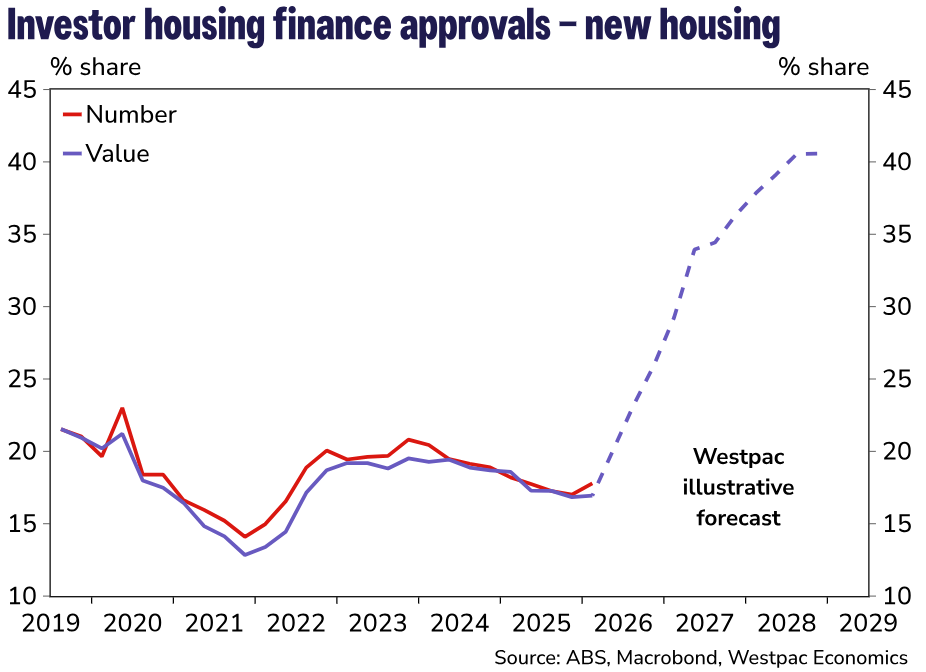
Source: Westpac
With dwelling completions still deeply depressed at near decade lows, more supply stemming from investors would be a welcome development.
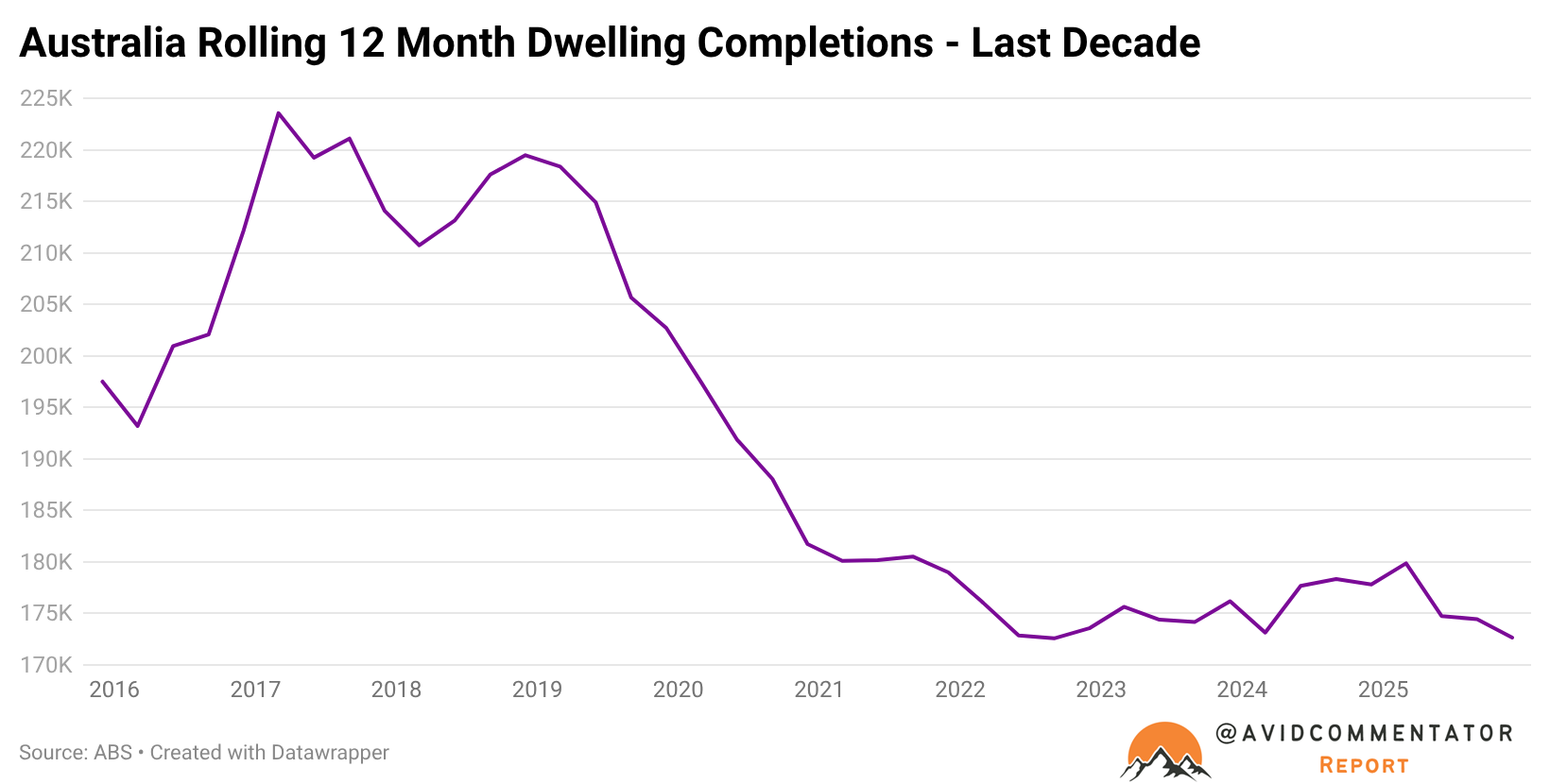
According to the latest figures from the ABS which cover up to the end of the December quarter, in the last year of data 172,700 new homes were completed, the lowest level since September 2022.
This is well below the 240,000 per year that would have to be constructed in order for 2025 to be on track to meet the Albanese government’s 1.2 million new home target during the so called ‘Housing Accord’ period, which covers from July 2024 to June 2029.
The Takeaway
While at this stage Westpac’s prediction is arguably an outlier, in my view they have correctly factored in the investor desire for tax concessions into their forecast.
There is an expectation in some quarters that the changes to negative gearing and capital gains tax as they relate to existing property will kill off great swathes of property investor demand for homes.
I think this underestimates how much property investment has been intertwined with Australian household financial planning and the broader collective consciousness.
Going forward its my suspicion that all manner of different strategies will be pursued in an attempt to make property investment still viable following the changes to the tax system.
From multiple occupancy properties in lower socioeconomic areas to new builds, its my suspicion that investors will pursue these strategies and more to keep investing the property, as they have become culturally and financially accustomed to.
