
When the Albanese government unveiled its target of building 1.2 million new homes over the 5 years from July 2024 to June 2029, it was met with skepticism from a range of property and housing construction experts.
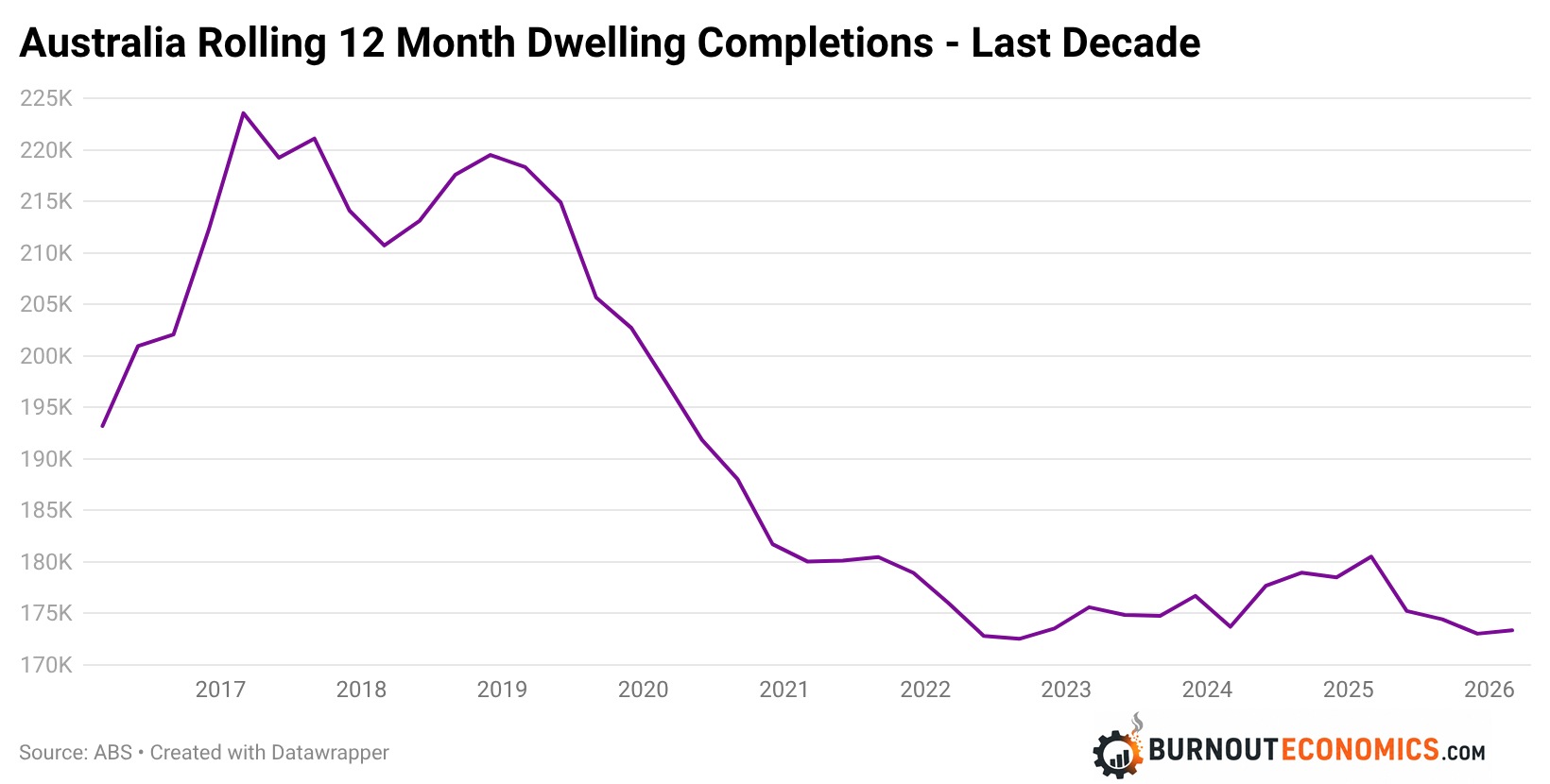
The skepticism was entirely understandable, considering that in the 12 months prior to the start of the so called ‘Housing Accord’ period, 177,700 homes had been built, far below the 240,000 per year required each and every year to meet the 1.2 million new home target.
To put the Albanese government’s target into perspective, the all time high rate of dwelling completions came in the 12 months to March 2017, during which 223,600 new homes were completed.
The Albanese government’s 1.2 million new home target was always an unrealistic one and the latest dwelling completion data released today from the ABS has further confirmed that.
In the 12 months to March 2026, 173,400 new homes were built.
Coming up this short of the 240,000 homes required each year to meet the Housing Accord target is nothing new, with a rolling 12 month average of 176,300 homes being completed in the various snapshots covering the Housing Accord period prior to today’s data.
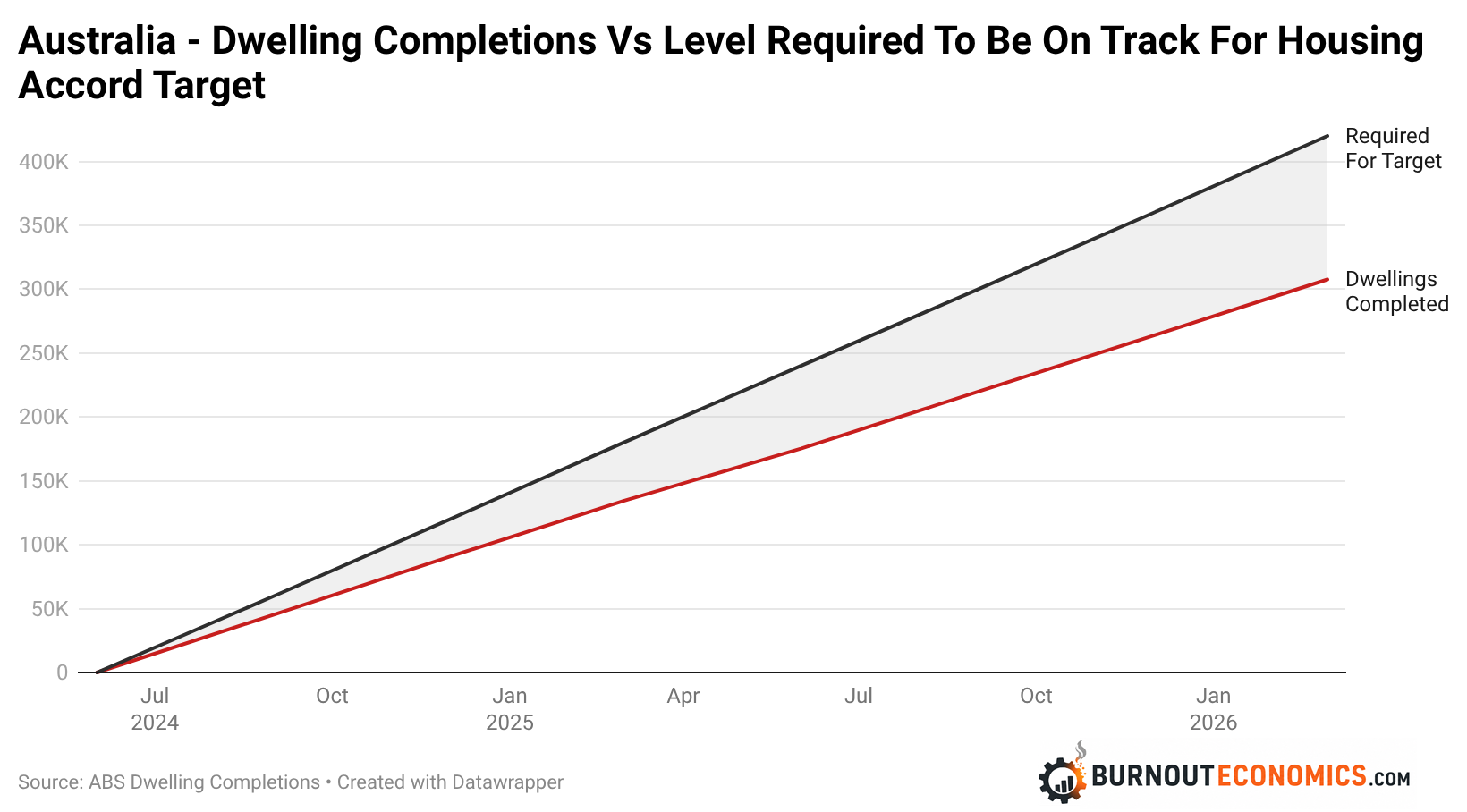
So far 21 months worth of data is available on the Housing Accord period, during which 420,000 homes had to be built to be on track to meet the Albanese government’s target.
In reality, just 307,600 homes have been completed so far, coming up 112,400 homes short of the government’s target so far.
Despite this ongoing failure to get even close to meeting the target, the Albanese government continues to insist that the target is a viable one.
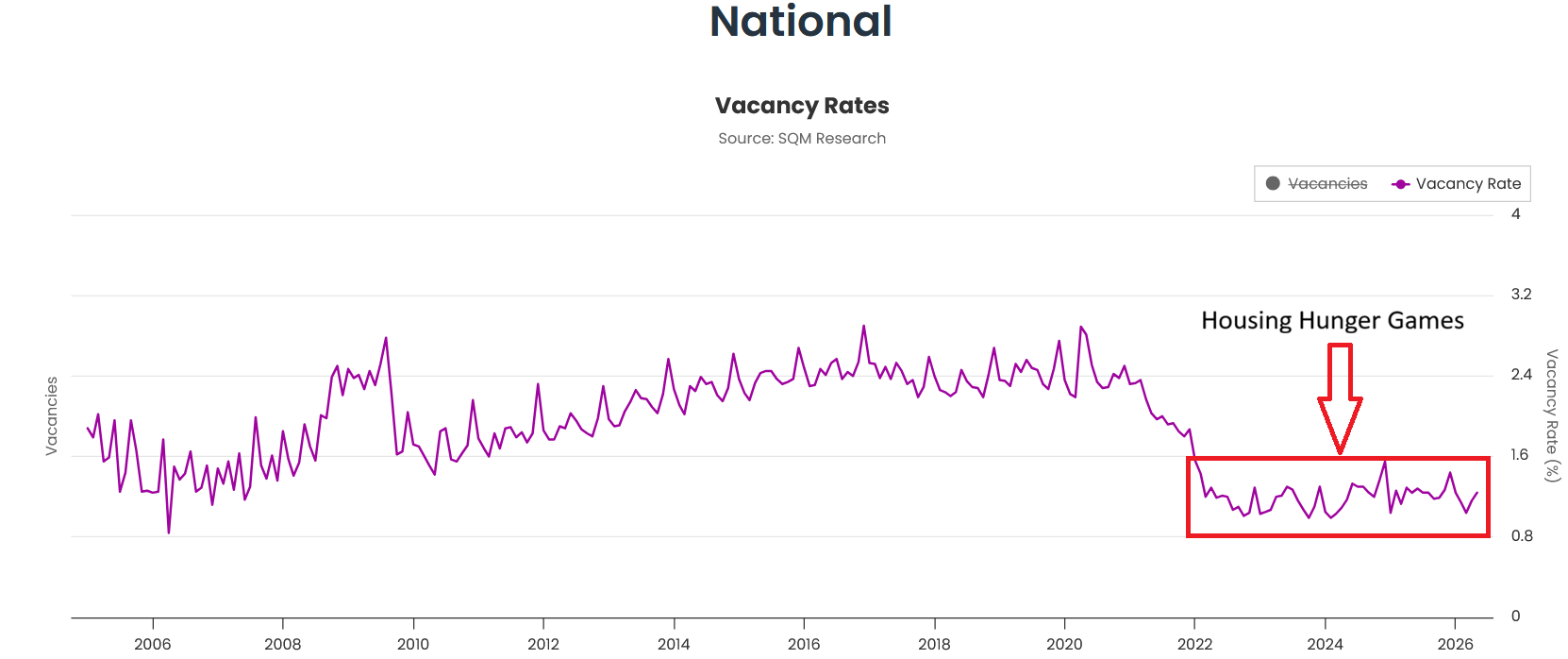
With rental vacancy rates still deeply depressed at or near crisis levels once adjusted for seasonality….
And the expectation from KPMG is that the housing deficit will continue to grow in 2026-27 by almost 40,000 homes….
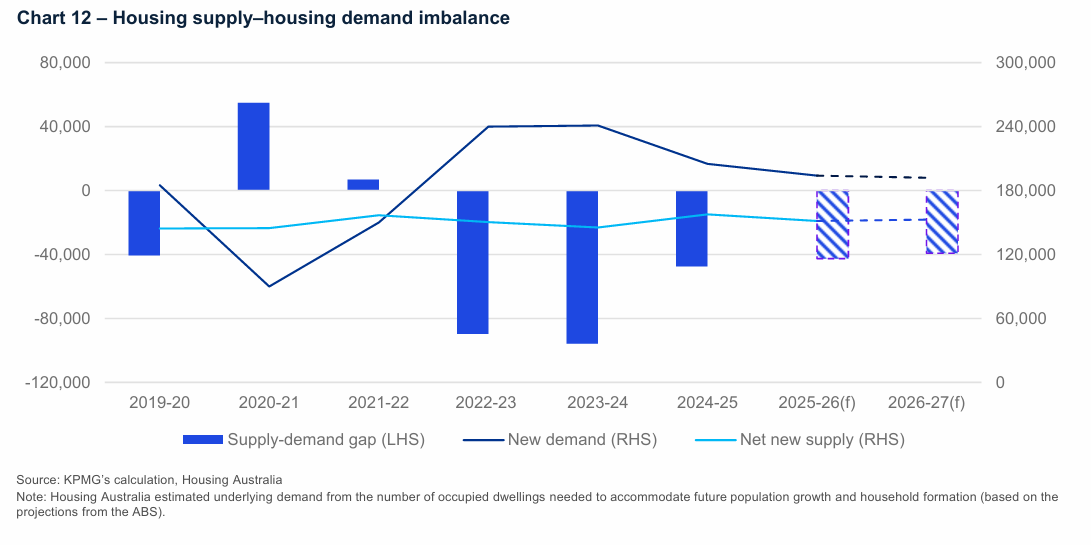
The rental crisis and the associated hit to household formation rates appears set to continue into the 2030s.
While Australians crowding together into larger households can and likely will place downward pressure on demand for homes on the road ahead, as it has already in recent years, this shift is no where large enough to counteract the growing demand for housing stemming from other factors such as changes to household demographics and still highly elevated levels of net overseas migration.
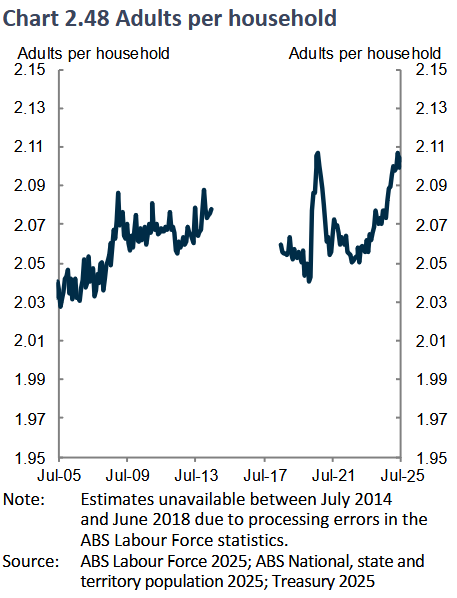
Source: National Housing Supply and Affordability Council
Meanwhile, the latest inflation data from the ABS shows that the cost of new homes is surging, up 5.6% year on year.
This marks the highest rate of new home price inflation as measured by the CPI since July 2023.
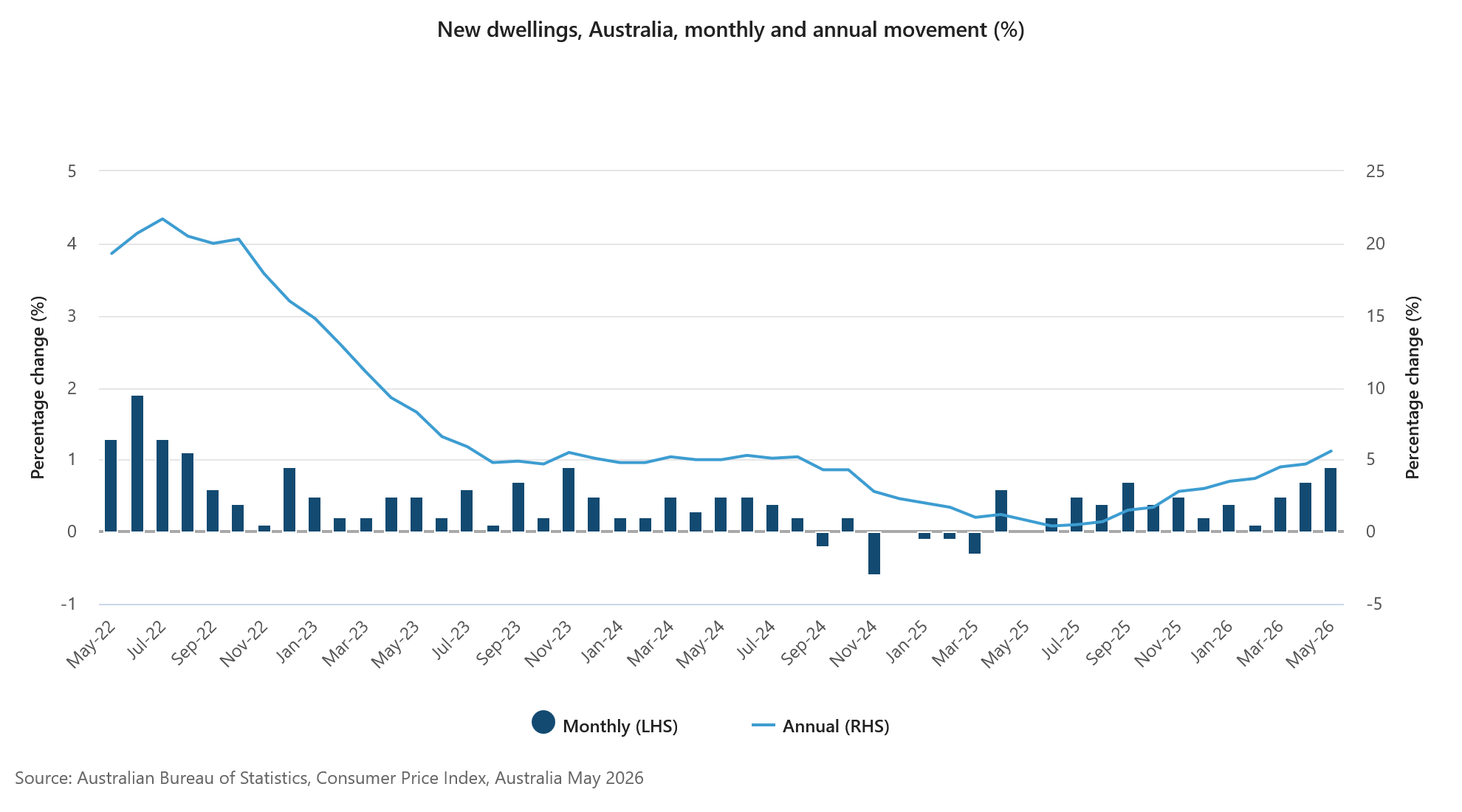
This further complicates an already challenging picture for new home completion rates on the road ahead.
Ultimately, the Albanese government set a home construction target that was never going to be achieved and the Australian people are set to continue to pay for that failure, as demand for housing outstrips the growth in supply on the road ahead.
