
Labor believes its recent loss of support to One Nation is driven more by economic frustration than ideological change.
According to Labor insiders, many voters are angry about persistent cost-of-living pressures and feel that their financial situation has not improved since voting Labor into government.
They view support for One Nation as a protest against the political system rather than an endorsement of Pauline Hanson’s policies.
Former prime minister Tony Abbott interpreted the poll as evidence that voters are turning against Labor and favouring conservative parties.
Labor minister Tanya Plibersek countered that One Nation has opposed workplace reforms and other policies that Labor argues would benefit ordinary workers.
Does any of these insiders not get it. Is One Nation a genuine, broad-based policy party? You tell me.
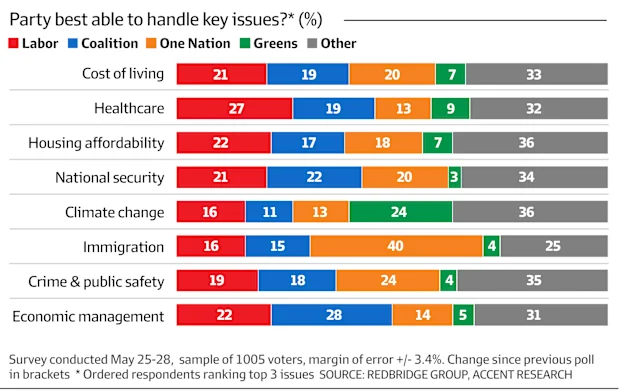
ON is an anti-immigration party. That absorbs crime and public safety (post-Bondi), housing affordability and national security.
That’s all there is to it.
So long as the major parties keep running the stupid immigration-led economic model, which systematically dehouses youth, crushloads public services, shrinks real wages and promotes the perception of social fragmentation (if not the reality in some areas), ON will rise.
There are other, better economic models to pursue. But the Canberra bubble is fixed on the tit of the immigration growth lobby even though it is now feeding it hemlock.
Australians want the immigration-led economic model gone. Not fake gone or mitigated. GONE.
They will vote for who gives it to them.
