
With the Albanese government’s proposed changes to negative gearing and the capital gains tax discount dominating headlines, tales of a property investor exodus pre-dating even the leaks of the changes have emerged.
According to an analysis by FoundIt, landlords listed 22,640 former rental properties for sale in the last three months; of those, 4,865 occurred in Sydney and 5,565 in Melbourne.
This showed that 21% of homes listed for sale in Sydney and Melbourne during that period were rental properties owned by property investors.
In the FoundIt report, it was described as a “flood”.
“The 4,865 ex-rentals leaving Sydney’s rental market this autumn are 4,865 properties that may never return as rentals,” the FoundIt report said.
On the face of it, these numbers sound pretty major, but when put into perspective, they reduce entirely to business as usual.
In the final non-pandemic-impacted data point on Australian-occupied housing stock, property investors owned 27.1% of the total.
In the snapshot taken during the absolute height of the pandemic, which is arguably significantly distorted by households abandoning rentals and banding together during the early months of Covid, 26.2% of occupied housing stock was owned by property investors.
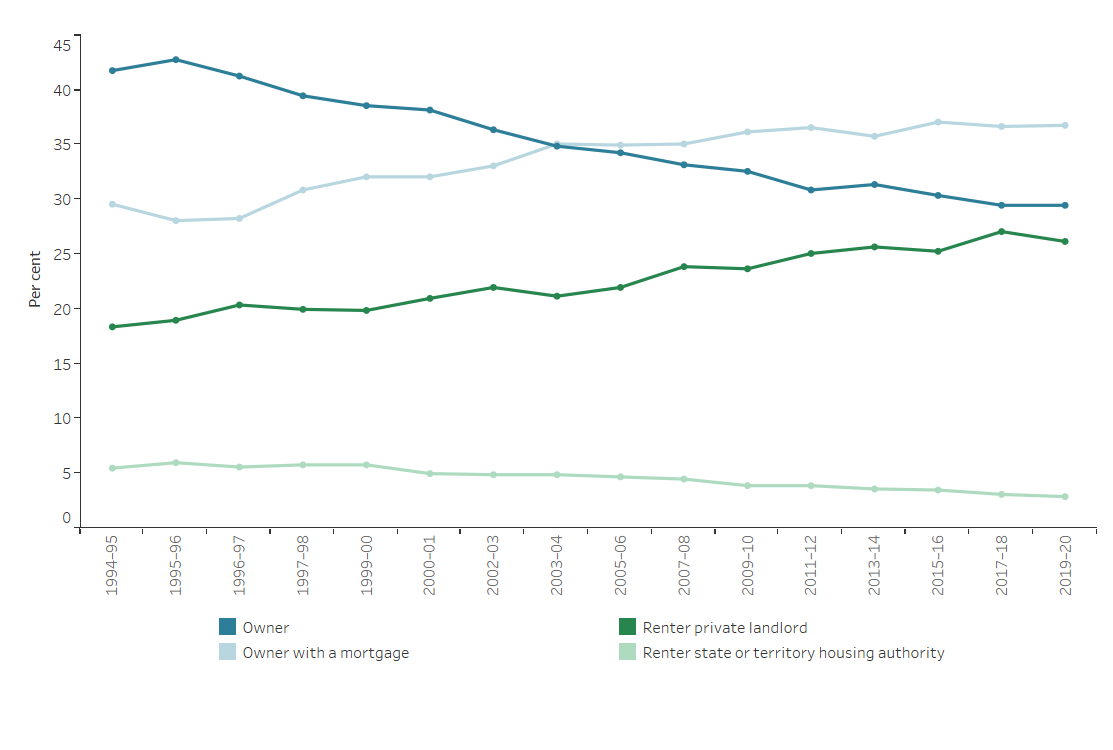
With 21% of homes in Sydney and Melbourne being sold by property investors, this figure means that investors are underrepresented in sales activity, not overrepresented.
Overall, property investors were roughly 20% less likely than the average to be selling a property.
On the other side of the coin, the share of demand for property, as illustrated by new mortgages, reveals that investor demand as a proportion of the overall total is near decade highs, significantly above the average seen in the ABS data since the relevant data set began in 2002.
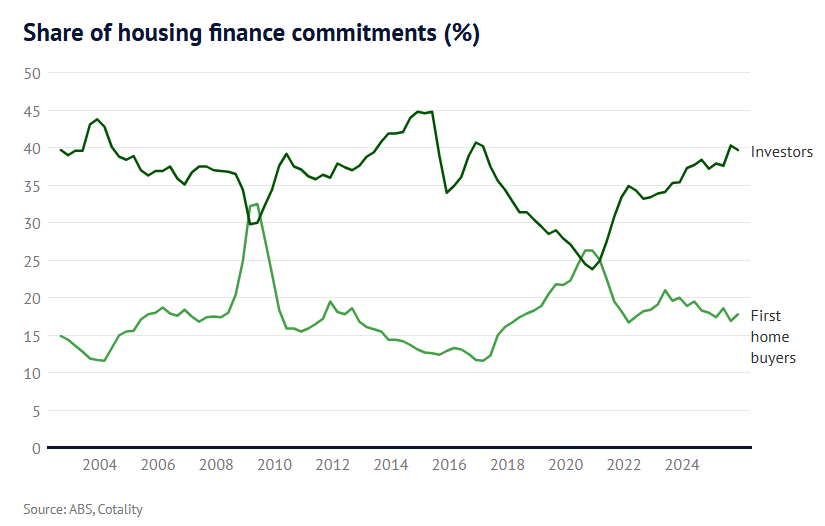
If one considers that property investors account for 40% of new loans and only 21% of sales in specific locales, the conclusion is rather obvious. These data points do not indicate an exodus of property investors.
Instead, it’s arguably the opposite: investors are significantly underrepresented in properties being sold and overrepresented in properties being purchased relative to their current share; the investor share of occupied housing stock is likely growing, not shrinking.
Tales of a property investor exodus are often popular, but broader data often do not support them.
Even when the share of residential property owned by investors has potentially declined in recent decades, this decline often hasn’t been an investor’s choice, such as during the Banking and Finance Royal Commission era.
In the months and years to come, changes to tax concessions for property investors and the impact of the war in the Middle East may well see investor demand fall and drive an exodus from the market, but we have yet to see evidence of that at this stage.
