
WA’s gas reservation policy is effective for one simple reason.
The amount of gas reserved exceeds the amount domestically consumed.
It’s roughly 10% of WA production that is used locally, while 15% of production is reserved for it.
Thus, we have a forced 5% surplus in WA that dislocates the local price from the global.
On the East Coast, Albo’s proposed reservation does not do the same.
The East consumes 20% of production domestically and exports 80%.
Thus, a 20% reservation, even if it applies to everything, would do nothing to lower local prices.
The policy proposes that exporters direct 20% of uncontracted gas locally, as well as 20% of gas extracted under future contracts.
So this does create an East Coast gas surplus, which drives down the price?
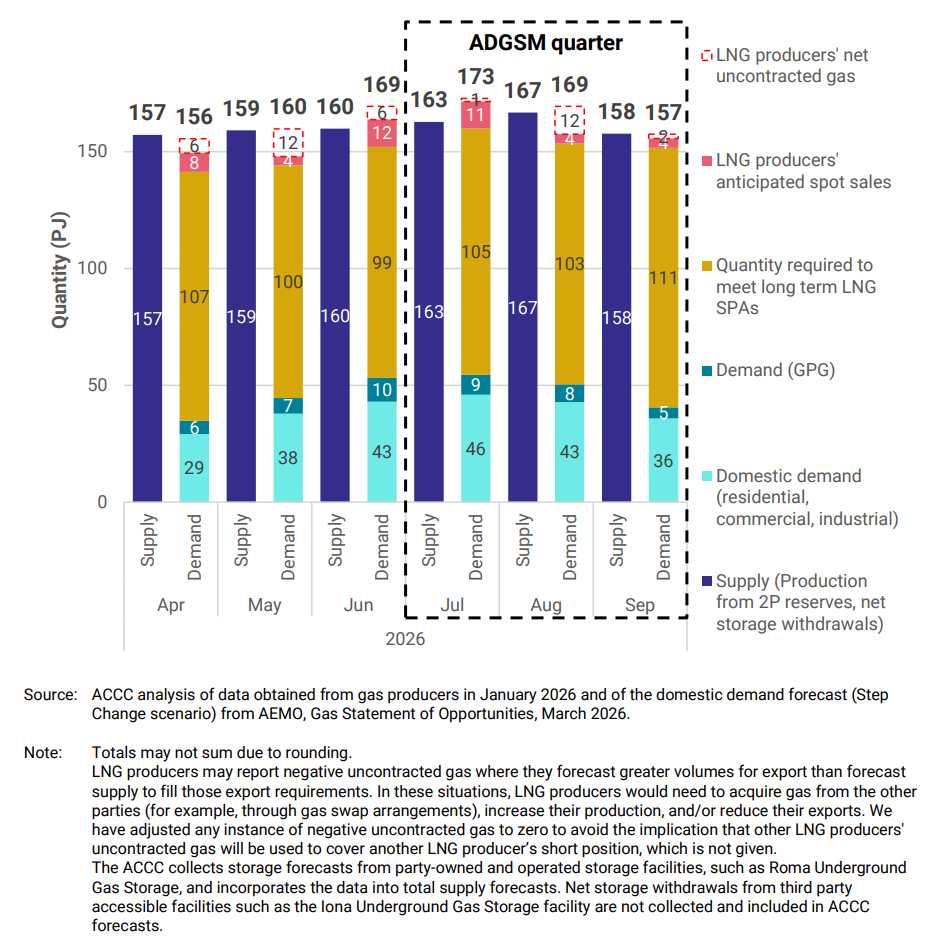
The following ACCC chart shows how pathetic the situation is. The policy would require only an extra 4Pj of gas in the local market on a good month.
It’s not meaningless at 2-3% of local demand, but it is not as large a surplus as WA, especially in the summer months. We will have more storage for this gas to lower prices effectively.
The key, then, is how quickly export contracts roll off so that the spot component of gas grows and reserves increase.
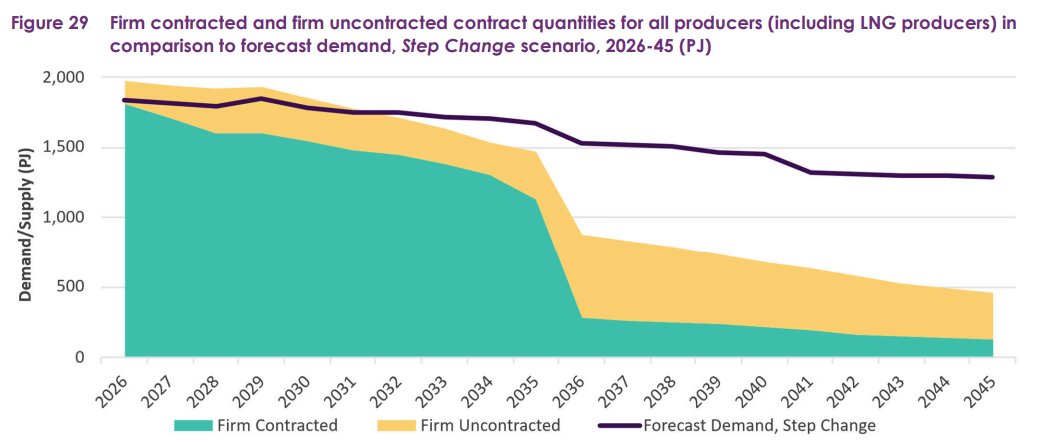
According to the ACCC, east coast gas contracts will roll off by about 150 PJ by 2028.
This scenario means that another 10% or surplus to domestic demand will be kept locally, and any new contracts signed cannot override it.
The outcome is much stronger than the WA reservation over time, which is doubtless why the Woodside arse-lickers wanted out.
This arrangement will crash local gas prices within the next two years.
Once APA completes its pipeline buildout so that enough gas can be shipped to VIC in winter, Aussie gas problems will be solved.
Bravo, Albo. Four years too late, but finally, a policy that kicks cartel arse.
Which makes me think it’s going to be shut down before it gets up.
