

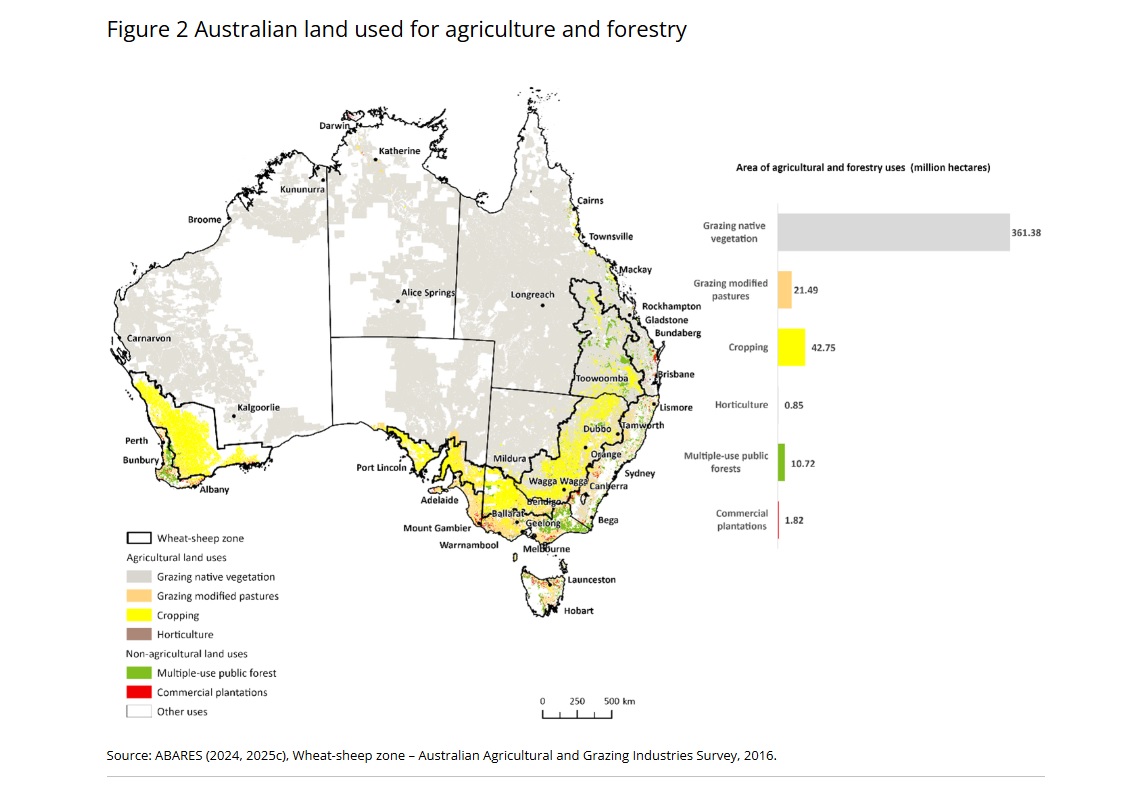
What we grow and where we grow it
Australia is about to get a food price hammering with the Iran war and the closure of the Straits of Hormuz to bring real food concerns to a nation where good food is seen as a birthright, just as a Mega El Nino comes onto the national radar.
So let us get this right.
Australia is regularly touted as one of the world’s great food production stories. More than 70% of what we produce is exported and only about 10% of what we consume is imported. Australia is one of the world’s most food-secure countries.
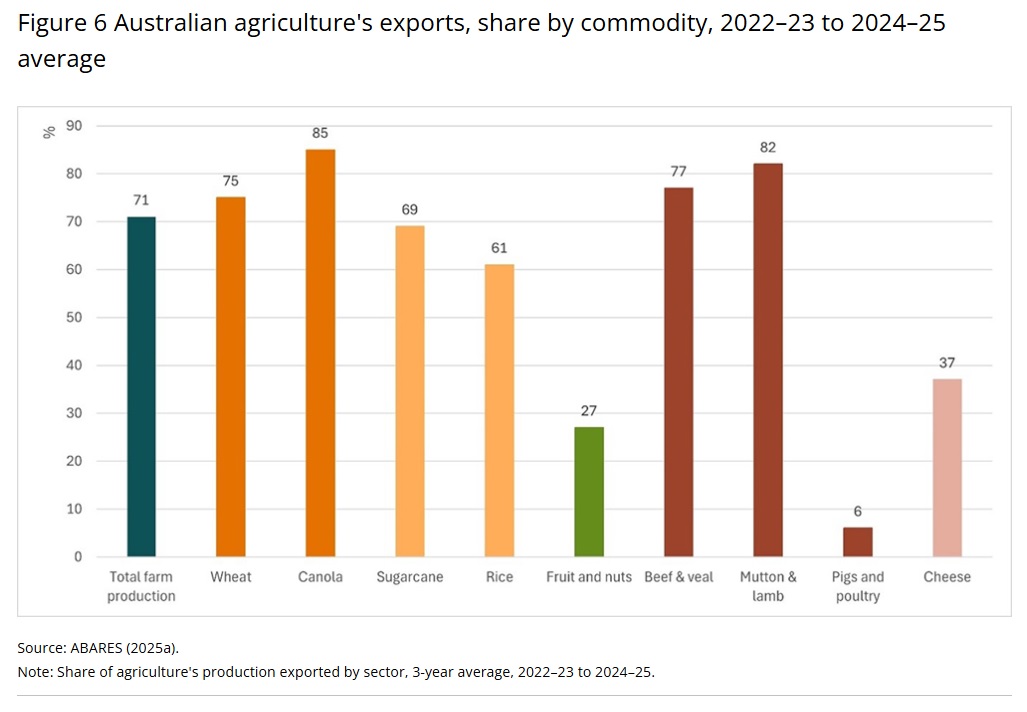
How much we export, various agriculture, from ABARE
But a nation more reliant on diesel than any other has a fuel policy of not ensuring enough so that after Donald and Bibi get into the ring against the Ayatollahs the price of diesel doubles. That affects every last item on the shelves of your Coles, Woolworths, Aldi or IGA. That is already happening as you are probably already noticing.
But wait, there’s more.
Those potatoes, tomatoes, carrots and cabbages you are eyeing off, sugar, and the flour you are using to make sure the schnitzels go a nice brown. It just about all involves the use of fertilisers, and mainly nitrogen fertilisers. Australia is currently reliant on the Middle East – inside the Strait of Hormuz – and China after the last Australian producer ceased operations at Gibson Island near Brisbane in 2023. It cited Australian gas prices as a central factor in its closure.
Australian policymakers take a bow. While there are plans to get production happening with an Indian company looking to use WA gas and importing Indian staff to do the work, that won’t be happening before next year at the earliest.
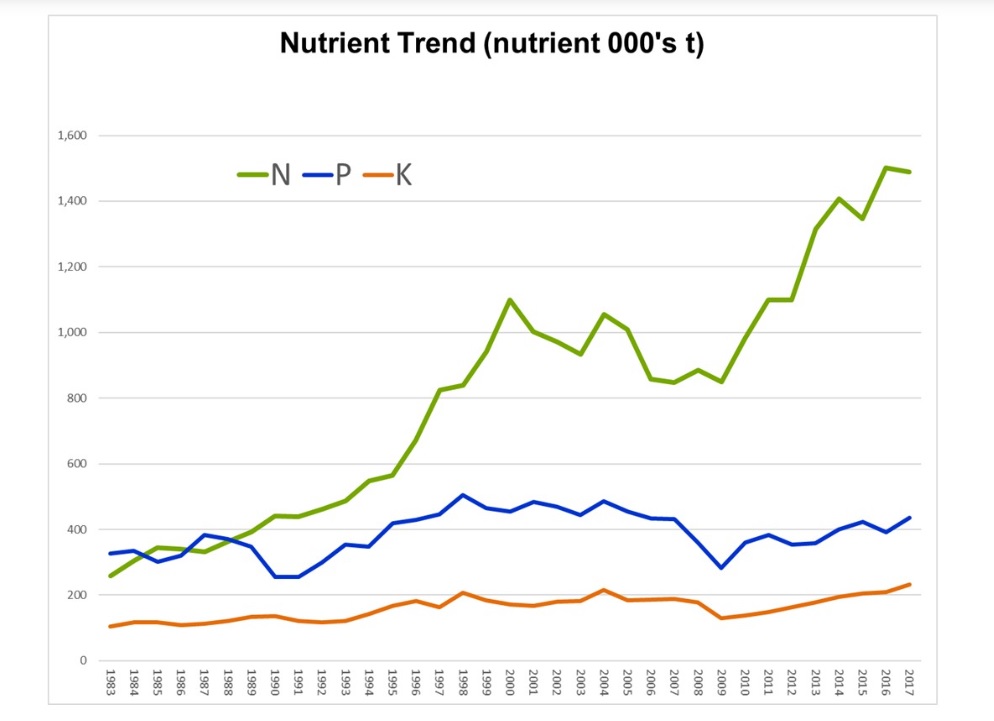
Australian fertiliser use, ABARE, Nitrogen Potassium Ammonia
Now that we are 8 weeks into the Strait of Hormuz stoush without an end in sight, there is a major implication for winter and spring plantings of almost everything. Prices for fertiliser will almost certainly be up, if they can be obtained at all. If they can’t be got at all, then the crop sizes will be much smaller or potentially non-existent – fertilisers are that important.
A couple of days ago the ABS told us that that Food and Non alcoholic beverages were up 3.1% in the 12 months to the end of February 2026. The decision by Donald Trump and Bibi Netanyahu to put in train a process leading to the close of the Strait of Hormuz means that a 3.1% annual increase will be looked back on as a golden era when the situation we are now in has played out.
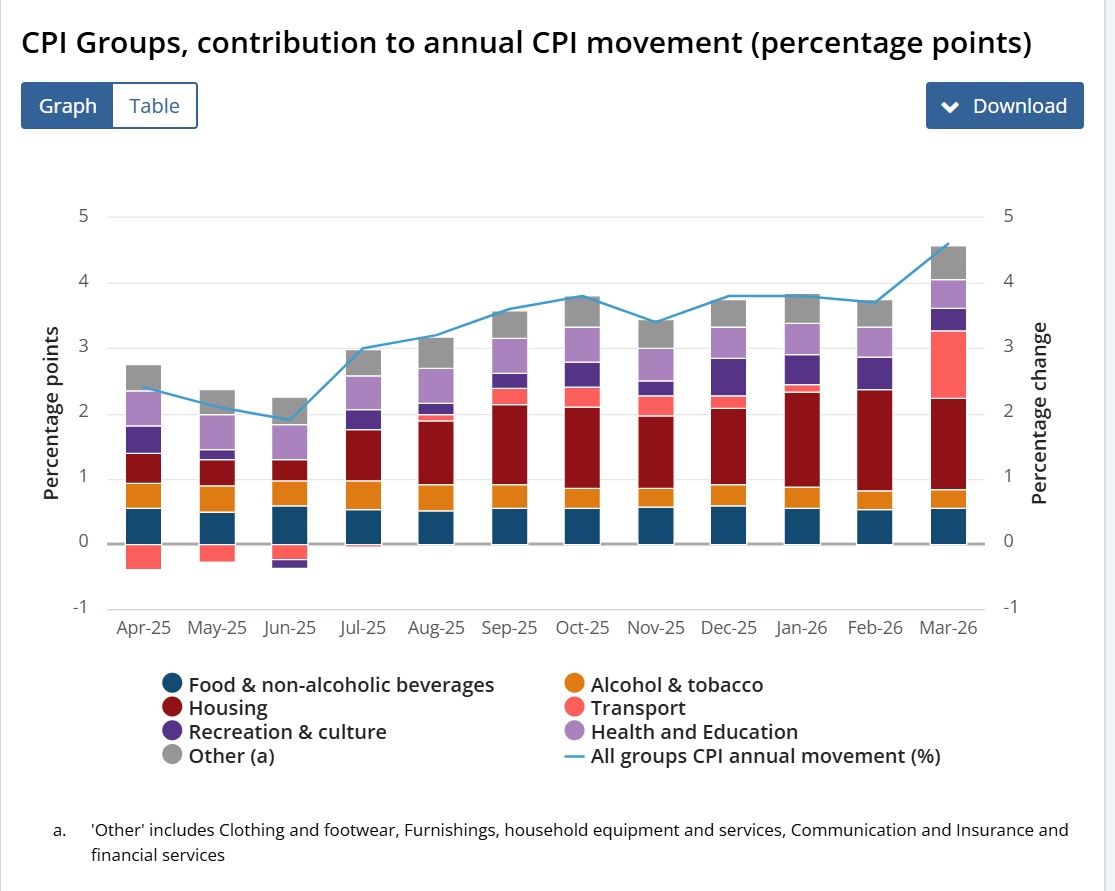
Note the little movement in the Food & Non Alcoholic beverages contribution over the last year and the massive jump in fuel costs in March, ABS
Nearly two weeks ago the ABC reported that industries had come to the end of their ability to hold off price rises, and that the next couple of months would be ground zero. Ominously it also noted that fuel and fertiliser price increases were leading inexorably to production decreases, with fruit and vegetable growers delaying plantings.
All of the above is bad enough and all reflects atrocious policy over more than a decade.
Australia should never have allowed domestic gas prices to rise so much, simply to burn off to liquefy yet more gas and export as LNG. That decision is now taking money out of the pockets of people in suburban Australia. A miniscule fraction of what we are allowing to be exported would completely alter our fertiliser outlook and completely avoid having our primary growers looking at reducing plantings.
Australia should never have allowed a situation where it was reliant on diesel production from offshore, with insufficient production locally to support national need, without even a semblance of an effective national reserve.
In the same way, allowing a nitrogen fertiliser and urea production capacity to simply cease operation would have to rank as one of the all-time classic examples of policymaking stupidity. Australia is a nation with considerable fertiliser-making history – it stripped both Nauru and Christmas Island of phosphate, and had been making nitrogen fertiliser and Urea for a century. Whoever signed off on all of that, and whoever voted yes in parliaments around the country, should be held up for ridicule.
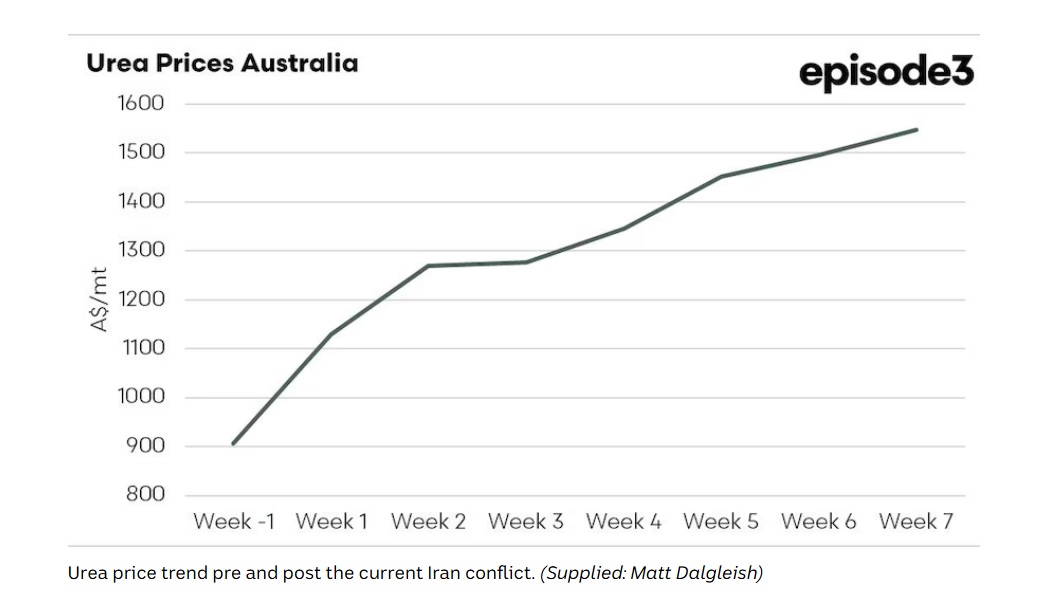
Australian urea prices after the first attack on Iran in February
Even if there was an intention to recreate fertiliser production using cheaper WA gas, with imported Indian labour, those missiles which wiped out Ayatollah Khamanei in Teheran on 28 February might just as well have been shoved into the buttocks of Australian food production.
In the coming weeks we will see pricing for milk and dairy products, all forms of fruit and vegetables, and bread begin to rise more sharply. The same cost dynamics will affect feed for livestock and will begin to appear within the month – noting that beef and lamb prices have remained subdued since the advent of the Trump tariffs last year, when US buyers purchased large volumes of Australian meat prior to the tariffs being unveiled.
At the same time, the medium through which this pain will come to mainstream Australia is the grocery duopoly, which is the highest-margin grocery retail in the world. They have been happy to laugh off competition laws by swapping weekly specials. That is before we get to member prices and various forms of dynamic pricing and then onto their contracting practices with primary producers.
All of the above is policy driven and all of them have been policy failures over the long term.
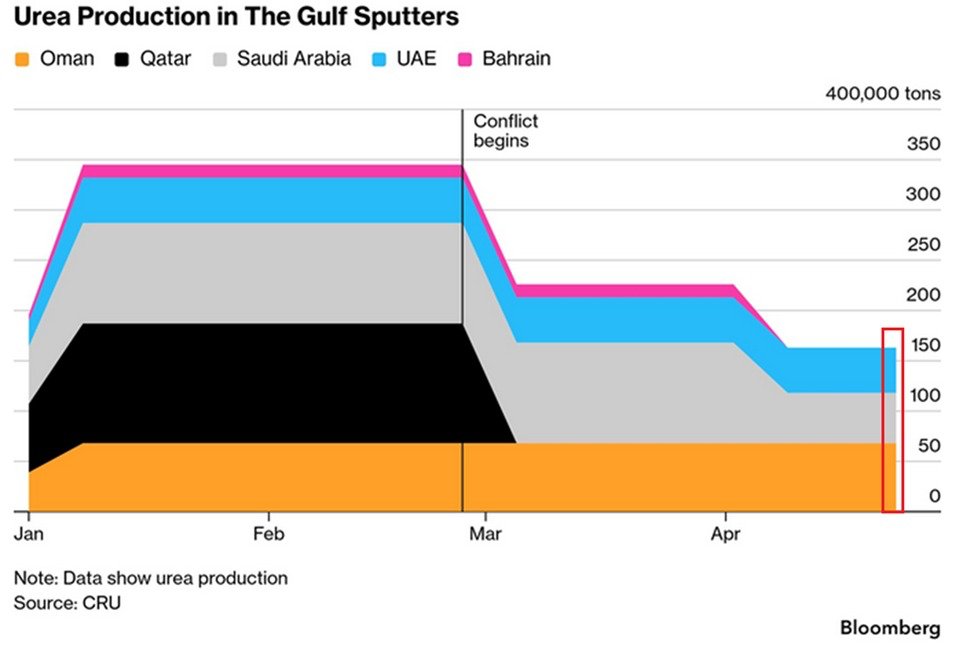
This Bloomberg chart tells us not just how much Urea production in the Gulf has dropped off but also how long it will take to recover. Even if the war ended tomorrow it isnt likely to be quick.
But it gets worse.
In recent weeks there have been a spate of reports suggesting we are increasingly likely to experience what is being called a ‘Super El Nino’. This is where the El Nino is unusually intense and likely more than 2 degrees Celsius above the long-term average. The latest US long-term outlook released 27 April has us with a 62% probability that an unusually strong El Nino will be apparent by late winter and persist well into 2027.
For Australia, the forecast implies a considerable potential for winter and subsequently spring plantings to be significantly degraded. While we can’t point to the politicians and bureaucrats as being responsible for that, we can at least note that the utter failure of policy they are responsible for will certainly magnify the effects of it.
But no matter what, getting some cheaply priced cans of beans and vegetables and stocking up on long-life food stuffs – after paying for petrol and electricity and setting aside an extra helping for the mortgage – may help down the track.
This may fuel considerable discontent in the near to medium term.
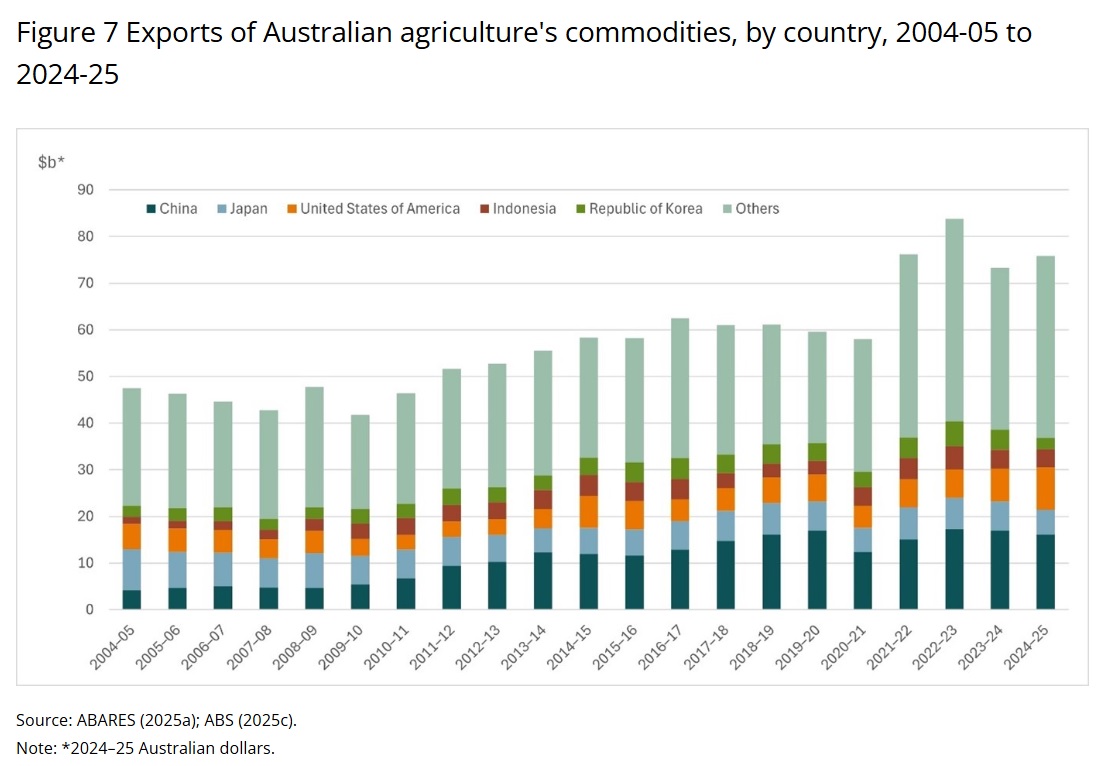
Where we export to, ABARE
But that isn’t the end of the story; much of the world gets its fertilisers from the Persian Gulf. While El Niño brings drought to Australia ordinarily, in other parts of the world it has other effects which may help food production. Much of the world is going to be experiencing the downturn in production due to fertiliser price spikes or unavailability. While there certainly are other providers, they will all have their issues, and of course we can assume that sanctions against Russian and Belarussian fertilisers will be toned down.
While that will help, much of the world will be seeking to ensure food for their own people at whatever price they can get it. While it isn’t a matter of calling for export restrictions on food production, there is a case for ensuring better awareness and policy addressing Australian production and the factors affecting pricing on the shelves in Australia. Of course some of the nations to whom we export significant volumes of food are those in control of how much diesel we get so there would be some scope of trade-offs there.
But we certainly should never have allowed ourselves to be as utterly pawned as we are currently when it comes to diesel and fertilisers, and we should be addressing that. And if the coming year brings us scorched earth and algal blooms in the wake of an El Nino we should be ensuring that Australians do not experience food insecurity and are not traumatised by the price to put meat and three veg on the table for their families.
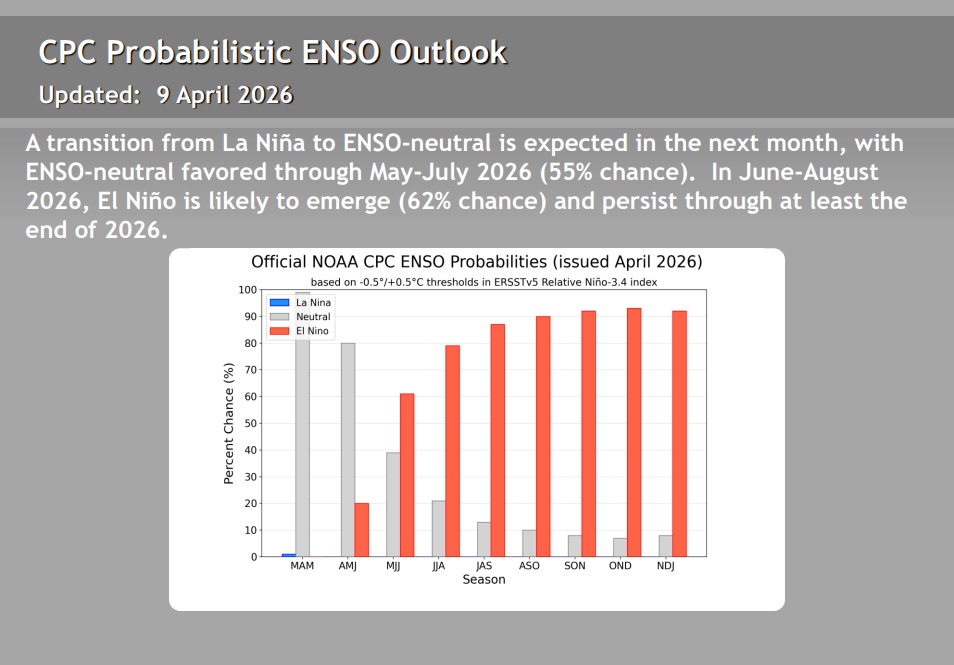
The US El Nino forecast
Of course, if we can’t obtain the jet fuel, there’s likely to be cheaper crayfish and asparagus heads for Australians. At least that’s something!