It’s a lot of motherhood statements so far, but they are good ones, at least.
“Tiny” Tim Wilson has given us a sort of philosophy.
Mr Wilson flagged plans for a two-tier system of company taxes and regulations that provided a more generous environment for small business owners.
“I’m looking exclusively at how it is we incentivise work and, particularly, how we encourage Australians to set up small businesses, family businesses, or be self-employed, and actually reorientate the policy settings squarely to back and incentivise that behaviour,” Mr Wilson said.
“The laws for big business shouldn’t automatically equate to small business,” he said. “Small businesses across the country are being expected to have an HR, legal, industrial relations and tax department just to comply (with regulations). We’re going to look seriously about how we change the whole dynamic.
Sounds pretty good and is part of Tiny’s liberal vision to restore the individual and empower innovation.
Tiny also wants more intergenerational fairness, which is great, but is not going to cut the CGT discount.
On Wednesday, Mr Wilson said his issue with the capital gains discount was that it made the effective tax rate on assets far lower than on wages.
“What I was talking about was the relationship between a 47 per cent income tax rate and the capital gains discount. My solution to that is to lower income taxes,” Mr Wilson said.
The issue is, how is he going to pay for it while balancing the budget? Cutting the NDIS won’t be enough.
And what of immigration? It’s the number one cause of big businesses’ laziness because it guarantees topline growth by adding more warm bodies, rather than competing for customers.
Not to mention, the clogging up of everything for business, big or small.
Over to you, Andrew.
New opposition industry spokesman Andrew Hastie has vowed to prosecute an aggressive supply-side agenda focused on energy affordability, arguing an end to net zero emission targets is critical to reinvigorating Australia’s manufacturing power.
“It’s an aggressive supply-side agenda focusing on energy, not centralised big government,” Hastie told The Australian Financial Review of his approach to his new portfolios of manufacturing and sovereign capability.
“The question is: are the multinationals acting in the national interest or are they acting in their own interest?”
If you say so, Andrew, but no industry will recover without cheap gas.
Whether you freeze the energy transition in place or proceed with it, cheap gas remains the key.
I’d suggest reviving the Dutton plan for gas, which was an excellent idea, but lower its target price from $10Gj to $5Gj.
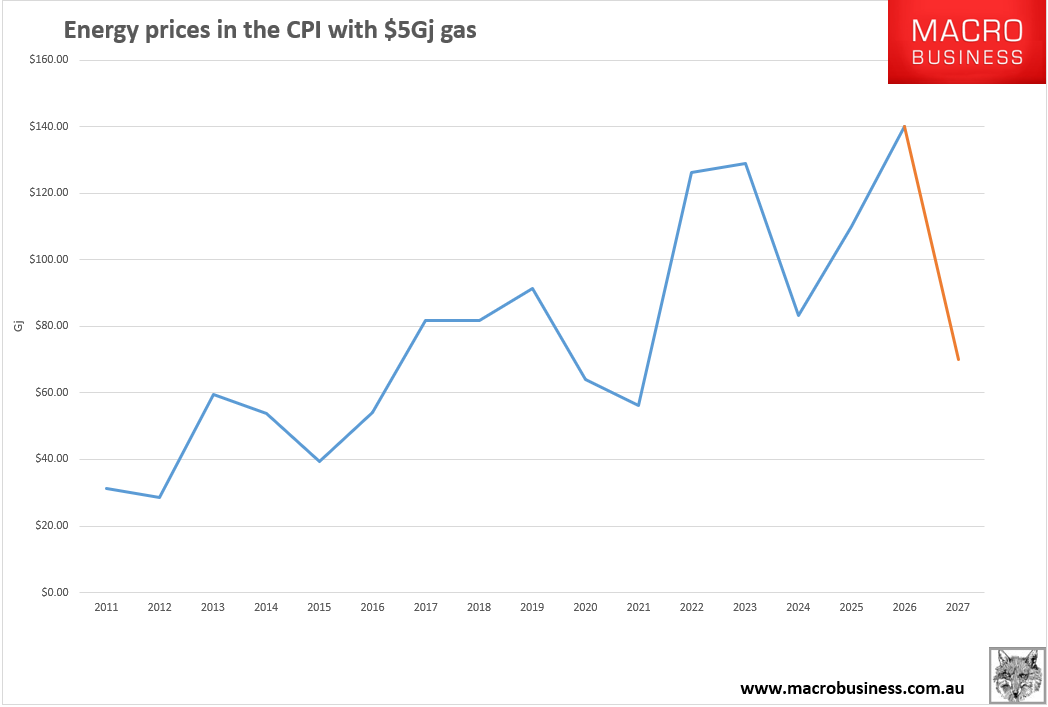
That would make industry competitive again.
Nothing else will.