
In the debate over the types of houses being built in Australia, a frequently repeated narrative is that the shift toward more apartments is positive because migrants favour that type of living arrangement.
While we lack data on this question for Australia, figures from Canada shed some light on migrants’ housing choices and priorities.
While Canada is naturally not Australia, the makeup of its intake by nationality is not too far removed from our own.
In an analysis by Statistics Canada, the current living arrangements of migrants are broken down by migrant type and length of time in Canada.
Among temporary visa holders, 79.2% live in apartments.
However, when the focus shifts to migrants more broadly, that proportion falls to 41.7%.
This figure is likely skewed somewhat by the impact of newer arrivals, who live in apartments, whether that is their preference or not, during their early years in Canada, establishing their household.
The figures led Statistics Canada to conclude:
“Immigrants are more likely to occupy single-detached homes in the ownership market and apartments in the rental market, whereas NPRs (temporary visa holders) predominantly use rental apartments. This indicates that increased immigration is likely to drive demand for owned single-detached homes”
Home ownership also occurs significantly more swiftly than one might think.
By their sixth year in Canada, the proportion of migrant households owning their homes exceeds that of those renting.

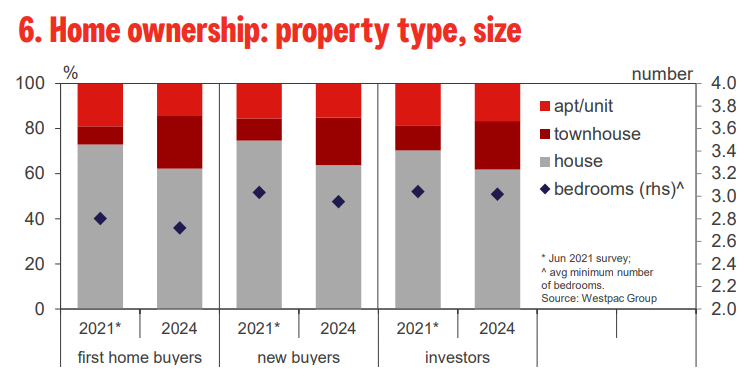
The roughly 60/40 split among migrants is remarkably similar to the split among Australian first home buyers when surveyed by Westpac in 2024.
When price was factored in, just over 60% of Australian first home buyers preferred a freestanding house, with a further 23% preferring a townhouse.
This raises a challenging question for the nation’s policymakers and the nation’s voting public.
If a majority of Australians don’t want to live in apartments, and a majority of migrants don’t want to live in apartments. The current level of detached house completions means someone will have to miss out on realising their goal.
That is the crux of today’s issue, along with the fact that policymakers almost entirely overlook it.
The existing Australian people and new Australians who arrive in the years to come deserve a government working with our collective society to realise our goals.
If people want to live in townhouses and apartments, that is entirely their choice, and the market will generally deliver more of that type of housing.
But in an Australia where approvals to build new houses are currently almost 30,000 below where they were when Gough Whitlam was Prime Minister in 1973, it’s clear that not enough freestanding houses will be built to meet demand.
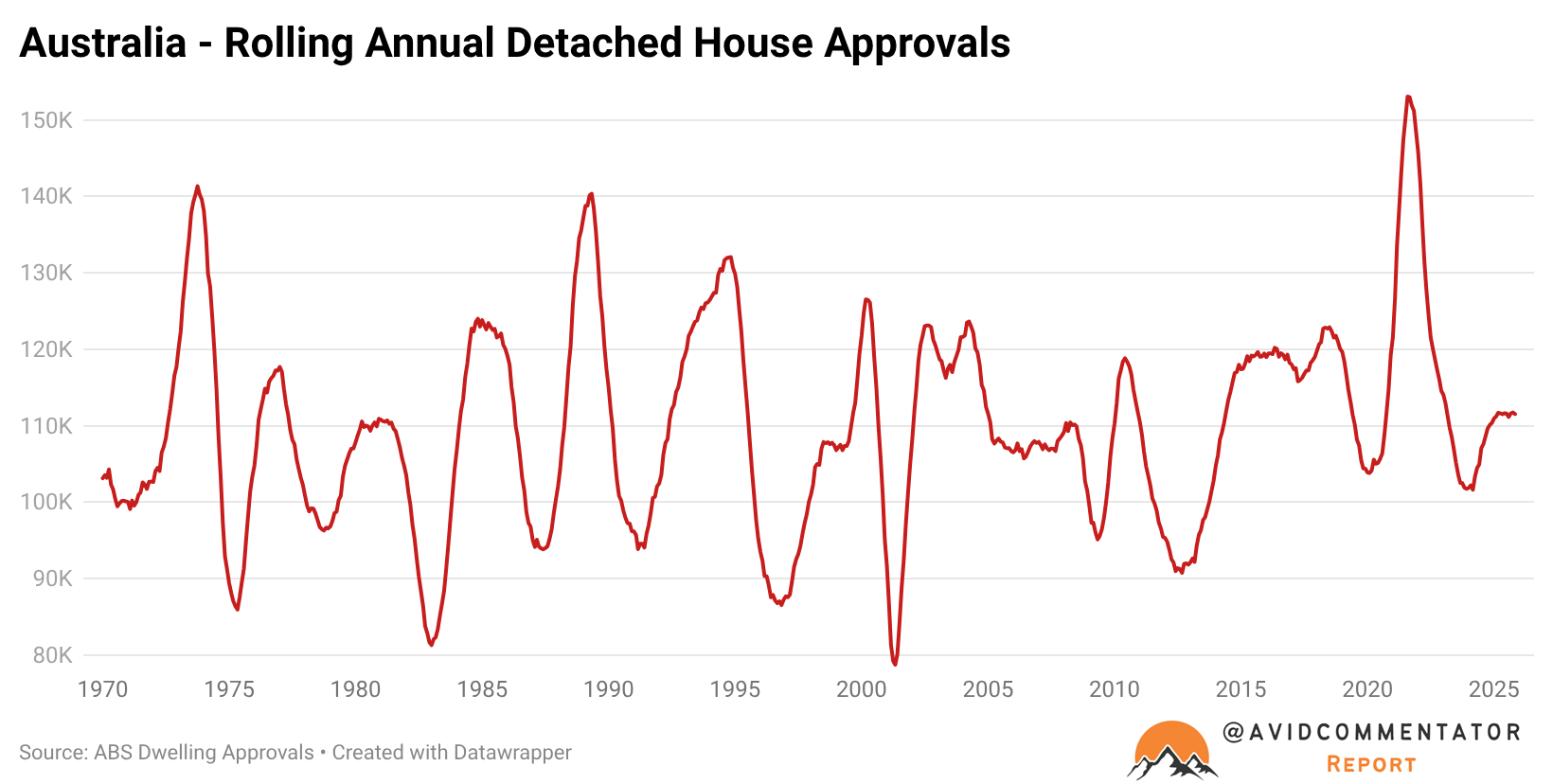
Ultimately, this is an issue of basic mathematics—too much demand and not enough supply—and it needs to be addressed before it becomes a significantly larger, more bitterly contested social issue.
The Prime Minister and other policymakers speak of social cohesion, but pursuing a set of policy settings that will certainly prevent Australians from realising their dreams is not going to help.
