

The latest Newspoll revealed the enormity of the seismic shifts occurring in the tectonic plates that underpin federal politics.
One Nation is now outpolling the Coalition on primary vote, 22% to 21%.
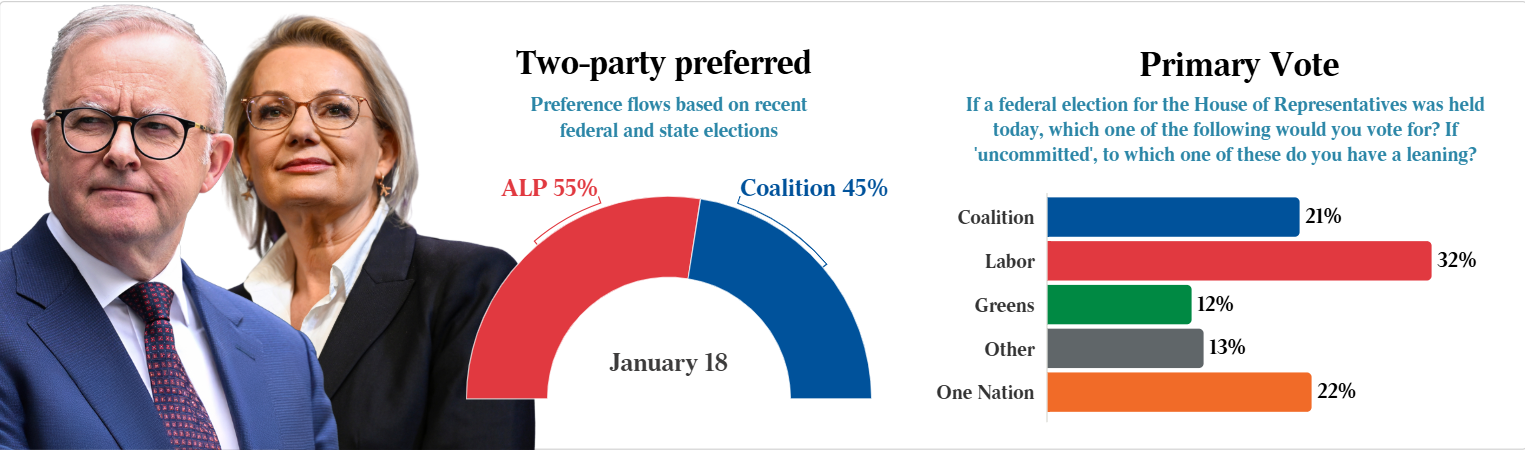
Source: Newspoll
For a Coalition already reeling from the lowest number of lower house seats in its history, this is a clear signal that the party faces a deep existential crisis.
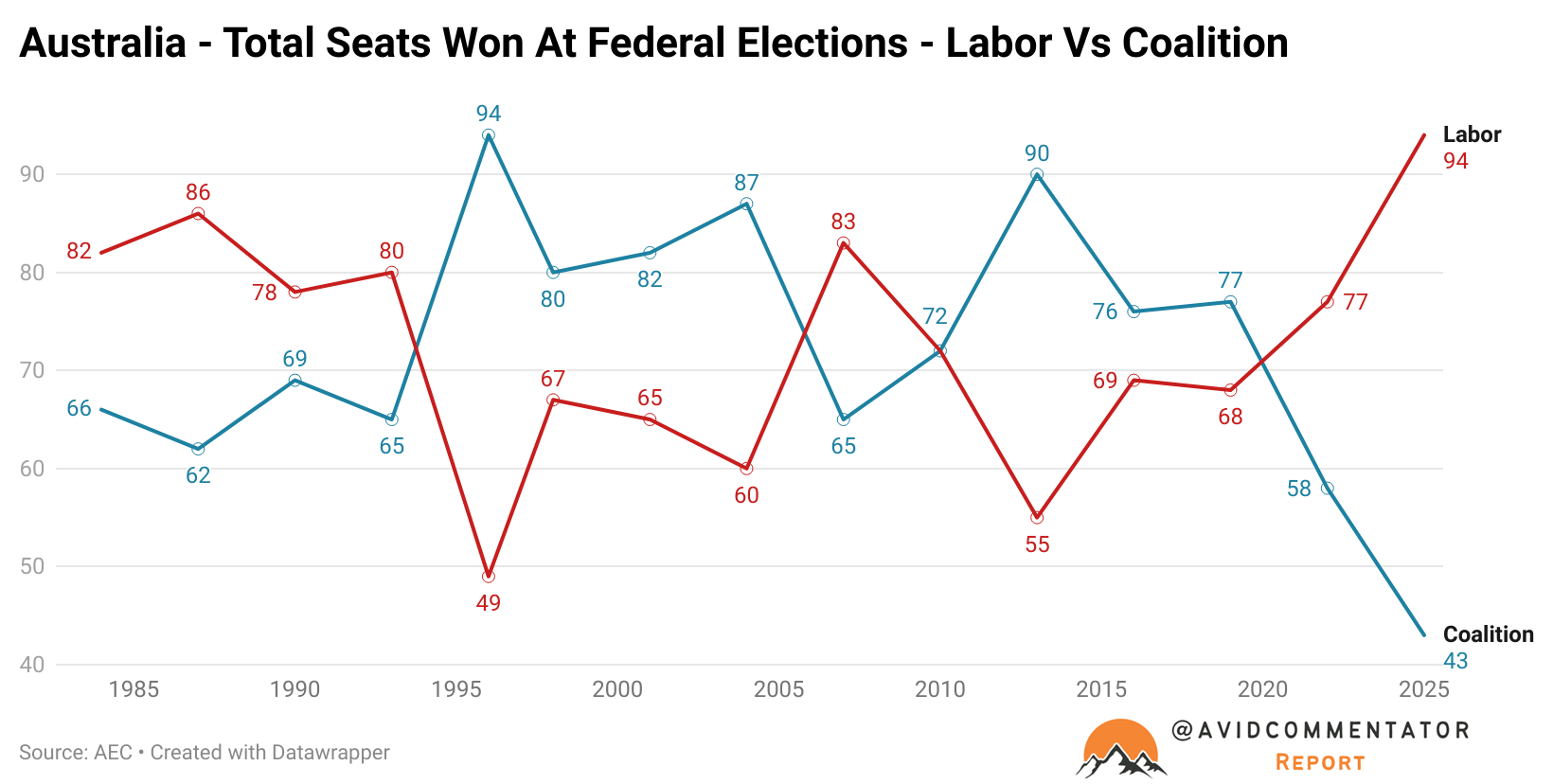
To exacerbate the situation, the Coalition may witness a potential exodus of MPs seeking better opportunities, while the Sussan Ley-led opposition struggles to generate any significant political momentum due to either government errors or broader circumstances.
Media reports suggest that Barnaby Joyce, the former Nationals leader and Deputy Prime Minister, might not be the only Coalition figure to defect to One Nation.
According to the bookies, Sussan Ley not being Coalition leader at the next election is paying just $1.22, compared with $4 for her going a full term.
Meanwhile, former Shadow Home Affairs Minister Andrew Hastie is the odds-on favourite to succeed Ley at $1.50, followed by Angus Taylor in a very distant second place at $4.50.
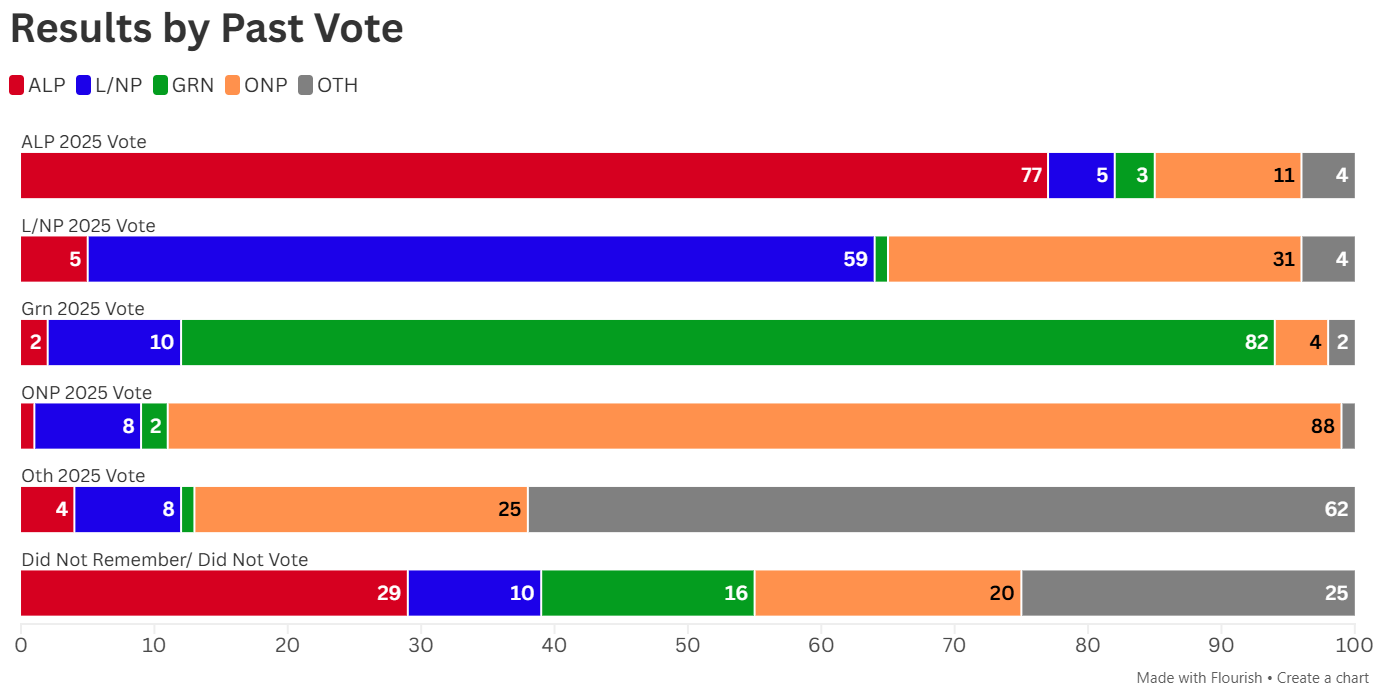
While the rise of One Nation has heavily been at the Coalition’s expense so far, with polling from DemosAU revealing that the Coalition has lost 31% of voters at the 2025 election to One Nation, Labor is not immune.
As of early January, Labor had lost 11% of its primary vote to One Nation.
The internals of Newspoll also paint a concerning picture for Labor, with January’s result revealing that Labor had lost 4 percentage points of its’s primary vote, the Coalition 3 percentage points, while One Nation has gained 7 percentage points.
Federal voting intention
🟥 ALP: 32% (-4)
🟧 ONP: 22% (+7)
🟦 L/NP: 21% (-3)
🟩 GRN: 12% (-1)
⬛️ OTH: 13% (+1)
In an interview with KIIS FM on Monday, Prime Minister Anthony Albanese shared his concern over the rise of “divisive” One Nation.
The rise of One Nation and the decline of the major parties’ share of the primary vote to an all-time low of 53% is hardly a surprise.
The issue of immigration in particular is frustrating voters as the Albanese government continues to pursue an intake that polling reveals voters believe is far too high.
If and when the Coalition produces a migration policy with a significantly smaller intake that is more in keeping with pressures on housing and infrastructure and more in line with the developed world per capita average, then things may change.
But until the elephant in the room is adequately addressed or One Nation makes a significant enough error to reverse the current trend, the Coalition will be deeply entrenched in an existential crisis.
