

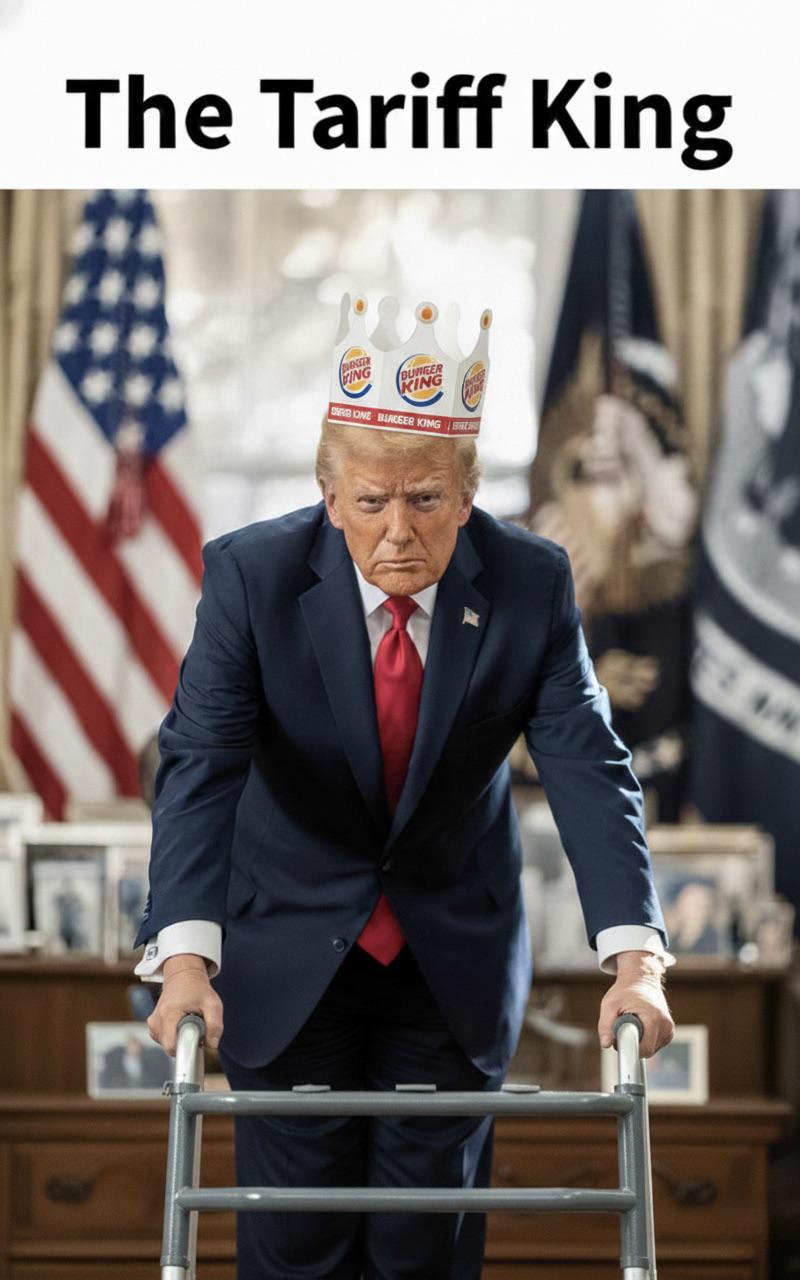
Wall Street futures fell sharply alongside the USD (and Bitcoin) while gold and undollars rose on the weekend tariff orders from the Trump regime, with the Europeans playing hardball. Asian share markets are all in the red given the risk off mood with the latest Chinese economic figures (and more importantly – population figures – more below) coming in on target as expected (or massaged) only giving mainland Chinese markets some stability. Oil prices remain in flux with the Iranian situation while the Australian dollar bounced off support at the 67 cent level.
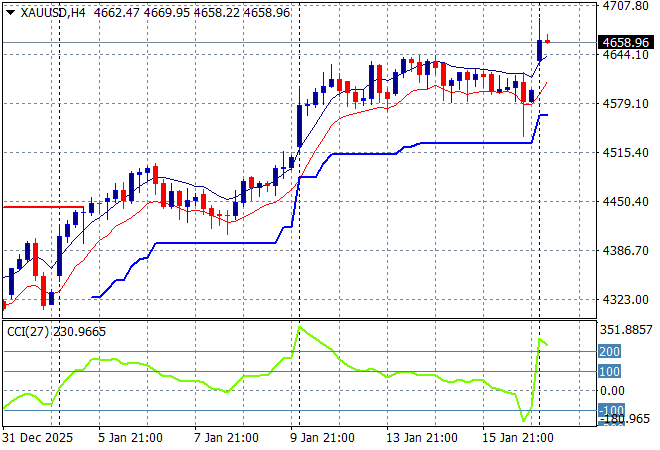
Oil markets are seeing some stability with Brent crude steady just above the $64USD per barrel level while gold has gapped higher over the weekend to new high well above the $4600USD per ounce level:
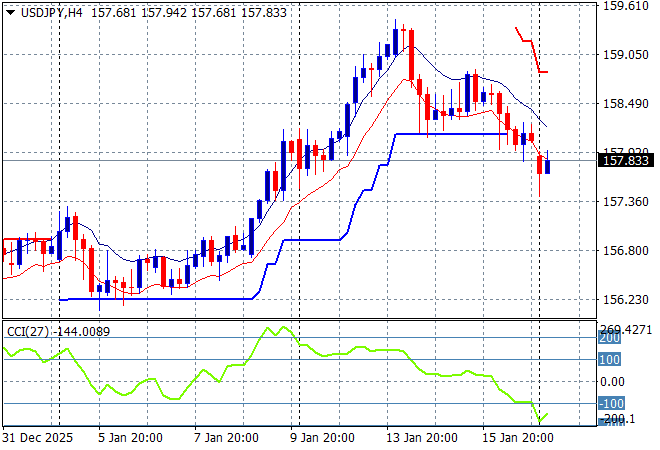
Mainland Chinese share markets are up slightly in the afternoon session with the Shanghai Composite up just 0.1% while the Hang Seng Index is down 1% to crack the 27000 point level. Japanese stock markets are also in retreat with the Nikkei 225 down nearly 0.9% to stay well below the 54000 point level while Yen is firming even further against USD, with the USDPY pair gapping below the 158 level:
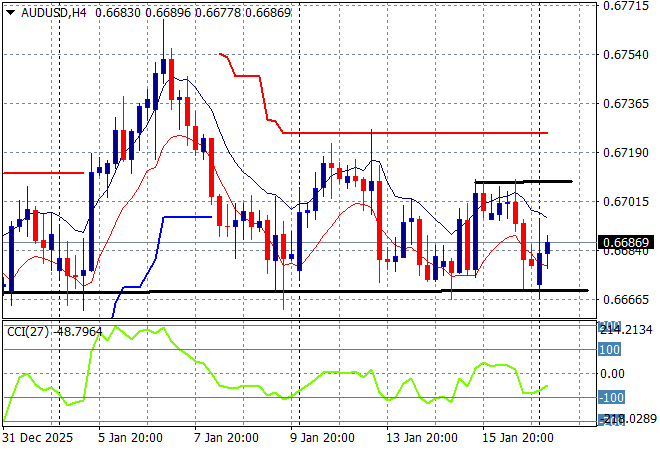
Australian stocks are again the best performers in the region but its all relative with the ASX200 down just 0.3% to 8869 points while the Australian dollar is bouncing back slightly to almost get above the 67 cent level but still looks anchored at support just below:
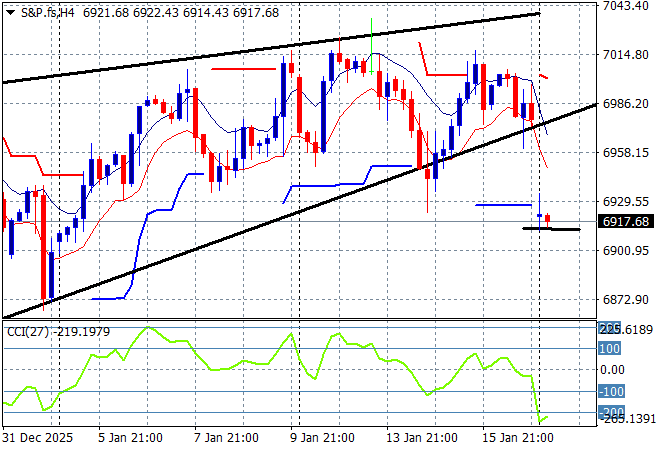
S&P futures have gapped a solid 1% lower as Wall Street is closed for a long weekend, with the S&P500 four hourly chart still unable to get up towards the 7000 point level and potentially rolling over here as the rising wedge pattern completes:
The economic calendar starts the week quietly – relatively speaking – as US markets are closed but there is some key Canadian inflation data tonight.
China clocked its lowest birth rate on record in 2025 as its population shrank for the fourth year in a row, deepening a demographic challenge that could drag on the world’s second-largest economy for decades to come.
The rate fell to 5.63 births per 1,000 people in 2025, beneath 2023’s low of 6.39 per 1,000, China’s National Bureau of Statistics reported on Monday.